
Guide
What Wind Does to a Wide Door in Arlington Heights
Arlington Heights homes built mostly in the 1960s-70s often carry wide double doors on hardware never rated for today's wind loads. Here's what that means for your door.
Local detail
How Local Conditions Play In
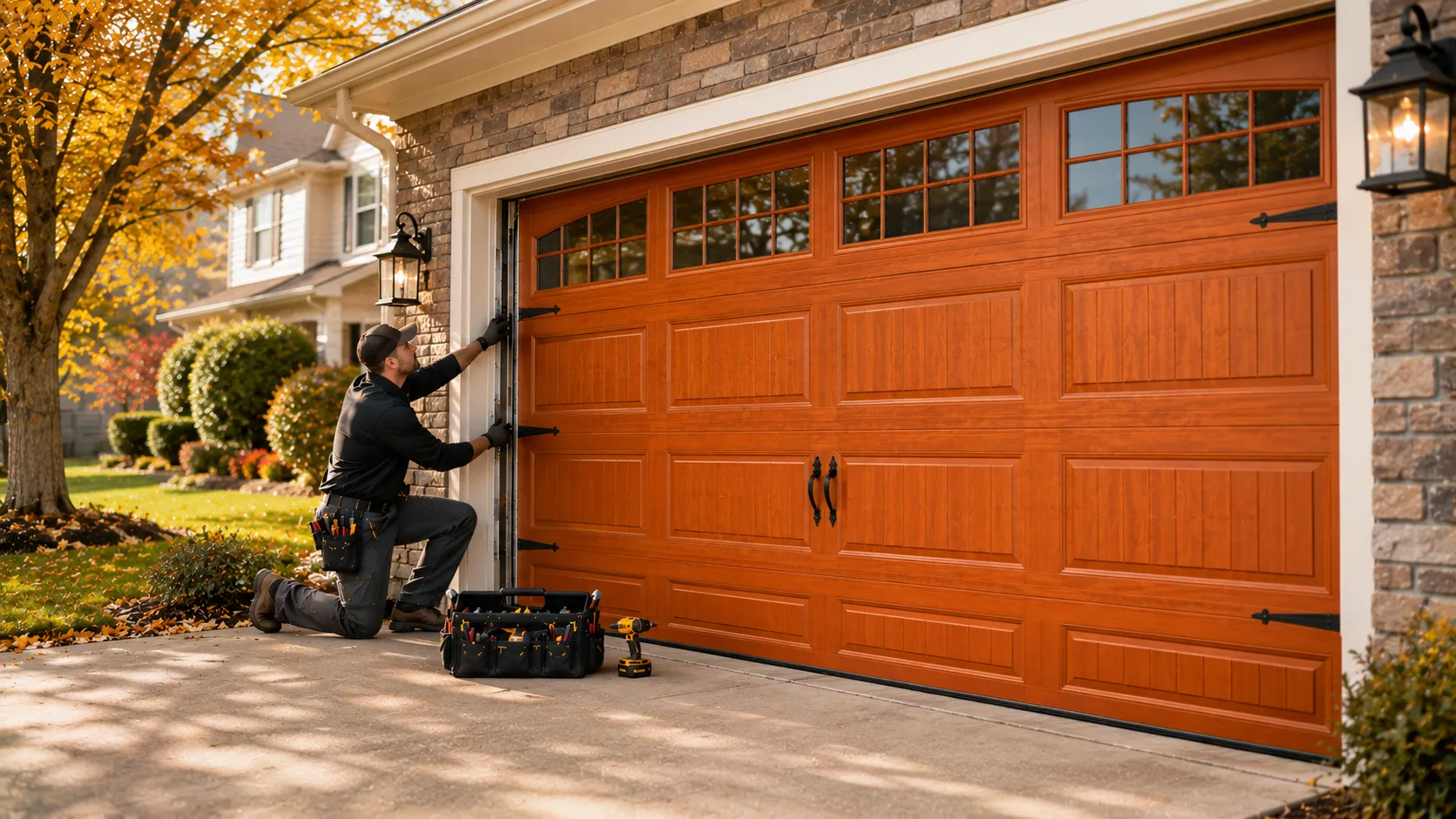
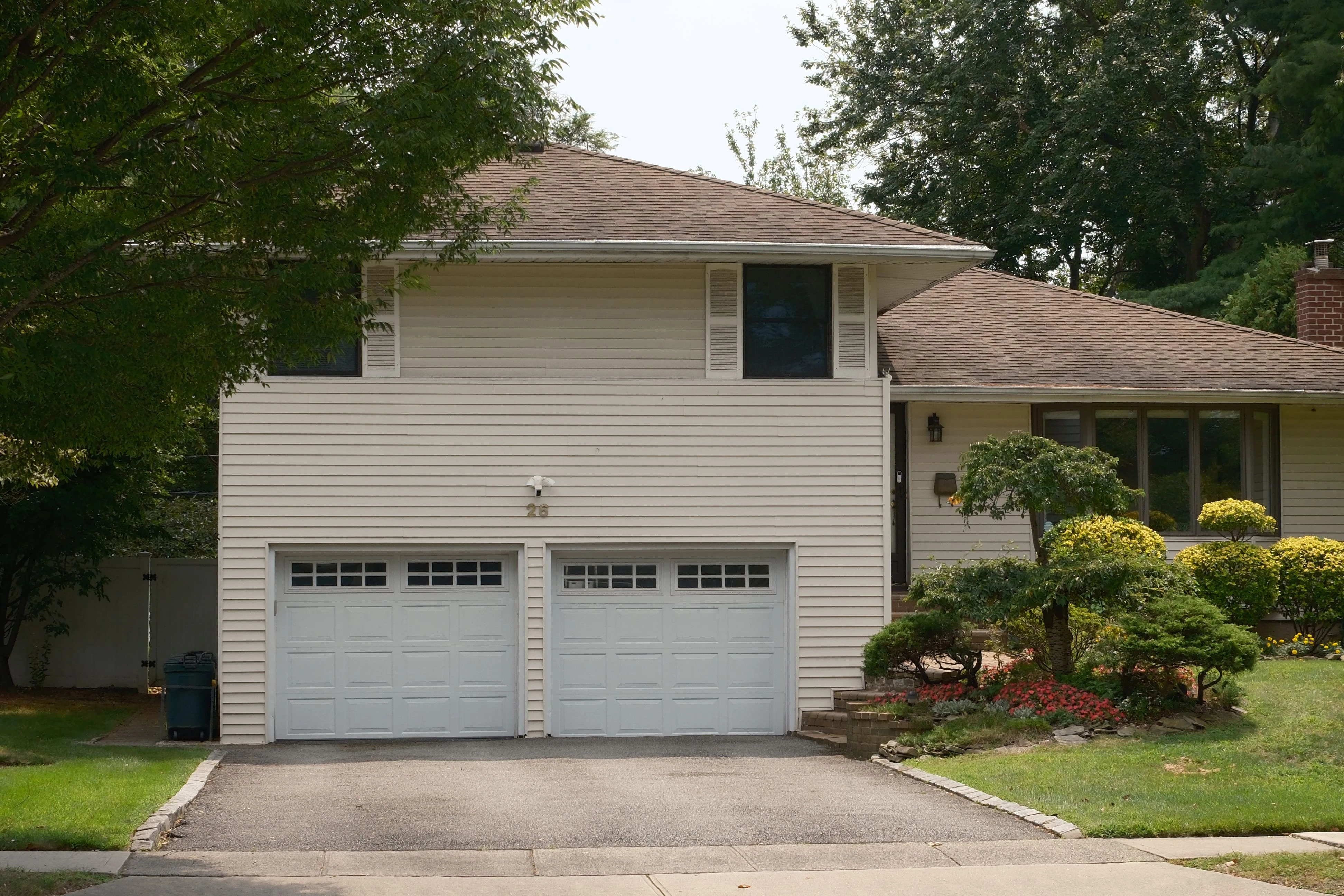
Arlington Heights sits in a cold-severe climate band, which means wide temperature swings and hard winter wind on top of snow load. A wide door, meaning a single 16-foot double-car door rather than two 8-foot singles, catches more of that wind on one panel. The housing stock here runs from 1938 to 2009 with a median build year of 1977, and most of the named areas in this part of the county are mostly 1960s-70s stock. That era built a lot of two-car garages with a single wide door and center hardware that was standard for the time but light by current wind-load thinking. When gusts push against that much surface area, the load travels through the top panel, the center stile if there is one, and out to the track brackets at each end. On an older wide door, those brackets are often the weak point, not the panel itself.
Cold makes it worse, not because cold bends steel, but because cold stiffens the seals and nylon rollers, so the door doesn't flex and absorb a gust the way it would in warmer weather. A door that's a little stiff and a little wide is exactly the combination that shows stress at the track first.
The area
When It Stops Being a DIY Job
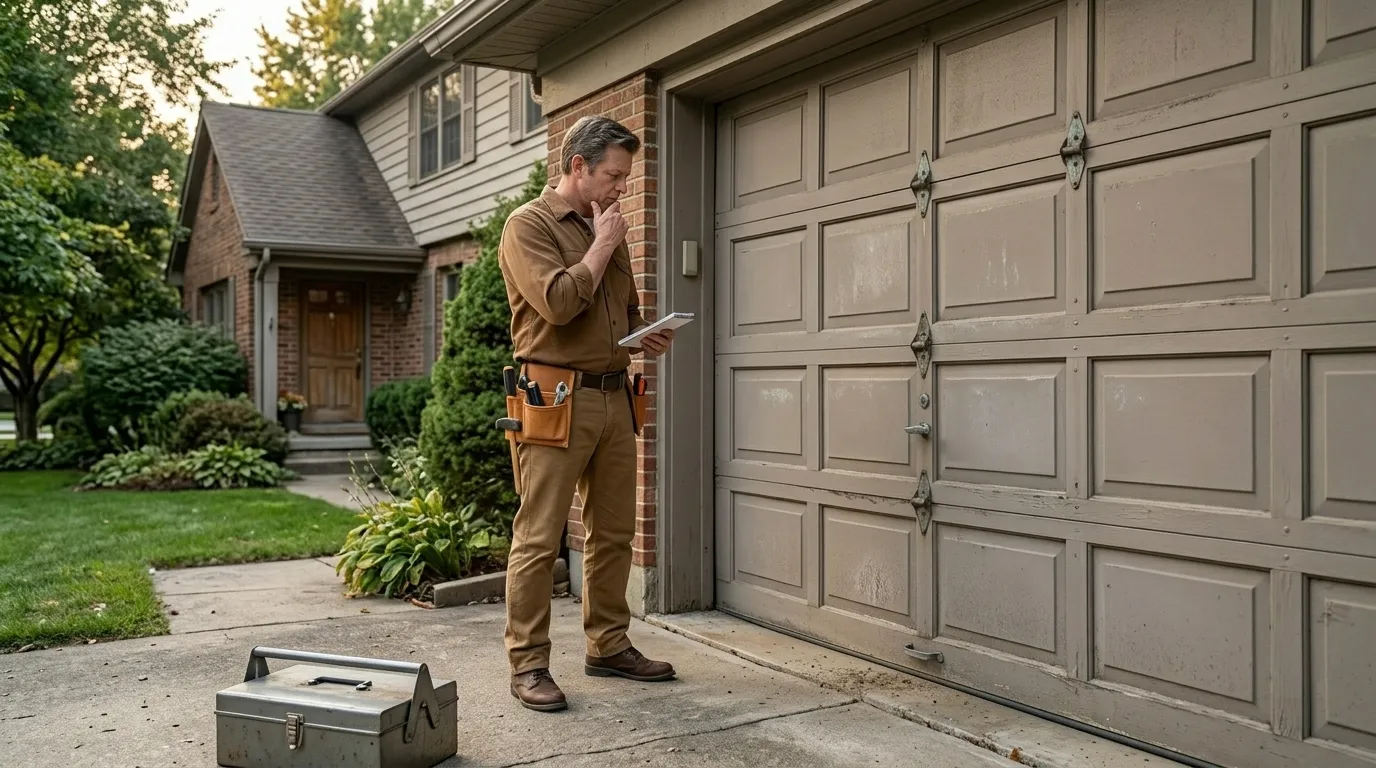
If a wide double door on your house is racking, meaning one side visibly lags the other going up or down, or the top panel bows when a gust hits it, that's a track and bracket problem, not a lubrication problem. On houses from the 1960s-70s stock common in this area, the original track brackets were fastened into framing that's now fifty-plus years old, and lag screws that held fine in 1968 can be working loose in wood that's dried out over decades.
This is where DIY stops making sense. Re-tensioning a torsion spring on a wide door is already a two-person, right-tool job because the spring is under more load than on a single door. Add a bent track or pulled bracket from wind stress and you're working with parts that can let go while you're standing under them. If the door is racking, or if you see daylight between the bracket and the jamb, that's a call, not a Saturday project.
What we find
Doing Nothing For Now
Not every wind-stressed wide door needs work today. If your door still runs straight, the seal along the bottom still compresses evenly, and you don't hear a new bang or shudder when wind hits it broadside, you can watch it through this winter rather than replace hardware now. Given the cold-severe climate here, most of the stress events happen with the big wind-driven cold fronts, so the test is really how the door behaves during and right after one of those.
We'll say plainly: we're not going to talk you into new track brackets on a door that's holding its line. If it's quiet, straight, and sealing, leave it. Replacing hardware that isn't failing yet is money spent on a guess. The honest move is to note how the door behaves after the next hard wind and act on what you actually see, not on what might happen.
How we work
What Is Going On
A wide door under wind load is a beam problem. The panel spans the full opening, so it has to resist bending across roughly 16 feet instead of 8, and all of that load has to get carried down to two end brackets and, if the door has one, a center support. On houses from the 1938-2009 stock in this area, with most of it dating to the 1960s-70s, that center support and the end brackets are original hardware sized to codes and habits from decades ago, not to today's understanding of wind load on a wide span.
What you're seeing when a wide door shudders or racks in wind isn't the panel failing, it's the connection points flexing under a load they weren't built to spread evenly. Cold-severe conditions add stiffness to the seals and rollers, so the door has less give to absorb that load smoothly, and the flex concentrates at the brackets instead. That's the mechanism, plain and simple: an old wide span, old hardware, and a stiff cold day.
Questions
Common questions
Why does my garage door shake more in the wind than it used to?
If your door is one of the wide 16-foot double panels common in the 1960s-70s houses around here, wind load spreads across the whole span down to two end brackets. As that original hardware ages, the connection points flex more under the same gust than they did when new, which is what you're feeling as shake or shudder.
Is a racking door an emergency?
Not always, but it's not a wait-and-see either. A door that visibly lags on one side while opening or closing under wind is showing bracket or track stress. Given the cold-severe winters here, that stress compounds. It's worth a call before the next hard wind event, not necessarily an emergency same-day visit.
Should I replace my wide door with two single doors?
That's a real option on some 1960s-70s houses, but it depends on your framing and opening, which we'd need to see in person. We don't have a blanket answer that applies to every house in this area, so this is a judgment call made at your garage, not over the phone.
Ready when you are
Need a garage door sorted in Arlington Heights?
Arlington Heights Garage Door Pros repairs and installs garage doors, springs and openers in Arlington Heights, IL and the surrounding area.