
Guide
What to Know Before You Replace a Garage Door in Arlington Heights
Arlington Heights homes span 1938 to 2009, most from the 60s and 70s, in a severe cold climate. Here's what that means for a new garage door.
Local detail
How Local Conditions Play In
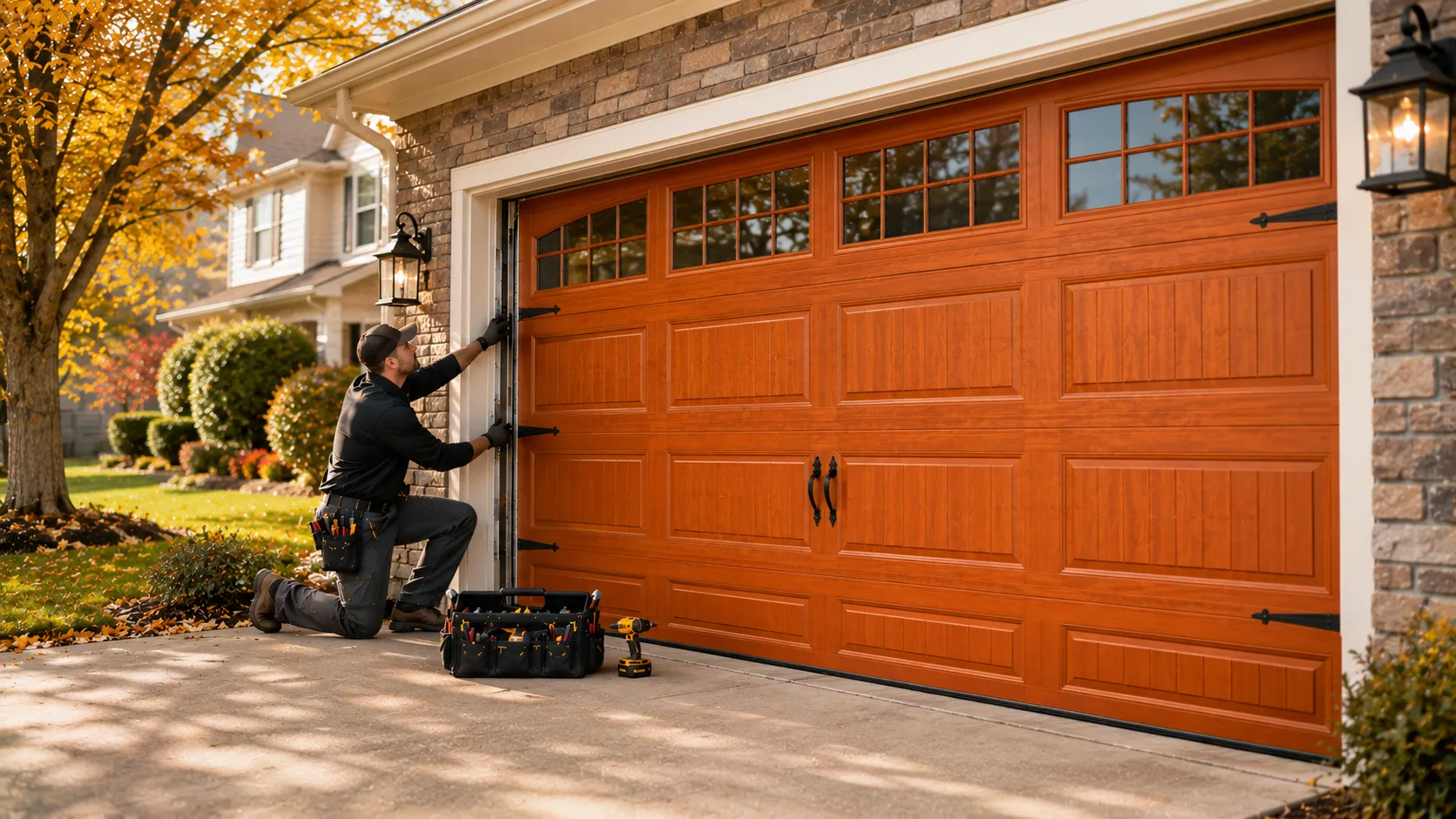
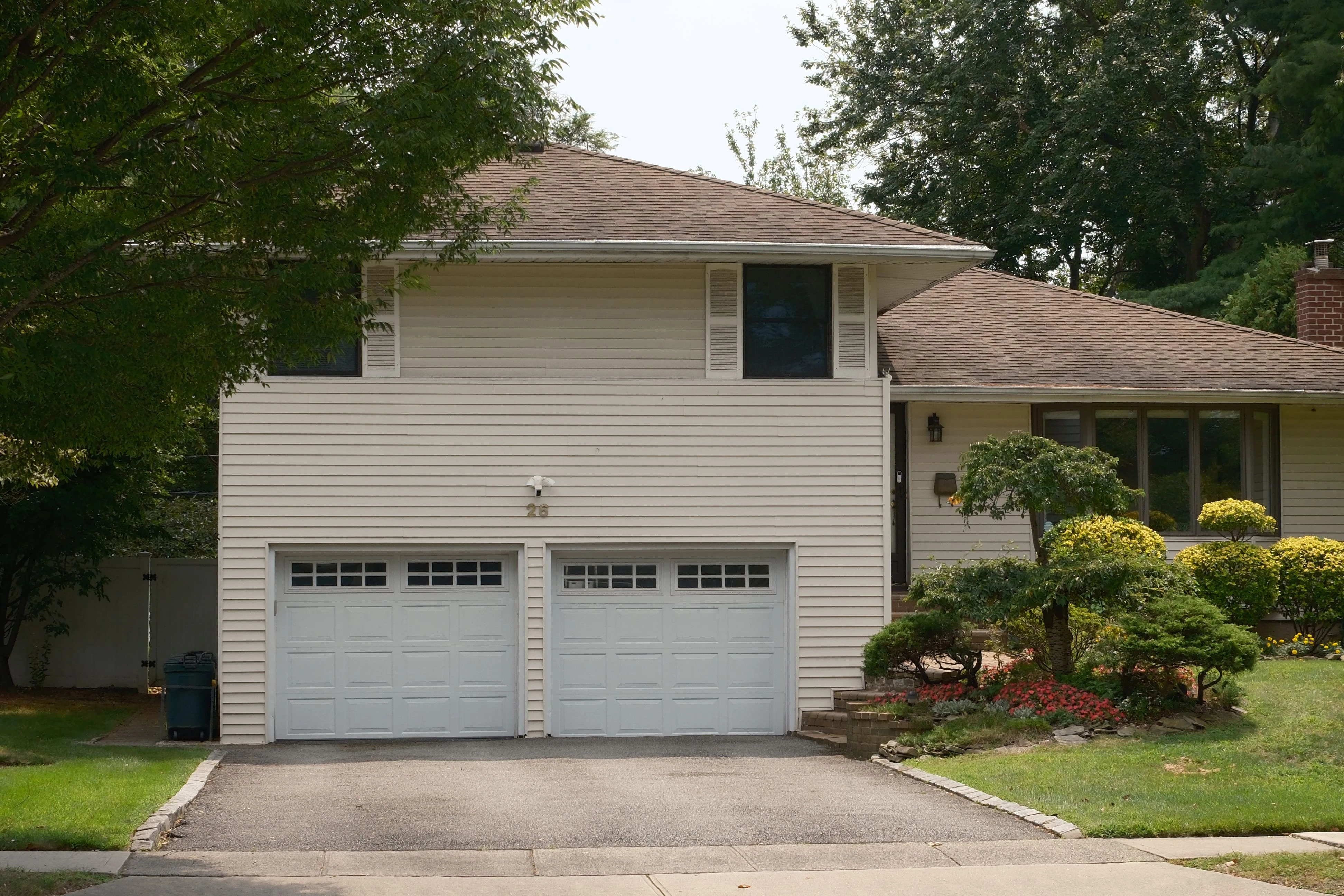
Housing stock around here runs from 1938 up through 2009, with the median build year landing at 1977 and most of the neighborhoods dominated by 1960s and 70s construction. That matters more than people think when a door finally needs replacing. A house framed in the 70s often has an opening sized to steel sectional doors that were standard then, not the wider tracks and thicker panel stock sold today, so a straight swap isn't always straight. Add in a climate band that federal data classifies as cold and severe, and the door itself has to do more than look right.
Panels need enough insulation value to keep a heat-losing surface from working against your furnace all winter, and hardware - hinges, rollers, the track itself - needs to tolerate hard freeze-thaw cycles without binding. We don't sell a door here without factoring both of those in: the age of the opening it's going into and the weather it has to survive. A door that would be fine in a mild climate can bind, crack a panel seam, or throw a spring early once real cold sets in against 40-plus-year-old jamb framing.
The area
When It Stops Being a DIY Job
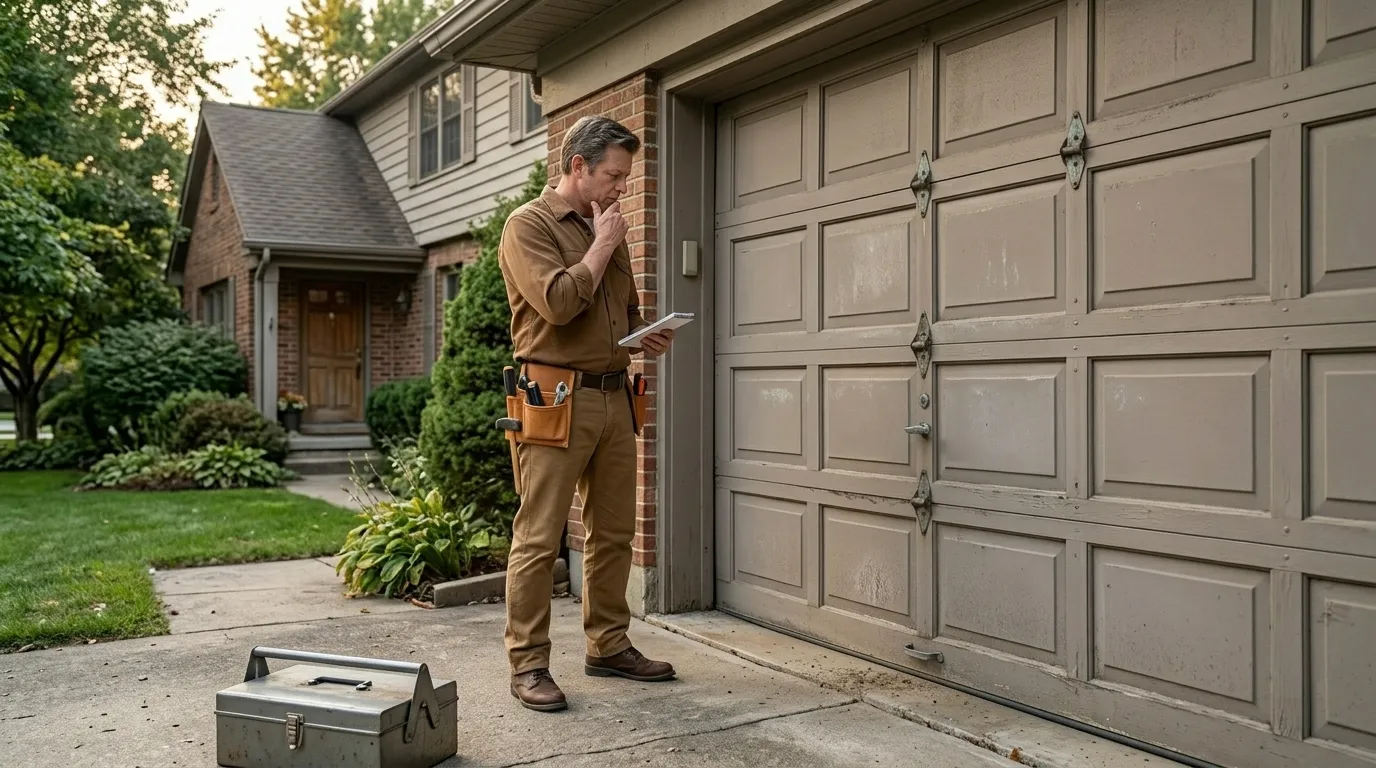
On a house built in the 60s or 70s, the original door hardware has usually been swapped once already, and what's on there now is a mix of eras - an old track with a newer opener bolted on, or a spring rated for a lighter door than what's actually hanging. Torsion springs under tension are dangerous on any house, but on this vintage of stock we see more mismatched parts, which raises the odds that something binds or lets go wrong. Cold makes it worse: steel cable and spring wire get less forgiving below freezing, and a garage that sees severe cold swings all winter puts real stress on hardware that's already decades past its install date.
If your door is sticking, off-track, or the spring has visibly stretched or snapped, that's the point to stop working on it yourself and get a second set of hands on it. We're not going to tell you every squeak needs a truck out - a dry hinge and a can of the right lubricant handles plenty of it. But a broken torsion spring or a bent track on an older opening is not a weekend fix.
What we find
Doing Nothing For Now
Sometimes the right call is to wait. If a panel is dented but the door still seals and runs true, spending money on a full replacement before it's needed doesn't make sense, especially with a median household income in this area at $109,454 - people here budget carefully, not carelessly. The honest limitation on our end: we can't quote lead times or exact part availability on a page like this, because it depends on the door make and what's actually on your house right now, which we only know after we look at it.
What we can say is that a severe cold climate is unforgiving to a door that's already failing - a panel seam that's slightly separated in October is a bigger problem by January once ice works into it. Waiting on cosmetic wear is usually fine. Waiting on a spring that's already sagging, or a panel that's cracked through, tends to cost more once the cold finishes the job the summer heat started.
How we work
What Is Going On
When a door on a 1960s or 70s-era Arlington Heights house finally needs full replacement rather than a repair, it's usually one of three things: the steel has rusted through at the bottom panel from decades of snowmelt sitting against it, the spring and hardware no longer match a heavier insulated door someone bolted on at some point, or the opening itself has settled slightly with the house and the old track no longer runs square. None of that is unusual for housing built between 1938 and 2009 with a median year of 1977 - it's just what happens over 50 years in a climate this cold.
We work the wider service area too, including Prospect Heights, Mount Prospect, and Wheeling, all within a few miles, and out to Inverness, Kildeer, and Riverwoods a bit further off, so the housing-age patterns we see aren't limited to one street. If you want to talk through what a new door would need for your specific opening, more on how we handle that is on our site (/).
Questions
Common questions
Will a new garage door actually help with heating costs in the winter?
It can, since this area falls in a climate zone rated cold and severe. An insulated panel door cuts down on heat loss through the garage, which matters more here than in a milder climate. It won't replace attic or wall insulation, but on an attached garage it's a real factor, not a marketing line.
My house was built in the 1970s - can I just buy any door off the shelf?
Not always. Openings from that era were often sized for the steel doors standard at the time, and track widths have shifted since. We measure the actual opening before quoting anything, because a door that fits a newer house can bind on an older frame without adjustment to the track or jamb.
How do I know if my spring is about to fail rather than just noisy?
Visible gaps in the coil, a door that feels heavier than usual when lifted by hand with the opener disconnected, or a door that slams down the last foot are signs the spring is going. Cold weather speeds this up on older hardware. If you see any of those, stop opening it manually and get it looked at.
Ready when you are
Need a garage door sorted in Arlington Heights?
Arlington Heights Garage Door Pros repairs and installs garage doors, springs and openers in Arlington Heights, IL and the surrounding area.