
Guide
What That Noise From Your Garage Door Is Actually Telling You
Grinding, popping, or slamming door in Arlington Heights? Local housing stock from 1938-2009 and severe cold winters point to specific causes. Here's what to check.
Local detail
How Local Conditions Play In
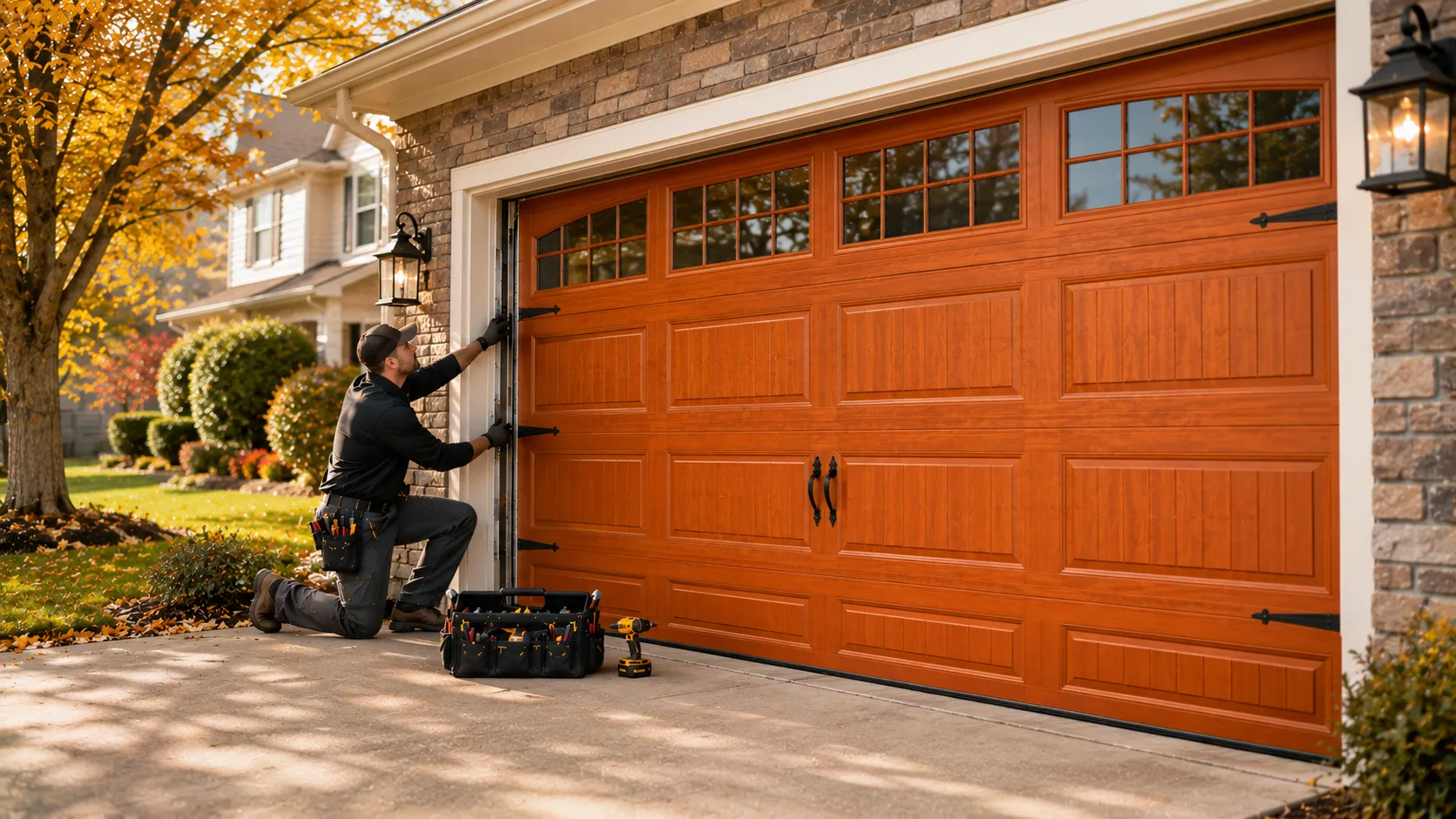
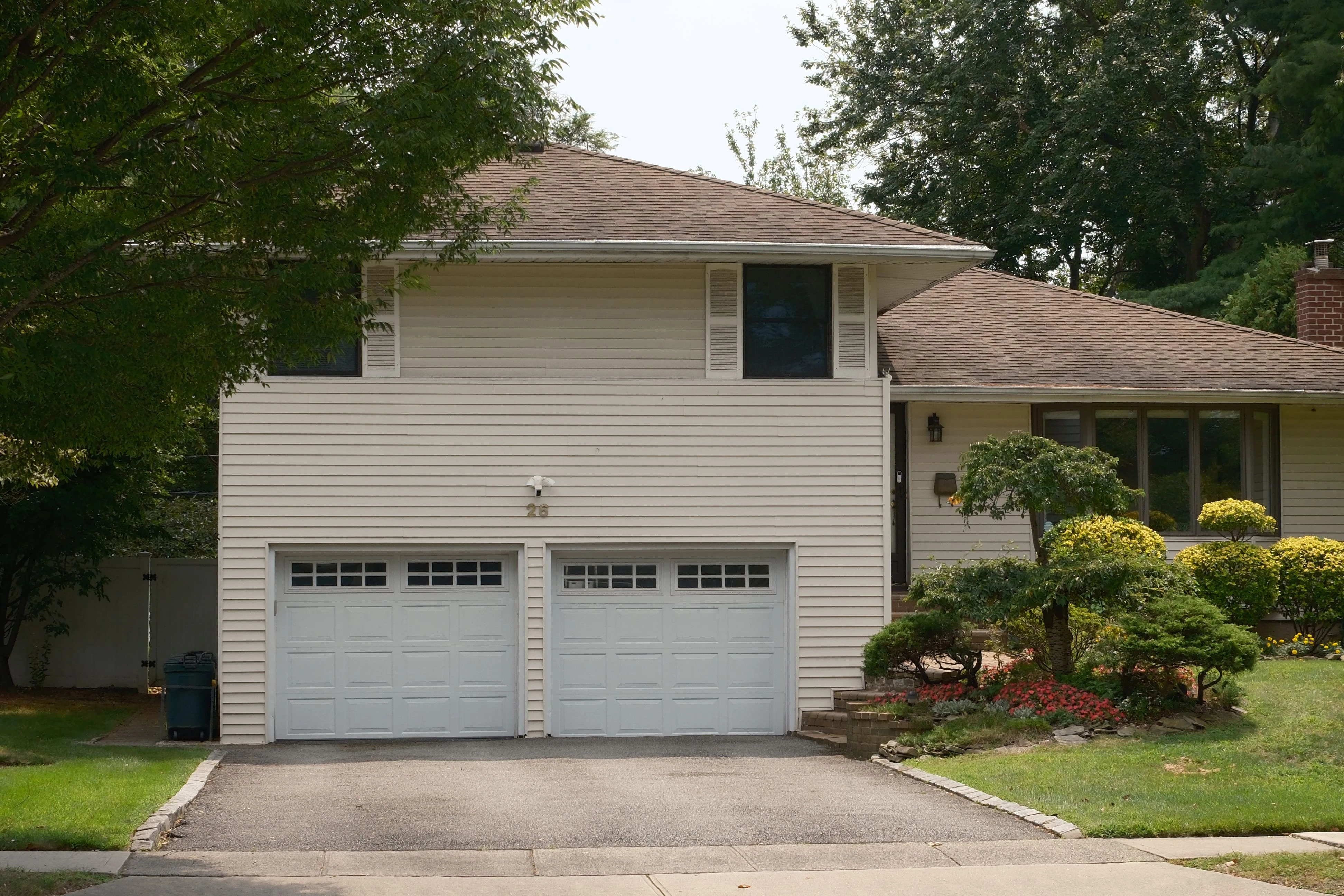
Most of the houses on this side of town went up somewhere between 1938 and 2009, with the bulk of that stock dating to the late 1960s and 1970s. That matters because a door and opener installed when a 1970s split-level was built has almost certainly been replaced at least once, maybe twice, and each replacement brings a different hardware generation into the same 16-foot header. Mixed-era hardware is where a lot of the strange noises start - a newer opener bolted to an older track, or a torsion spring swapped without checking the drum size against the rest of the assembly.
The cold band here is severe, not mild, and that changes what a noise means. In a lot of the country a squeak is just a squeak. Here, a squeak that shows up specifically when the temperature drops below freezing is often steel contracting against dry rollers or a spring losing tension as the metal cools. If the noise is worse on the first cold morning after a warm stretch, that is a temperature-cycling symptom, not a random one, and it points at lubrication and spring condition before anything else.
A door in a garage built in the 1970s and never re-insulated will also transmit sound differently than a newer build. Thinner panel material carries vibration from a worn roller straight into the house.
The area
When It Stops Being a DIY Job
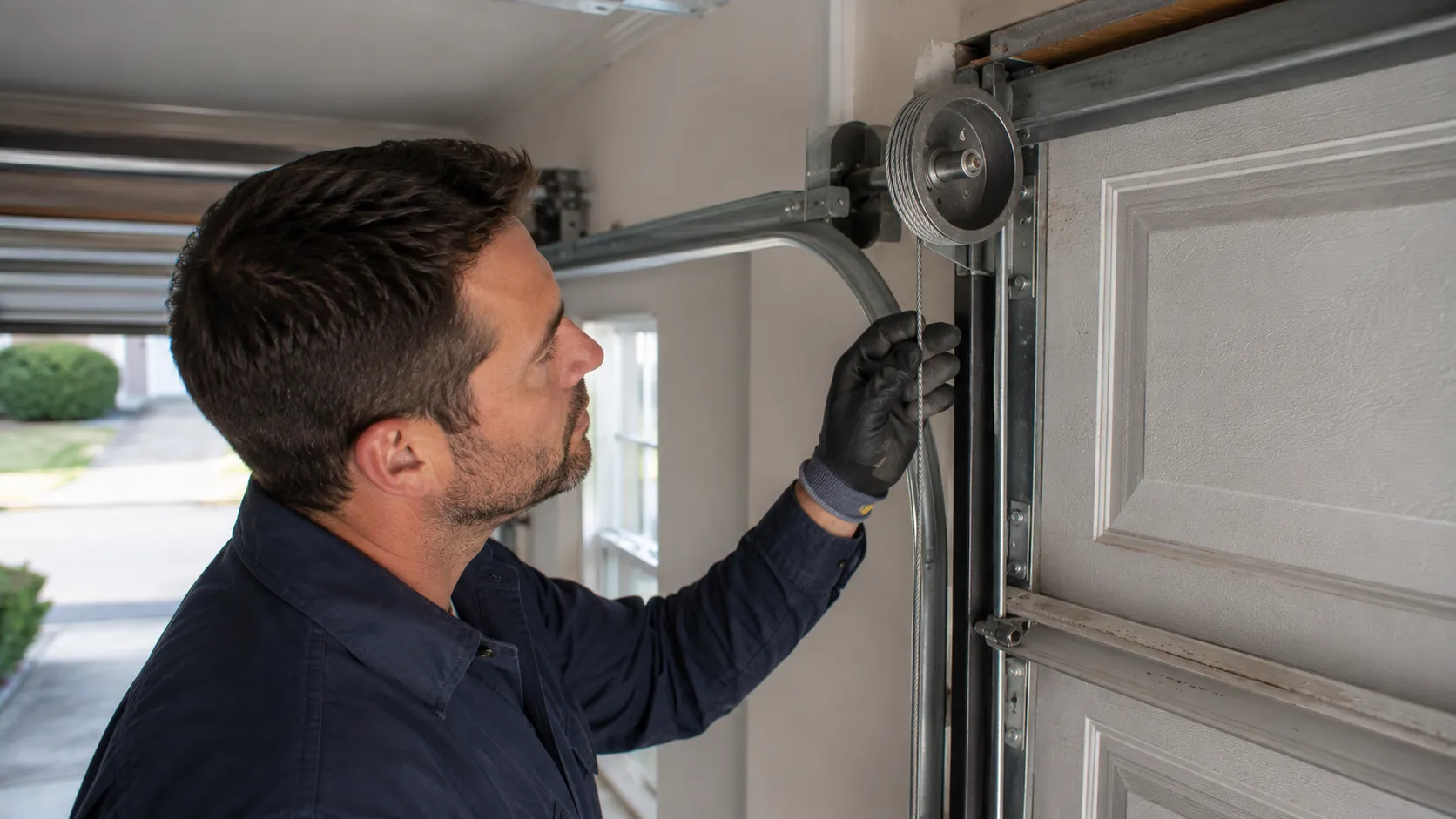
A rhythmic thump once per rotation, in sync with the door's travel, is almost always a flat spot on a roller or a bent track section - annoying, but usually safe to live with for a short while and cheap to fix once someone's looking at it directly. A grinding or screeching sound during winter cold, especially if it's gotten louder over a few weeks, is different. That's often a spring under load that's starting to fail, and a spring under tension is not something to poke at with a ladder and a can of WD-40.
Here's the honest line: if the noise changes pitch as the door moves, or if you hear a bang followed by the door sitting crooked in the track, stop opening it by remote or by hand and call. Torsion springs on a standard double door hold enough stored energy to break a hand or worse, and that risk doesn't care how handy you are. Track noise, roller noise, and opener-chain slap are reasonable to inspect yourself with the power disconnected. Spring noise, cable noise, or anything involving the door dropping unevenly is not.
What we find
Doing Nothing For Now
Not every noise needs a same-week call. A dry roller squeak that only shows up on the coldest mornings and goes away by afternoon is a maintenance item, not an emergency - lubricate the rollers and hinges with a silicone-based product rated for cold, and see if it clears up before you spend money on a service call. Given the median household income across this service area sits around $109,454, a lot of owners can afford to just fix it right the first time rather than patch it, but that doesn't mean every squeak deserves a truck roll.
Where I'd tell you to wait: cosmetic panel rattle on an older door that still opens smoothly, or opener chain slap on a unit that otherwise runs fine. Where I wouldn't wait: any noise tied to the spring system, or a noise that's gotten louder week over week. If your house falls into that late-1960s to 1970s wave that makes up so much of the area's stock, the spring and hardware are old enough that 'wait and see' has a shorter runway than it would on a door installed five years ago.
How we work
What Is Going On
Put the two local facts together - housing built anywhere from 1938 to 2009 with the heaviest concentration in the '60s and '70s, sitting in a climate zone rated severe for cold - and most of the noise complaints here sort into two buckets: hardware old enough to be tired, and hardware being asked to move in temperatures it wasn't lubricated for. A door that's quiet in July and loud in January is telling you something specific about grease viscosity and metal contraction, not something random.
We don't do warranty work on openers we didn't install, and we won't pretend a $40 roller kit fixes a spring problem just because it's the cheaper answer. If the noise is coming from a torsion spring, that's a parts-and-labor job, not a lubricant job, and I'll tell you that on the phone before I drive out.
Questions
Common questions
Why does my garage door only make noise in the winter?
Steel contracts in the cold and lubricant thickens, so rollers, hinges, and springs that run quiet in summer often complain once temperatures drop into the severe range we get here. If the noise is worse on the first cold morning after a warm spell, that's a strong sign it's a lubrication or spring-tension issue tied to temperature cycling, not a new mechanical fault.
My house is from the 1970s - does that matter for a noisy door?
It can. A lot of the housing stock in this area dates to that late-1960s and 1970s wave, and doors from that era have often been through at least one opener or spring replacement, sometimes with mismatched hardware. That mix is a common source of grinding or clunking noises that a same-era, all-original setup wouldn't have.
Is a squeaky roller ever an emergency?
No. A squeak alone, without a change in how the door moves or sits in the track, is a maintenance item you can lubricate and monitor. It becomes urgent only if the pitch changes, the door starts binding, or you hear a bang followed by the door hanging unevenly - those point at spring or cable failure.
Ready when you are
Need a garage door sorted in Arlington Heights?
Arlington Heights Garage Door Pros repairs and installs garage doors, springs and openers in Arlington Heights, IL and the surrounding area.