Cary, Arlington Heights IL
Garage Door Service for Cary Homeowners
Serving Cary from Arlington Heights, 16 miles out. We work on the mid-80s builder doors and torsion setups common on this side of the county.

Local detail
This Area's Housing
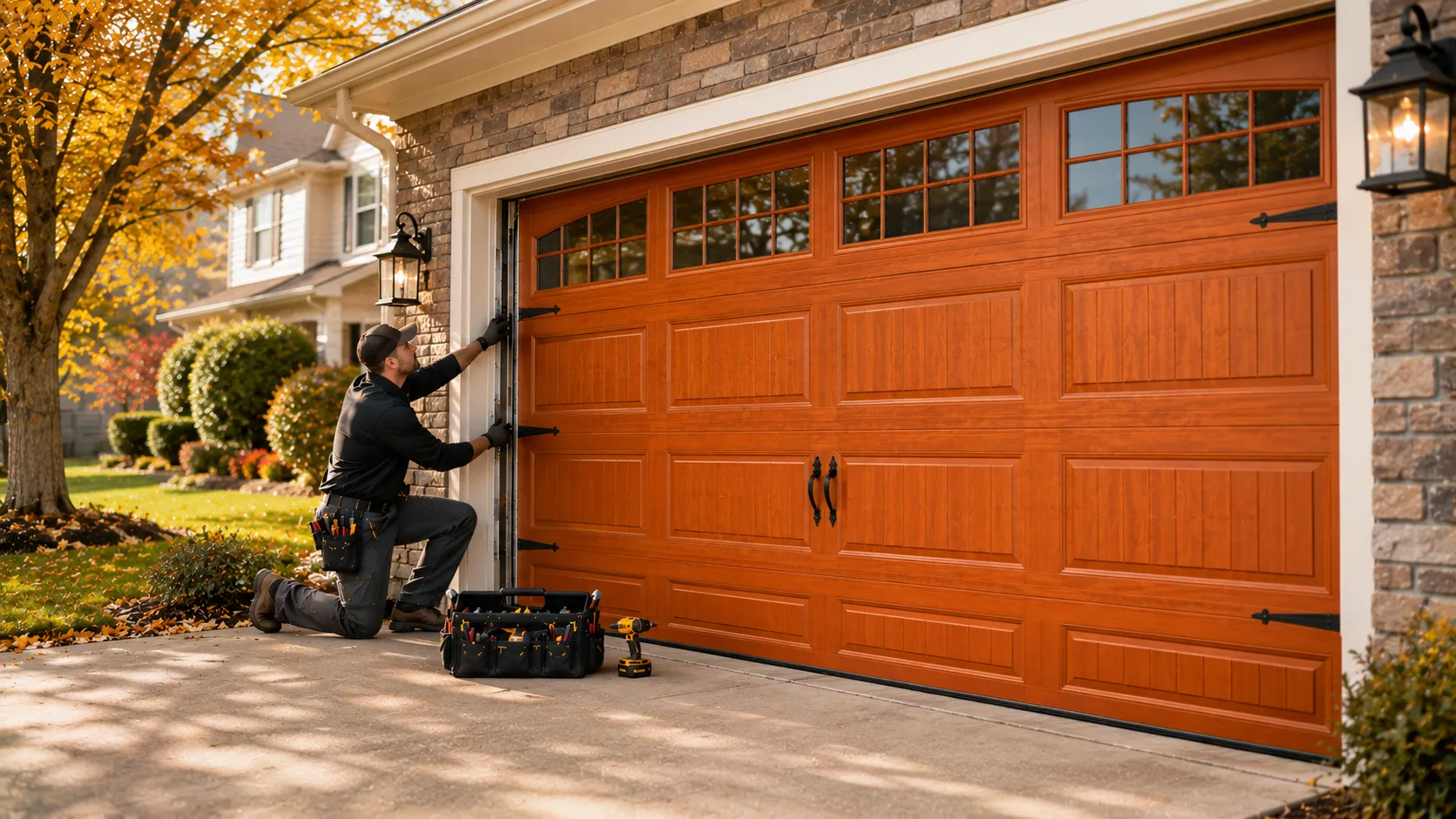
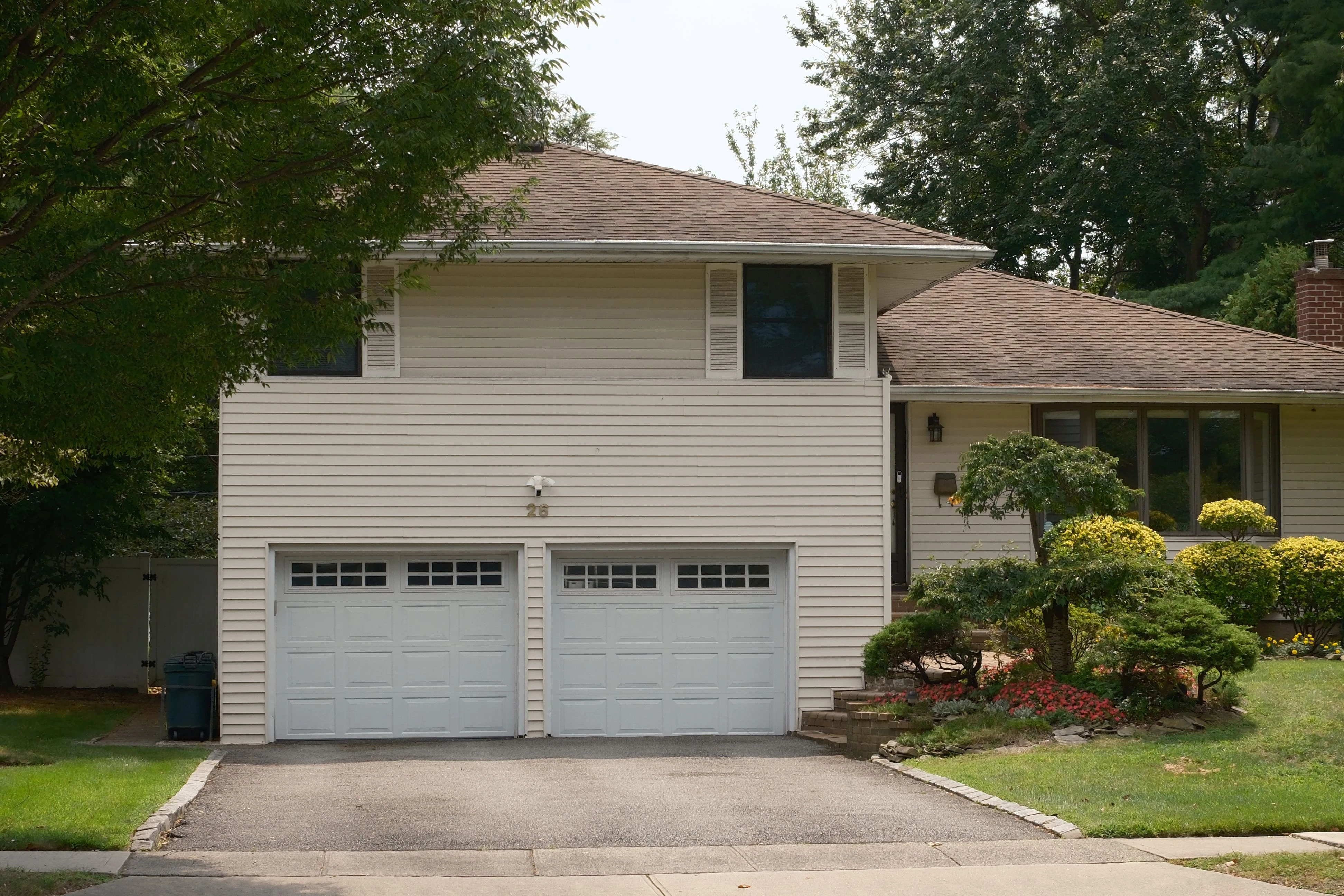
Cary's housing stock centers on a median build year of 1985, which puts it a good bit newer than a lot of the towns we cover out of Arlington Heights, where the wider service area's median sits closer to 1977. That gap matters more than it sounds like. A house built in the mid-80s almost always shipped with a steel sectional door on a standard torsion spring setup, not the older one-piece or extension-spring rigs you find in pre-1970 construction.
With about 6,342 households in the area, you've got a fairly consistent run of builder-grade doors and openers from that same era, which means a lot of them are now pushing 35-40 years old and hitting the point where springs, cables, and rollers wear out together rather than one at a time. The area sits in the same COLD severe climate band as the rest of our coverage, so cold-weather stress on hardware is a factor no matter when the house was built - it just shows up differently on 1980s track and drum assemblies than it does on older doors.
The area
Common Jobs Here
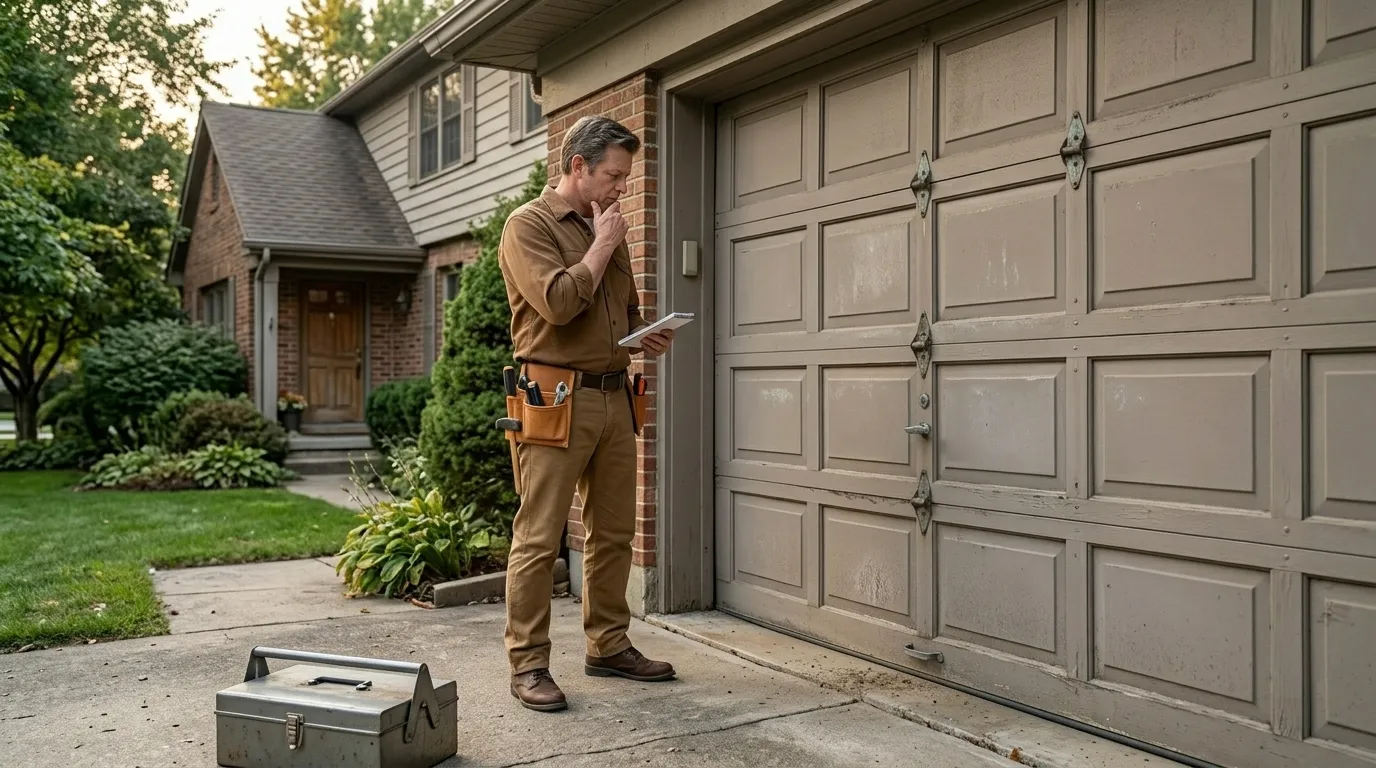
On 1980s-built doors, the jobs we see most are torsion spring replacement, worn nylon rollers swapped for steel, and opener logic boards that finally give out after decades of use. Original openers from that period were built to last but weren't built with today's safety reversal sensors, so a fair number of calls end with us recommending an opener swap rather than a repair, especially if the unit predates the 1993 photo-eye requirement. Panel damage from car contact or wind is another regular one - builder-grade steel from that era dents easier than the heavier gauge doors sold today.
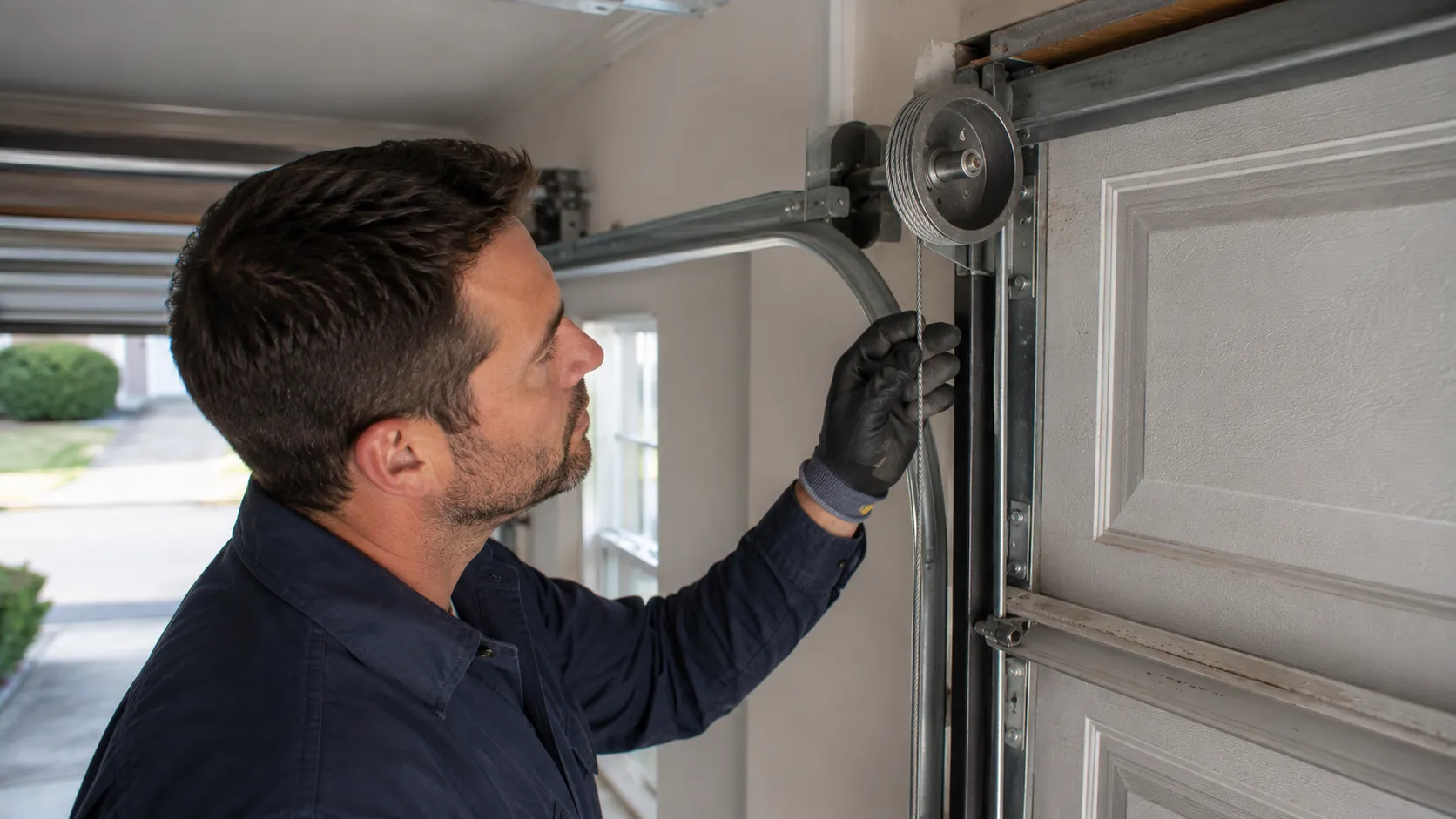
We also see cable fraying on doors that have never had the drums or cables serviced, which is common once a door passes the 30-year mark. None of this is unique to any one street in Cary, but it's a consistent pattern across houses built in that mid-80s window, and it's different from what we run into on older housing stock elsewhere in the service area.
What we find
What Neighbours Usually Call About
The calls we get from this area tend to follow the age of the house rather than the season. A door that suddenly won't open, and turns out to be a snapped torsion spring, is the single most common call. Right behind that is an opener that runs but doesn't fully close the door, usually a worn limit switch or a failing circuit board on an original unit from the 80s.
We also hear from owners whose door is noticeably louder than it used to be - that's almost always original rollers that were never replaced and have gone from nylon to metal-on-metal wear. Given the household income here, around $109,790, most people we talk to want the repair done right rather than the cheapest patch, and that tracks with what we see across the broader service area too, where median income runs close to the same figure. Since we travel in from Arlington Heights, about 16 miles out, we schedule the visit rather than showing up same-day off a local route.
How we work
What the Housing Means for Your Door
Because Cary's homes are newer on average than a lot of what we service, the fixes tend to be more predictable: standard torsion hardware, common panel sizes, and openers that are either original 1980s units or one replacement generation newer. That's good news for parts availability - we're not chasing obsolete extension-spring kits or oddball panel dimensions the way we sometimes do in the older parts of the wider area, where median build year runs closer to 1977.
The honest limitation here: if your opener is an original from the 80s and the logic board fails, we often can't get an exact replacement board, and a full opener swap ends up cheaper and more reliable than hunting for discontinued parts. With 223,811 owner-occupied houses across the full service area we cover from Arlington Heights, we've seen this pattern enough times to say it plainly rather than sell you a repair that won't hold.
 86 areas covered
Service areas
Other areas we cover near Cary
Questions
Common questions
Do you have a location in Cary?
No. We're based in Arlington Heights and travel to Cary, about 16 miles away, for scheduled jobs. We don't keep a local depot here, so we book the visit rather than offering same-day walk-ins.
Are Cary's garage doors different from older suburbs you service?
Generally yes. With a median build year around 1985, most Cary doors run standard torsion spring hardware and steel sectional panels, which is more consistent and easier to source parts for than the older one-piece and extension-spring setups common in towns with 1950s-60s housing stock.
My opener still works but won't fully close the door - what's that?
On original 1980s openers, this is usually a worn limit switch or a failing logic board rather than the door itself. We can often adjust the switch, but if the board is dying, replacing the opener is usually more reliable than repairing a 35-plus-year-old unit.
Is a broken spring an emergency or can it wait?
A snapped torsion spring means the door is unsafe to lift by hand or by opener - the cables can whip and the door can drop. It's not something to force open. We treat it as a priority repair, but exact scheduling depends on when we can route a truck out from Arlington Heights.
Ready when you are
Need a garage door sorted in Arlington Heights?
Arlington Heights Garage Door Pros repairs and installs garage doors, springs and openers in Arlington Heights, IL and the surrounding area.