
Prospect Heights, Arlington Heights IL
Garage Door Service for Prospect Heights Homes
Serving Prospect Heights from Arlington Heights, 3 miles away. Torsion springs, openers, and panel repairs matched to this area's 1976-median housing stock.
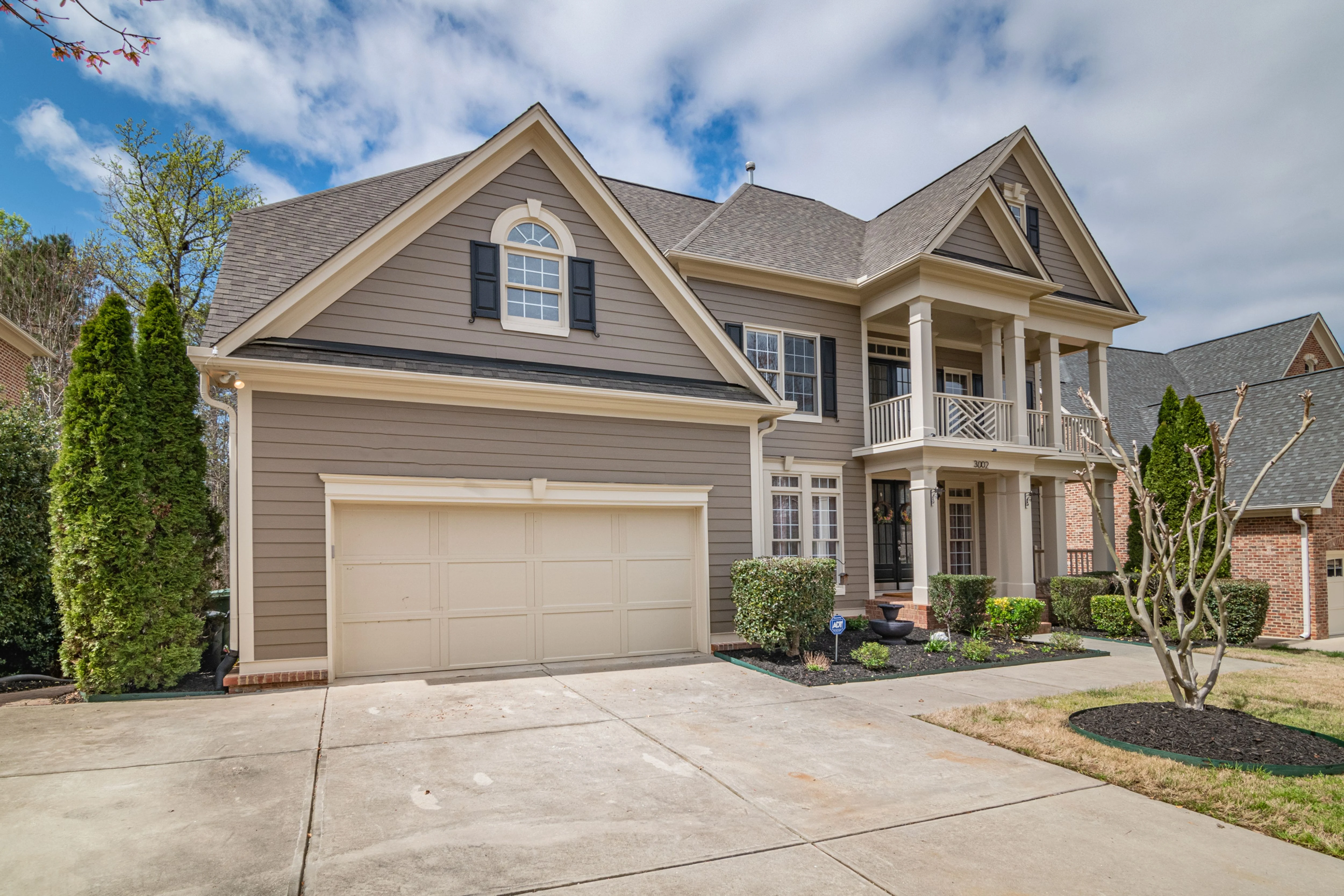
Local detail
This Area's Housing
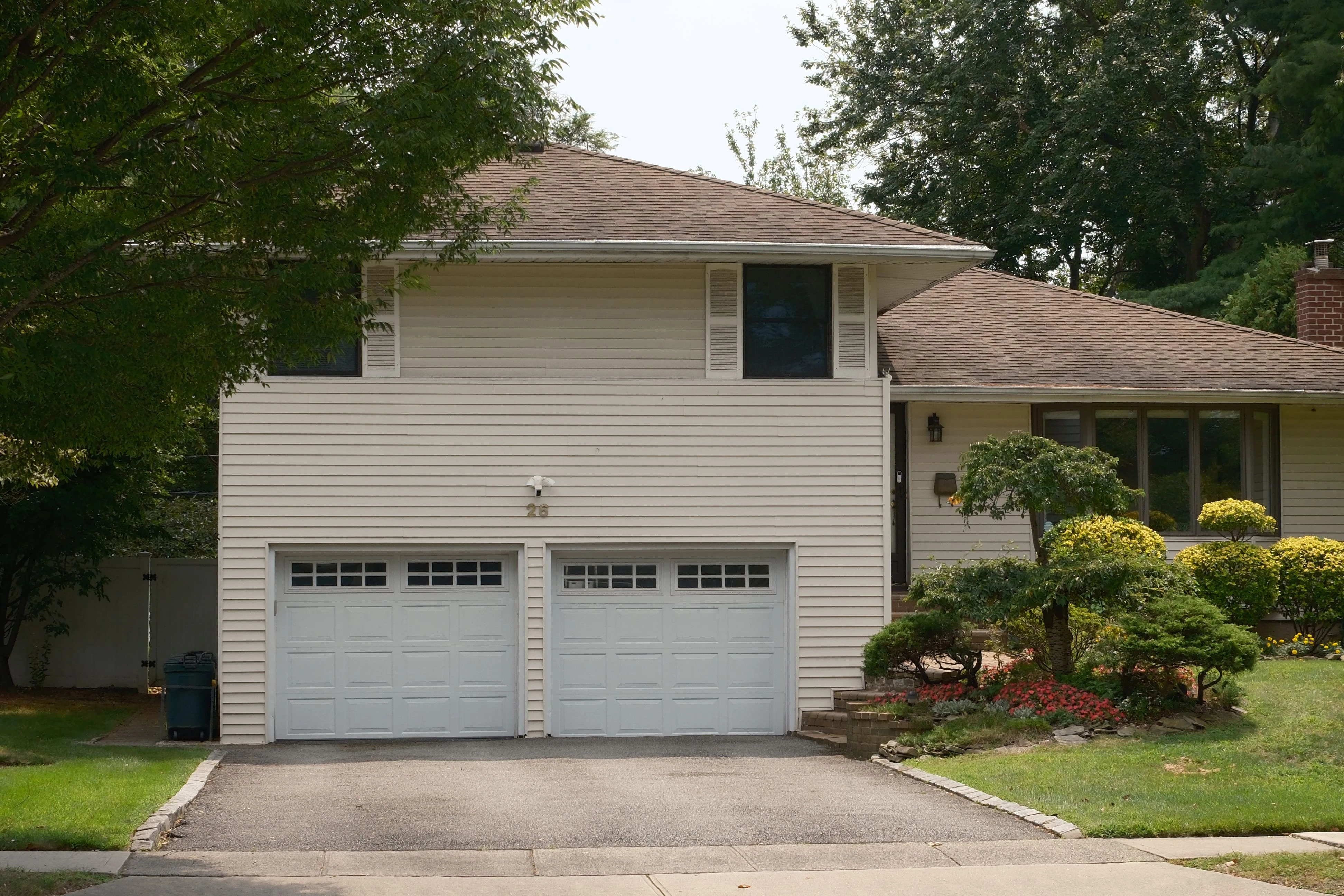
Prospect Heights sits about 3 miles from our Arlington Heights shop, and the housing stock here centers on 1976, right in the middle of the broader 1938-2009 range we see across the service area. That median year matters more than people think. A house built in the mid-1970s almost always came with a steel sectional door on an extension spring system, not the torsion setups that got standard later on.
Across the wider area we cover, 86 named communities share this same 1960s-70s base, and Prospect Heights fits that pattern closely rather than sitting at either edge of it. With 6,249 households in this specific area, there's a real, sizable cluster of these same-era doors aging out at roughly the same time, which is why the same handful of failures keeps showing up on our call sheet from this part of town. Median household income here runs $91,599, a bit under the wider service area's $109,454, which is worth mentioning because it shapes the repair-versus-replace conversation - more owners here are choosing to fix a working door instead of swapping it out.
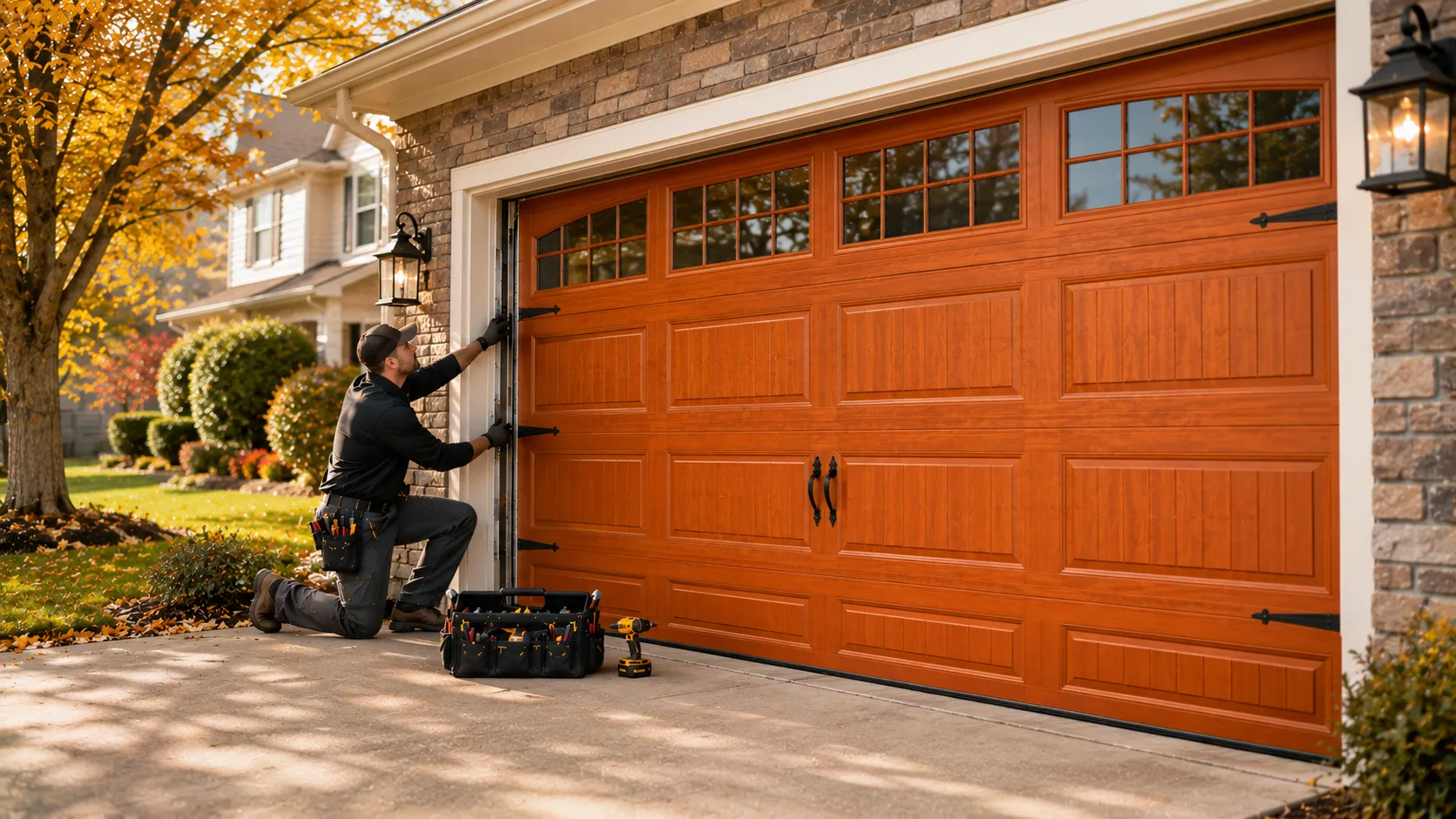
The area
Common Jobs Here
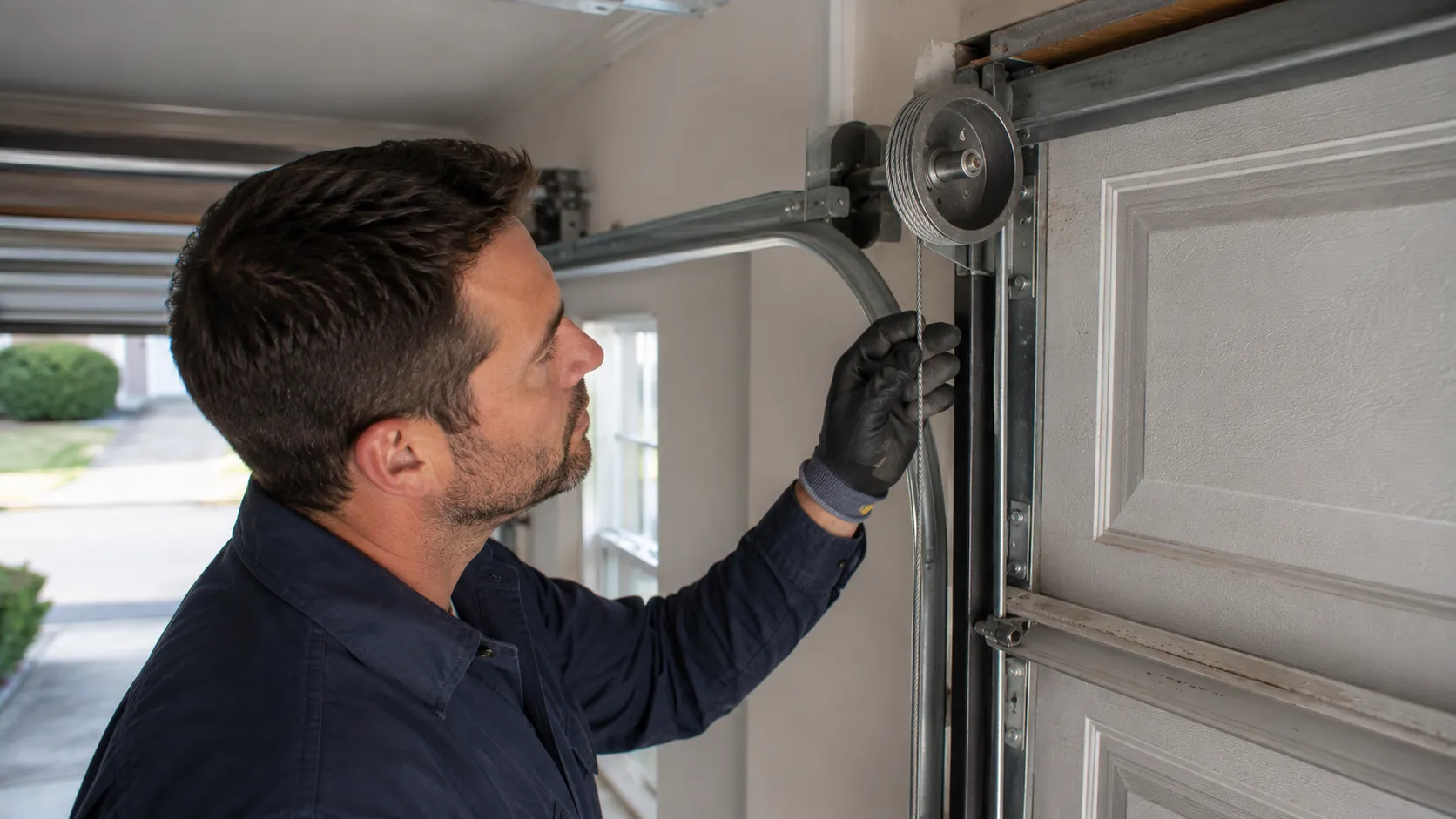
On 1970s-built doors, we're mostly dealing with worn extension springs, not torsion springs - a different repair with different hardware and a different price point. The rollers on these doors are original-style steel on steel track, which means noise complaints are common even when the door itself is fine mechanically. We also see a lot of openers that are on their second or third motor since the house was built, chain-drive units mounted on wood jambs that have shifted slightly over 40-plus years.
Track realignment comes up often for that reason - not because the door is bad, but because the framing around it has settled. Panel damage is usually cosmetic dents from cars or basketballs rather than structural failure, since steel sectional doors from this era hold up well if the spring system behind them is doing its job.
What we find
What Neighbours Usually Call About
The call we get most from this area is a door that won't open, and nine times out of ten it's a stretched or snapped extension spring rather than a broken cable. Second most common: an opener that runs but the door doesn't move, usually a stripped gear inside a chain-drive unit that's been asked to do too much for too long. We also hear from people whose door is loud enough to wake the house - almost always steel rollers on an original track that's never been lubricated.
Given the cold winters this area gets, we also see spring failure spike hard in January and February, since cold steel loses flexibility and the extra strain finds the weakest link first. None of this is unique to any one street - it's just what a 1976-vintage door does after five decades of Chicago-area winters.
How we work
What the Housing Means for Your Door
Because Prospect Heights homes cluster around 1976, most original doors and openers here are well past any reasonable service life, even if they still open and close. That's not a reason to panic-replace anything - if the spring is sound and the track is straight, a repair is usually the right call, and that's what we'll tell you if it's true. But if you're replacing an opener from this era, expect the mounting hardware and rail length to need adjustment, since modern openers aren't built to bolt straight onto 1970s brackets.
One honest limit: we don't stock every obsolete roller or track profile from this period, so on rare jobs we may need to order a part rather than finish same-visit. We're not based in Prospect Heights - we run out of Arlington Heights, about 3 miles off - so we schedule the trip, we don't drop by unannounced.
 86 areas covered
Service areas
Other areas we cover near Prospect Heights
Questions
Common questions
Why does my opener keep stripping gears?
On houses built around 1976, openers are often original or one replacement in, and chain-drive units from that era use plastic gears sized for lighter, smaller doors. If yours has been running rough for a while, the gear may already be partially stripped. Once it strips, the door won't move even though the motor runs, and the fix is a new opener rather than a gear swap.
Do you have a depot in Prospect Heights?
No, we run out of Arlington Heights, about 3 miles away, and we drive out for scheduled jobs. We don't keep a local yard or storefront in Prospect Heights, so all appointments are set in advance rather than walk-in.
Is it worth replacing an extension spring system with torsion?
Sometimes, but not always. If your extension springs are original to a 1976-era house and still holding tension evenly, a straight spring replacement is usually cheaper and faster than converting the whole system. Torsion conversion makes more sense when we're already replacing the door or track.
Why is my garage door loud after 40-plus years?
Steel rollers on steel track, common on doors from this build era, get noisier as the track wears and loses lubrication. It's rarely a safety issue on its own, but it's often a sign the track needs realignment or the rollers need replacing before something else in the run gets stressed.
Ready when you are
Need a garage door sorted in Arlington Heights?
Arlington Heights Garage Door Pros repairs and installs garage doors, springs and openers in Arlington Heights, IL and the surrounding area.