
Berkeley, Arlington Heights IL
Garage Doors for Berkeley's 1950s Ranch Homes
Garage door repair, spring, and opener service for Berkeley, IL homes built mostly in the 1950s and 60s. Arlington Heights Garage Door Pros serves this area.
Local detail
This Area's Housing
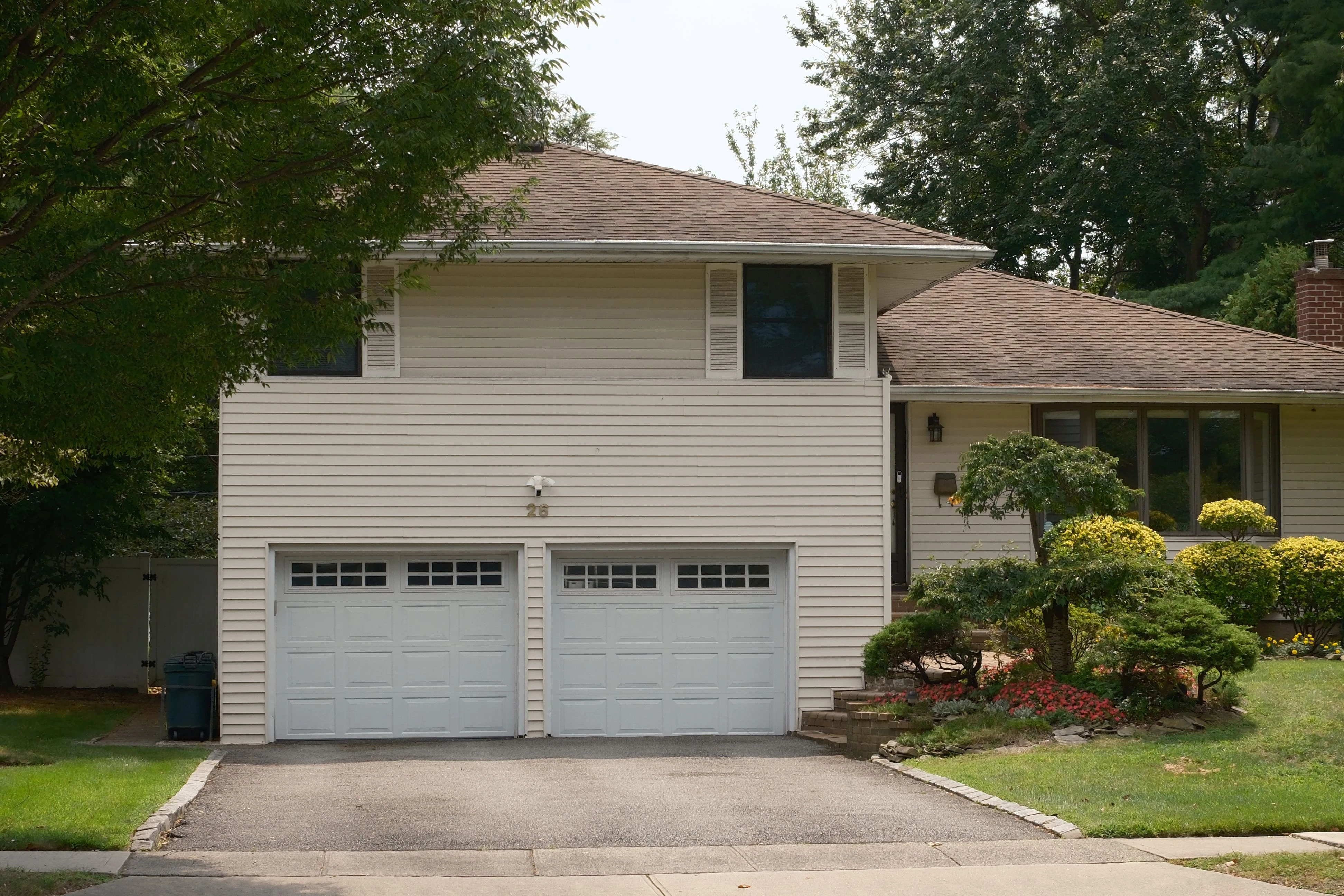
Berkeley's houses cluster around a median build year of 1955, which puts it earlier than a lot of the wider Arlington Heights service area, where the mix runs from 1938 up through 2009 with a median closer to 1977. That gap matters because a door built for a 1955 ranch garage is a different animal than one built for a 1985 colonial. This is a small area by household count - about 1,997 households - against roughly 454,992 across the full service territory, so the housing stock here reads as a tighter, more consistent pocket of postwar construction rather than a patchwork of decades.
Median household income here runs around $83,224, below the $109,454 median for the broader service area, which tends to show up in how long people stretch a repair before replacing a door outright. None of this is unusual for towns that filled in fast after the war - it just means the garages themselves, and the openers and track bolted into them, skew older than what you'd find in a newer subdivision a few miles off.
The area
Common Jobs Here
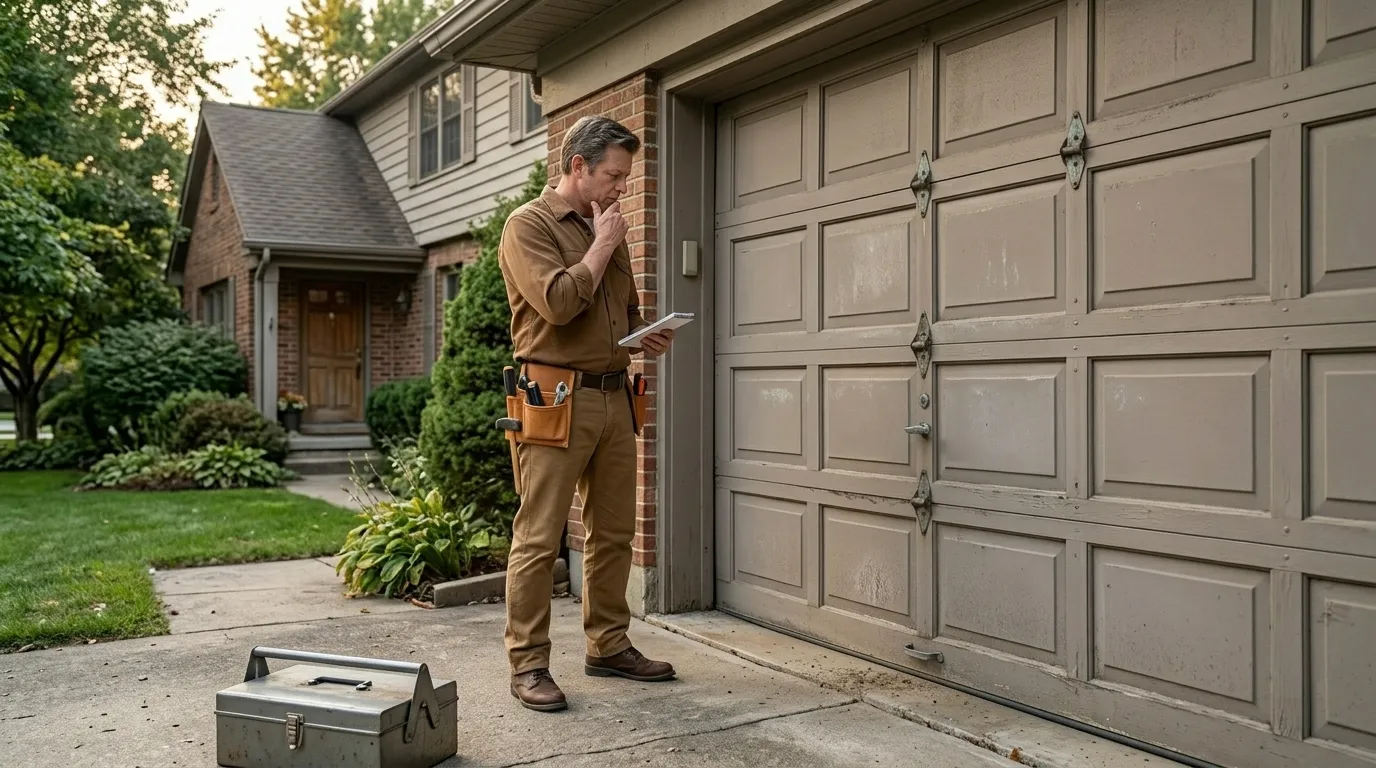
On 1950s-era garages the calls we get tend to be about single steel doors on narrow openings, often still riding on the original style of track even if the door itself has been swapped once already. Torsion springs on these older single-car setups wear out the same way they do everywhere, but the hardware mounting them is frequently the older side-mount style rather than the center-mount torsion tube you'd find on a newer double door - so a tech has to know which one they're looking at before quoting the job. We also see a fair number of openers that were added decades after the house was built, bolted onto framing that wasn't engineered for it, which shows up as rattling rail or a header bracket working loose.
Weatherstripping on doors this age is usually long gone or brittle, and the bottom seal rarely matches the track width anymore. It's straightforward work, but it's not the same catalog of parts you'd pull for a house built in the 1990s.
What we find
What Neighbours Usually Call About
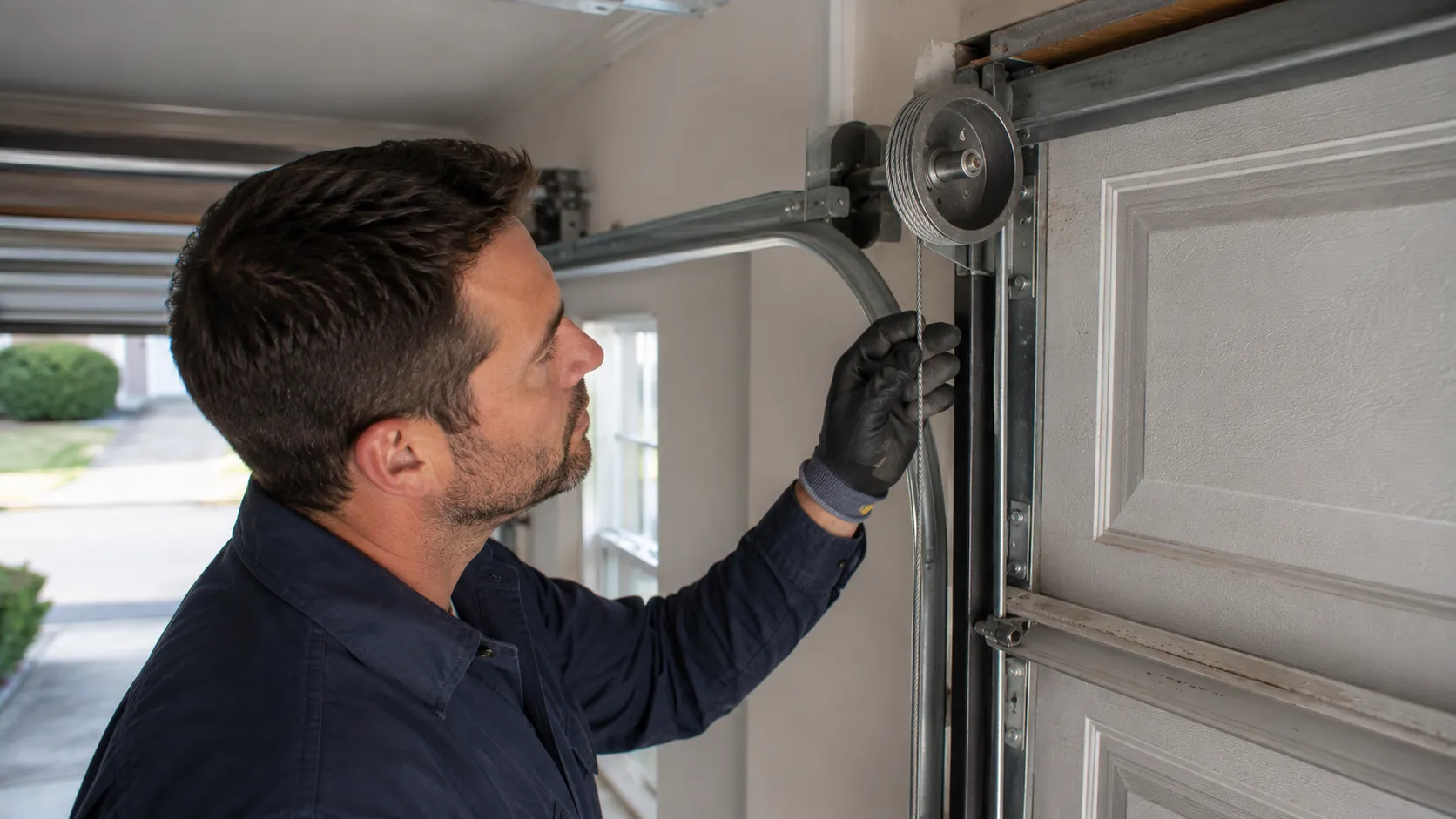
Cold is the recurring theme. This area sits in a climate band the federal data marks as severe cold, and a torsion spring that's already fatigued from age will often pick the coldest morning of the year to let go - steel contracts and gets brittle, and a spring on its last cycle doesn't get a warning shot. We hear about openers that grind and stall in winter more than in July, usually because old grease in the gearbox has thickened up.
Cables fraying near the bottom bracket is another one, especially on doors that never got insulated and see more temperature swing on the inside face of the panel than a newer insulated door would. None of this is exotic - it's what happens to 1950s-grade doors after decades of Midwest winters, and it's why the calls cluster the way they do.
How we work
What the Housing Means for Your Door
A door sized and hung for a 1955 single-car opening won't take a stock replacement panel off the shelf the way a 2005 double door will - openings from that era run narrower, and some of the track hardware and drum sizes aren't things every supplier carries. That means a repair on an original-era door sometimes takes a day or two longer to source the right part, and we'll tell you that up front rather than promise a same-day fix we can't back up. On the flip side, once you're working with a newer replacement door in one of these openings, it behaves like any modern door - the age of the house stops mattering once the hardware is current.
Given the income profile here, we generally lean toward repairing a spring, cable, or opener board before recommending a full door replacement, unless the panel itself is rusted through or the track is bent beyond a clean pull. If a door truly isn't worth fixing, we'll say so instead of billing for a patch that won't hold.
 86 areas covered
Service areas
Other areas we cover near Berkeley
Questions
Common questions
Do you have a shop in Berkeley?
No. Arlington Heights Garage Door Pros is based in Arlington Heights and travels about 15 miles to reach Berkeley. We don't keep a local depot here, so we schedule the trip as part of the job rather than offering a walk-in counter.
Why did my spring snap in winter with no warning?
This area sits in a severe cold climate band, and a torsion spring near the end of its cycle life is more likely to fail on a hard cold morning than in mild weather. Steel gets less forgiving in the cold, and a spring that's already fatigued won't give you notice before it goes.
Can you match parts for my older door?
Often, yes, but doors from the 1950s building era sometimes use track and drum sizes that aren't on every supplier's shelf. If your hardware falls into that category, sourcing the right part can add a day or two to the job, and we'll tell you that before we start.
Is it cheaper to repair or replace an old door?
Depends on the door. If the panel and track are sound, repairing a spring, cable, or opener almost always costs less than replacement. If the steel is rusted through or the track is badly bent, we'll tell you replacement makes more sense rather than billing you for a repair that won't last.
Ready when you are
Need a garage door sorted in Arlington Heights?
Arlington Heights Garage Door Pros repairs and installs garage doors, springs and openers in Arlington Heights, IL and the surrounding area.