
Guide
Why Arlington Heights Garage Doors Let the Cold In
In Arlington Heights, homes built between 1938 and 2009 face cold-climate draughts through worn garage door weather seals; here's what actually helps.
Local detail
How Local Conditions Play In
Arlington Heights sits in a cold-severe climate band, and that matters more for a garage door than most homeowners think. The bottom seal and the side/top weatherstripping are the only barrier between your garage and outside air, and vinyl seals degrade faster under repeated freeze-thaw cycles than they do in milder places. Most of the housing stock here went up between 1938 and 2009, with the bulk from the 1960s and 70s, which means a lot of doors are sitting on original or first-replacement seal channels that were never built for this many decades of Illinois winters.
On a door installed when the house was new, thirty or forty years of seasonal contraction and expansion has usually left the bottom seal flattened or cracked, and the side seals pulled loose from the track at the corners - exactly where cold air finds its way in. If your garage backs onto a finished room, or the door shares a wall with living space, that draught isn't just a garage problem, it's a heating bill problem. The fix is often simpler than people expect, but it does depend on which seal has failed and how the track has held up over that many winters.
The area
When It Stops Being a DIY Job
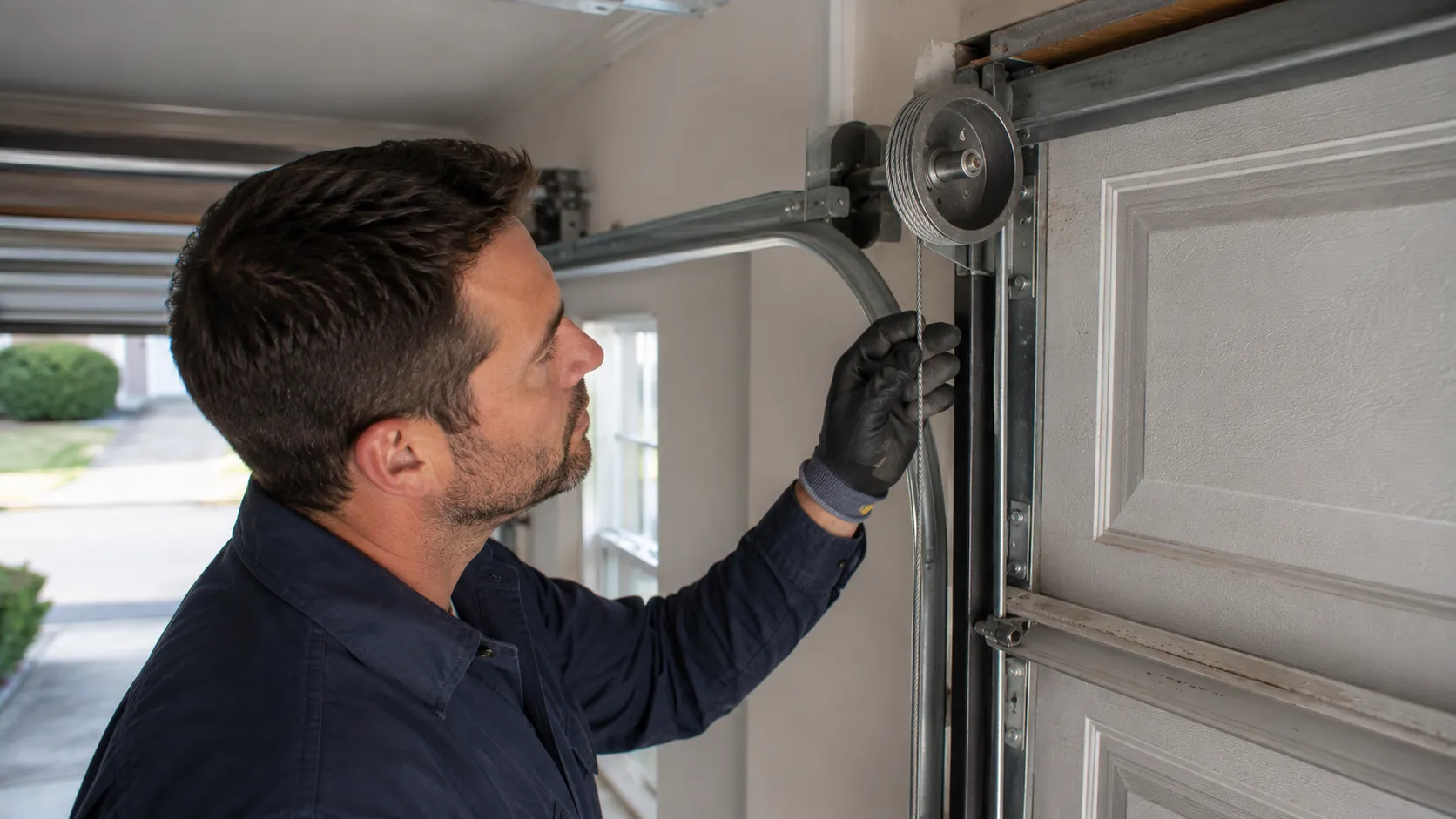
Swapping a bottom seal is a job most owners can do with a screwdriver and an hour on a Saturday. Where it stops being DIY is when the track itself has shifted - and in a lot of the 1960s and 70s-built houses around here, slab settling over that many decades has knocked the track slightly out of plumb, so a new seal still won't close the gap because the door isn't meeting the floor square anymore. That's a track adjustment, not a seal swap, and forcing a thicker seal into a misaligned gap just tears the new one faster.
Another sign it's past DIY: if the weatherstrip channel along the door panel itself is cracked or rotted rather than just the rubber insert, the aluminum retainer has to come off, and on an older door that retainer can be brittle enough to snap. We'll be honest about this one limitation: we don't carry every seal profile for every door age on the truck, so on some of the older 1970s-era doors we may need to order the exact channel size rather than fix it same-visit. It's a short wait, not a long one, but it's real.
What we find
Doing Nothing For Now
Leaving a worn seal alone through an Arlington Heights winter doesn't just cost you draught and a colder garage. In a cold-severe climate, moisture that gets past a failed bottom seal can freeze to the slab overnight, and repeated freezing right at the base of the door track accelerates rust on the track hardware faster than dry cold air alone would. On houses built before the 1970s especially, where the original track hardware is often still in place, that's hardware that's already had four or five decades of wear before you add ice cycling into the mix.
Doing nothing doesn't break the door tomorrow. It just means the small, cheap fix now - a strip of weatherstripping - turns into the more expensive fix later, once rust has set into the track or the panel bottom has swelled from repeated moisture contact. If your energy bill has crept up over a winter and you can see daylight under the door on a sunny afternoon, that's not a season to put off.
How we work
What Is Going On
The mechanism is straightforward once you see it. Vinyl and rubber seals lose flexibility as they age, and cold makes that loss worse - a seal that was pliable in July can be stiff and cracked by January, especially after a decade or more of exposure. Given that the median house here dates to 1977, a lot of doors are on their second or third seal replacement already, and each replacement is only as good as the channel and track it's seated in.
What's actually going on in most draught complaints isn't a door that's fundamentally worn out - it's a seal that's outlived its flexibility, sitting on a track that has shifted slightly over the building's lifetime, in a climate that punishes any gap that opens up. Once you know it's seal-plus-alignment rather than the whole door, the fix is usually contained and doesn't require touching the opener, the springs, or the panels themselves.
Questions
Common questions
Why is my garage door letting in cold air even though it looks fine?
Vinyl bottom seals stiffen and crack with age, and in a cold-severe climate like this one that happens faster than the seal looks like it should fail. A seal can appear intact while it's lost the flexibility to actually seat against the floor, especially on an older 1960s or 70s door.
Can I replace weatherstripping myself?
Often yes - the bottom seal is a straightforward swap with basic tools. It gets harder if the track has shifted with the house's age, since a new seal won't close a gap caused by misalignment. That part usually needs a track check first.
How do I know if it's the seal or the track?
If you can see daylight evenly along the bottom edge, it's usually the seal. If the gap is bigger on one side than the other, the track has likely shifted, which is common in houses that have settled over 40-plus years.
Ready when you are
Need a garage door sorted in Arlington Heights?
Arlington Heights Garage Door Pros repairs and installs garage doors, springs and openers in Arlington Heights, IL and the surrounding area.