Prospect Heights, Arlington Heights

Garage Door Installation, Prospect Heights, IL

Prospect Heights homes mostly date to 1976, meaning original openings sized for doors long gone. We install correctly sized doors, from Arlington Heights.

Garage Door Installation, Prospect Heights, IL in Arlington Heights
On-time arrivalInsured & guaranteedPrice before we startCommunity trusted

DIY or pro

Can You Do This Yourself

A full door swap looks simple from the driveway: unbolt the old panels, hang new ones, done. What actually trips up a homeowner here isn't the panels, it's the opening.

Non-standard opening measurement

Prospect Heights homes were mostly built around 1976, and a lot of those openings were framed for door widths and track hardware that manufacturers stopped making decades ago. Get the header height or the jamb width wrong by even half an inch and the new door binds on the track, or the opener never sets its travel limits correctly.

Panel weight and installation

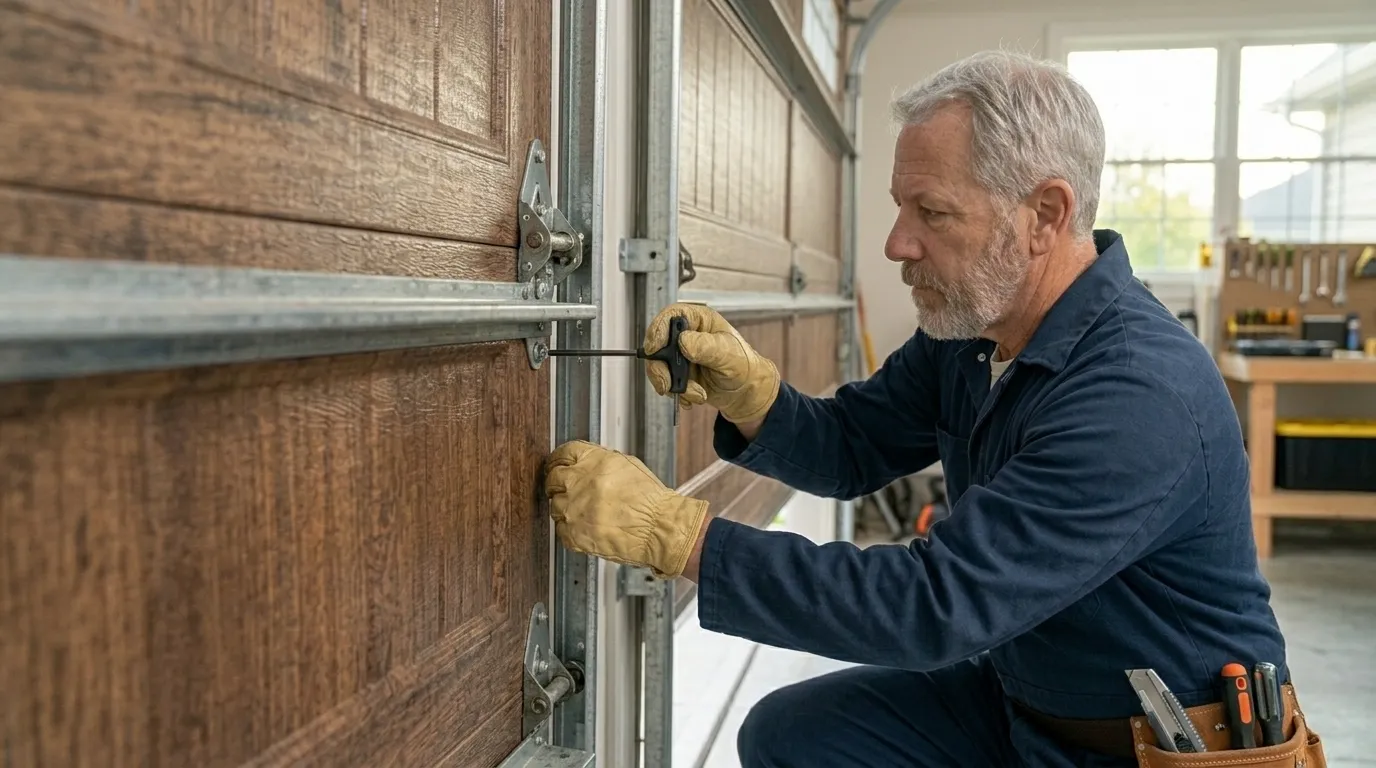
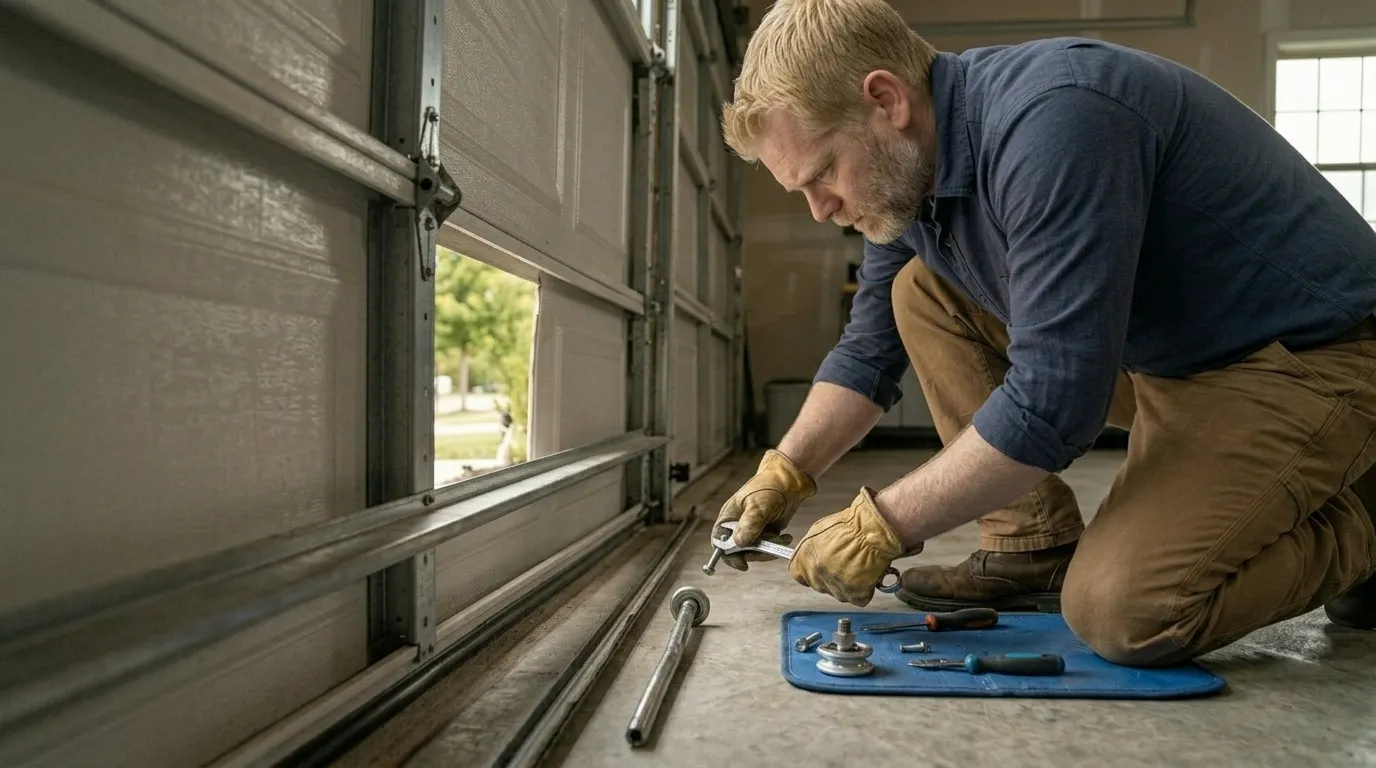
Measuring an opening that's off-square by an inch, which is common in a house this age, isn't a job for a tape measure and a Saturday afternoon. Beyond the measuring, a single door section can run over 100 pounds, and torsion spring tension on a wound shaft can put someone in the hospital if it lets go while you're working on it alone.

Spring wind safety

We'll say plainly what we won't do: we don't talk anyone through a DIY spring wind over the phone. That part of the job, we do in person or not at all. What you can reasonably do yourself: clear the garage, pull the old opener remote off the visor, and have a rough idea of what you want the new door to look like before we show up to measure.

Booking

How to Book

We work out of Arlington Heights and cover Prospect Heights, about three miles away, so there's no separate branch or drop-in counter here - you call, we come out.

  1. Booking and measure-quote

    Booking starts with a phone call or a request through the site; we ask what you've got now (single door, double, attached garage, detached) and get a rough sense of the opening before we ever load the truck.

  2. Size-specific installation

    Because the job depends on measuring the actual opening, not a catalog size, the first visit is usually a measure-and-quote trip rather than a same-day install. That's true whether the house is a ranch from the 1970s or something newer.

  3. Known door pre-sizing

    Once we've got real numbers off your jambs and header, we can tell you which doors will fit without shimming or re-framing, and give you a price for that specific door. If you already know the brand and size you want, say so up front - it saves a visit. If you don't, that's fine too; most people calling about a new install don't.

The repair

What the Fix Involves

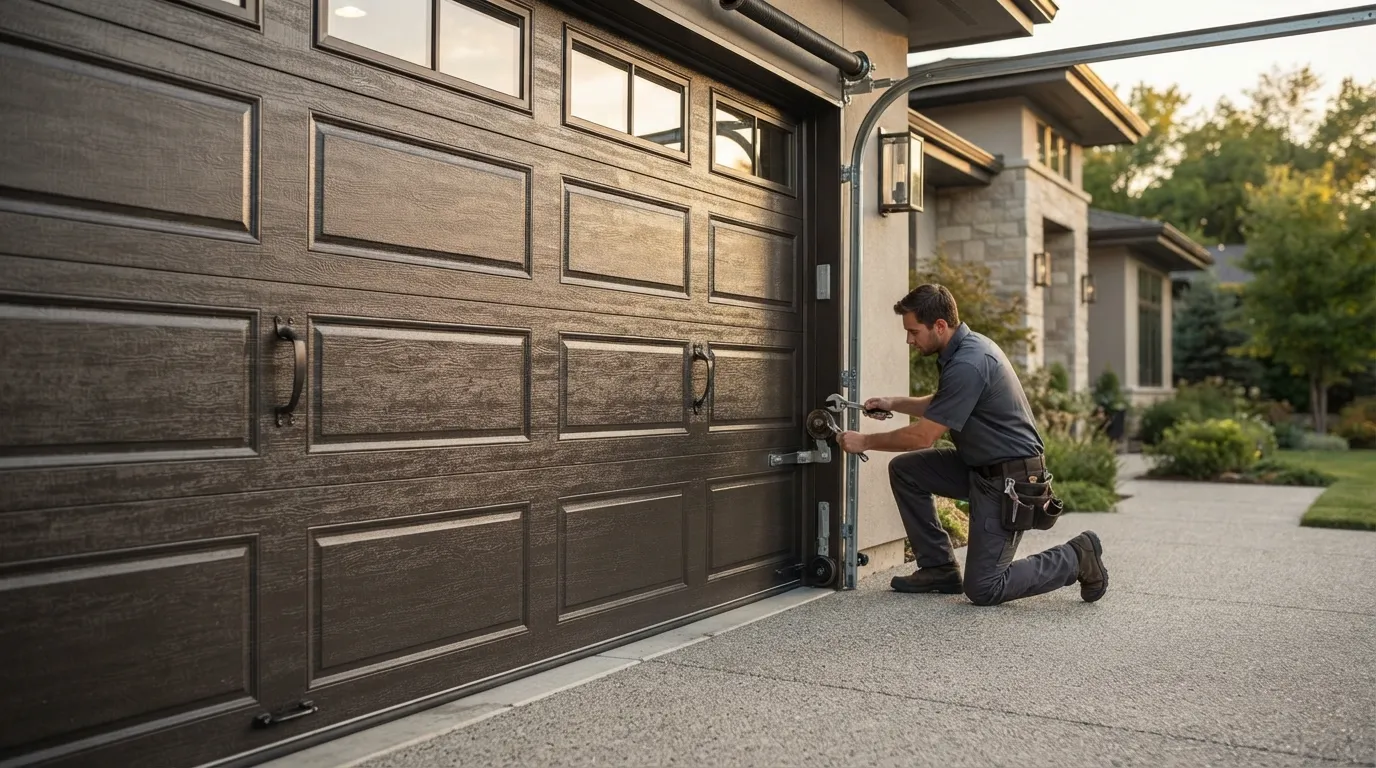
A new installation starts with tearing out the old door, track, and usually the old springs, since new doors are almost never balanced correctly on old spring tension.

Opening square and plumb

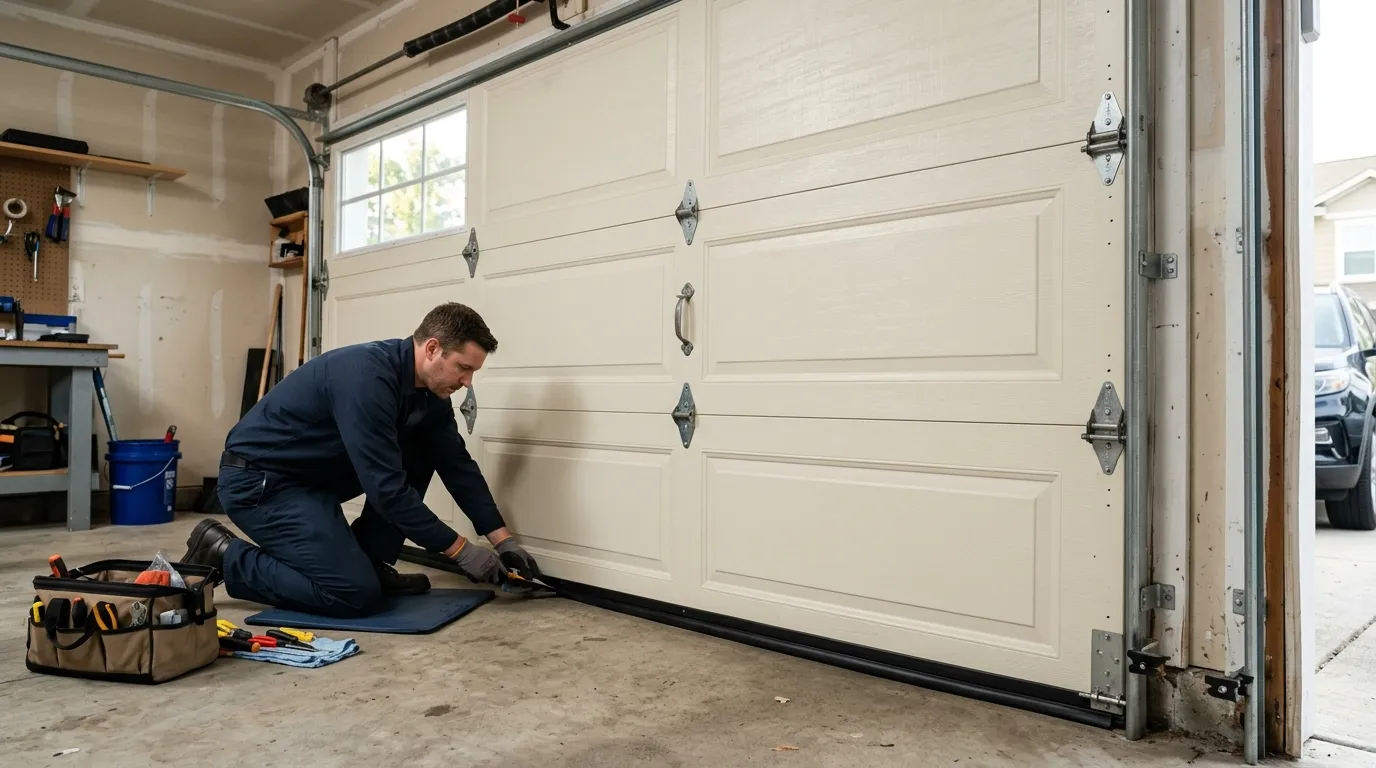
We check the opening for square and plumb, because houses built in the 1970s in this area have settled enough over fifty years that a header can be a half-inch out from one side to the other. From there it's new track, new rollers, a new torsion spring set sized to the actual door weight, and the door itself - insulated or not, depending on what you pick and what the garage is used for.

Insulated door preference

Given the cold winters this area sits in, most owners doing a full replacement now choose an insulated door over the single-layer steel that was standard when these houses went up; it's a real difference in how much cold transfers into an attached garage.

Opener and safety setup

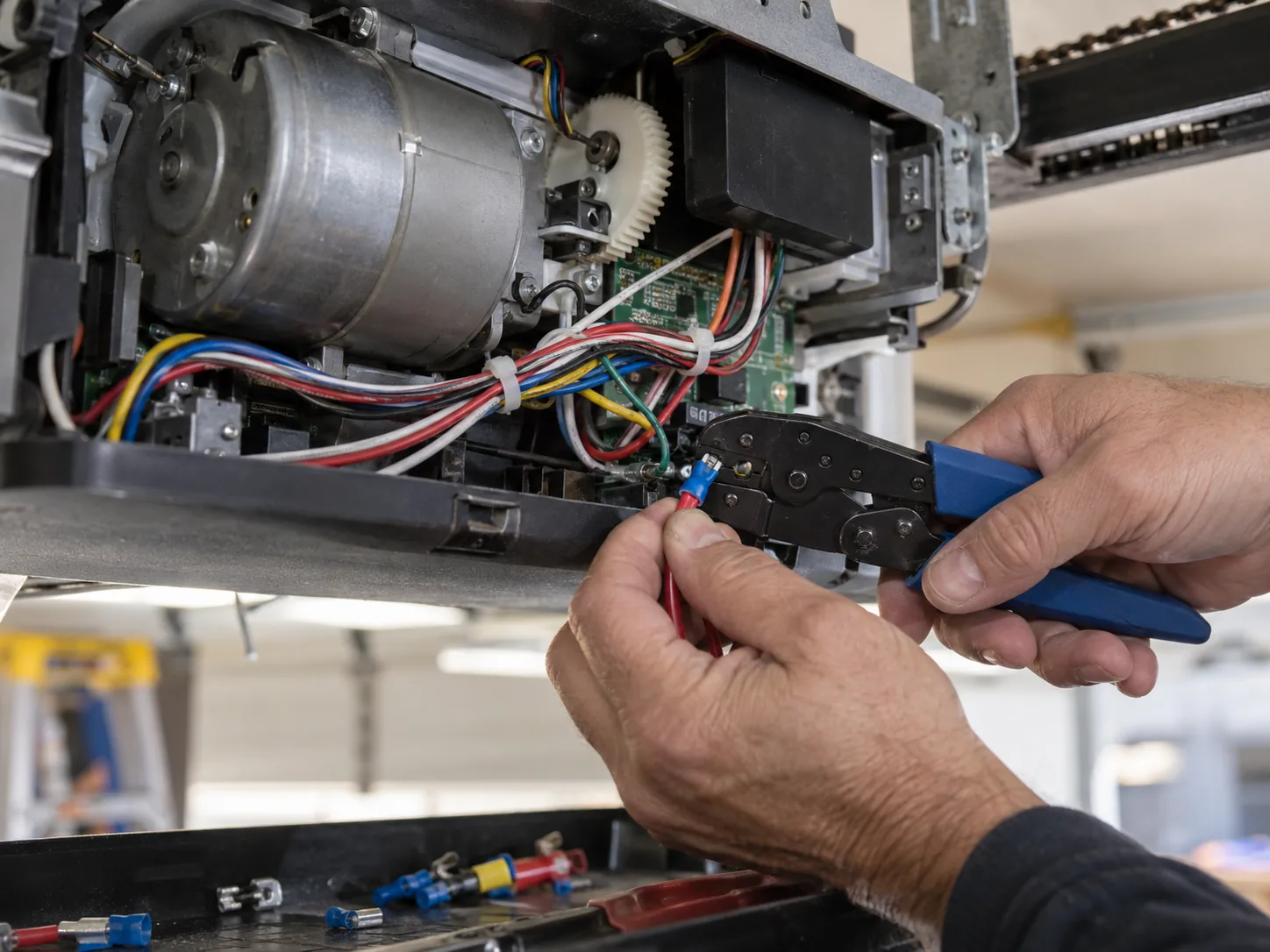
Last step is the opener: we mount it, set travel limits and force settings for the new door's actual weight, and test the safety reverse. We don't leave a job with the safety sensors unaligned or the auto-reverse untested - that's not optional, even on a straightforward swap.

Warning signs

How It Shows Up

Most calls for a full replacement here don't start as replacement calls. They start as a repair call on a door that's original or close to it - one heavy, single-layer steel panel that's been resprung once or twice already, riding on track that's been bent back into shape more than once.

Panel bottom rust

The seams along the bottom panel show rust first, especially where road salt splashes up in winter. Another pattern: the opener is straining, cycling slower than it used to, or reversing on its own partway up.

Opener strain and cycling

That's often the door, not the opener - a door built decades ago wasn't engineered for the opener hardware that's since become standard, so the motor is fighting a mismatch every time it runs.

Insulation and heat loss

A third sign is simpler: the door still works, but the garage is noticeably colder than the rest of the house, and frost builds up on the inside of the panel in winter. On a house this age, that's usually because the original door has no insulation at all, not a broken seal you can fix with weatherstripping.

Watch-outs

The Complications

The biggest complication on this job is opening size. Doors and track hardware sold new today are built around a narrower set of standard widths and heights than what was common when these houses were framed. If your opening doesn't match a current standard size, you're either special-ordering a door - which adds lead time - or modifying the framing, which is a bigger job than most people call in for.

A second complication is the opener wiring. Older attached garages sometimes have a single outlet or a run of wiring that wasn't sized for a modern opener with a battery backup or a camera. We'll flag it if we see it, but rewiring an outlet or adding a dedicated circuit is outside what a door install covers.

The honest limit here: if your framing is out of square by more than about an inch, or the opening is a genuinely nonstandard size, the quote goes up because the carpentry work goes up. We'd rather tell you that at the measuring visit than surprise you with it after the door's already ordered.

The Complications
The Cost of This Job

Pricing

The Cost of This Job

We're not going to put a number here that isn't tied to your actual door, because the range between a basic non-insulated single door and an insulated double with a matched opener is wide, and the honest answer depends on what's already in your garage. What we can tell you is what drives the price up or down on a job like this: door width (single versus double), insulation level, whether the opener needs replacing too, and whether the existing opening needs any framing correction.

Given the age of housing stock in this area, framing correction comes up often enough that it's worth budgeting for as a possibility rather than an assumption. We give a firm number after measuring, not before - a phone quote on an install job is a guess, and we don't like handing out guesses on something this physical.

Worth knowing before you call: if your current door is repairable rather than failing outright, we'll say so. Replacement makes sense when the door, track, or spring hardware is original and worn past the point repair parts exist for it - not just because it's old.

Questions

Common questions

How old are most garage doors in Prospect Heights?

Most houses in this area were built around 1976, so a lot of the original garage doors and track hardware are close to fifty years old. Many were resprung or repaired at some point, but the door panel and track itself are often original, which is usually the point where replacement makes more sense than another repair.

Do you have a branch in Prospect Heights?

No. We're based in Arlington Heights, about three miles away, and we come out to Prospect Heights for measuring, quoting, and installation. There's no local counter or depot here - every visit is a scheduled trip from Arlington Heights.

Will a new door fit my old opening without changes?

Often yes, but not always. Openings framed decades ago sometimes fall outside the standard widths and heights common in doors sold today. We measure before quoting so we can tell you honestly whether your opening takes a standard door or needs framing work first.

Should I replace the opener at the same time as the door?

If your current opener is original to the house, it was likely set up for a much lighter, non-insulated door. Putting a heavier insulated door on an old opener usually means resetting force and travel limits at minimum, and in some cases the motor just isn't strong enough for the new weight.

Ready when you are

Need a garage door sorted in Arlington Heights?

Arlington Heights Garage Door Pros repairs and installs garage doors, springs and openers in Arlington Heights, IL and the surrounding area.

CallGet a quote