Arlington Heights, IL

Garage Door Roller Replacement in Arlington Heights

Worn or cracked rollers are common in Arlington Heights homes built in the 1960s-70s. See why cold winters speed up roller failure and what a proper fix involves.

Garage Door Roller Replacement in Arlington Heights in Arlington Heights
On-time arrivalInsured & guaranteedPrice before we startCommunity trusted
1938–2009
Typical build years of local homes
1977
Median year homes were built
Hard winters
Climate that shapes door wear
224K
Owner-occupied homes in the area

Watch-outs

The Complications

A garage door roller looks like a small part, but it carries the whole weight of the door every time it travels the track. When a roller wears down, it doesn't fail quietly.

Bearing deterioration

The door starts to bind in the track, the opener strains harder than it should, and eventually a roller stem snaps or a wheel shatters mid-cycle. On a lot of the housing stock in this service area, built between 1938 and 2009 with a median year of 1977, the original steel rollers were never swapped for nylon, and steel-on-steel wear inside a metal track is a slow, grinding process that finally lets go all at once.

Off-track derailment risk

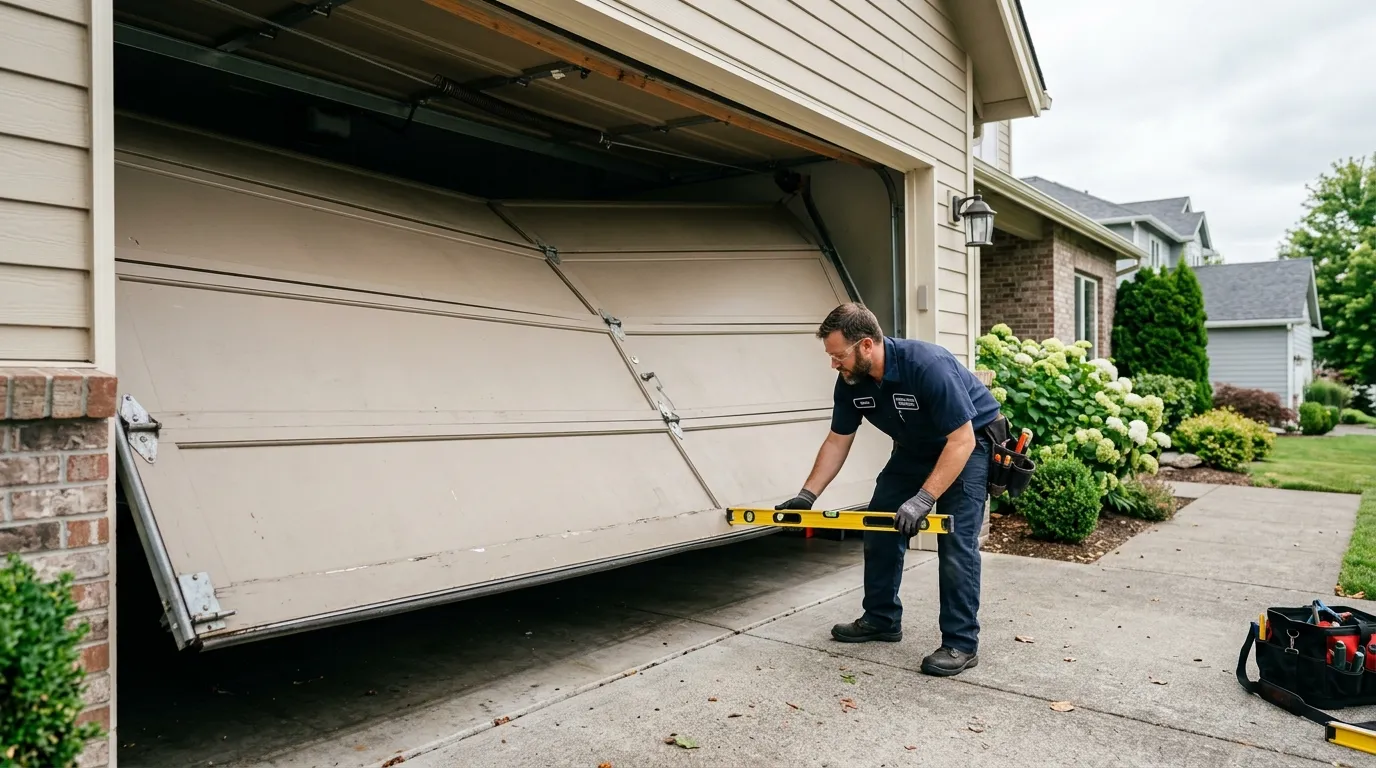
The complication isn't just noise - it's that a stuck or misaligned door under spring tension can come off the track entirely if a roller gives out on one side while the door is mid-travel.

Time-sensitive repairs

That's a heavier repair than the roller itself, and it's why this isn't a job to put off once you hear the grinding start. We work across the wider area - Prospect Heights, Mount Prospect, Wheeling, and the towns further out - and the pattern repeats: older steel rollers, worn tracks, and doors that finally jam.

Warning signs

How It Shows Up

The first sign is usually sound, not sight. A door that used to glide will start to groan or squeal on the way up, especially on cold mornings.

Flat-spotted roller wheels

You might notice the door hesitate at the same spot in the track every time - that's a flat spot worn into one roller wheel. Some owners feel it in the remote: the opener runs longer than it used to, straining against friction it shouldn't have to fight.

Track groove widening

Left alone, a worn roller starts to chew into the track itself, widening the channel and making the whole door rock side to side as it moves. In homes with steel rollers original to a 1960s or 70s build, this shows up as a slow decline over a couple of winters - fine in fall, sluggish by January, and grinding by February.

Rhythmic clunking sounds

In severe cold climates like this one, that timeline compresses, because cold steel and cold grease don't move the way warm ones do. If you're hearing a rhythmic clunk once per rotation of the roller, that wheel is already flat-spotted and won't get better on its own.

Local causes

Why It Happens Here

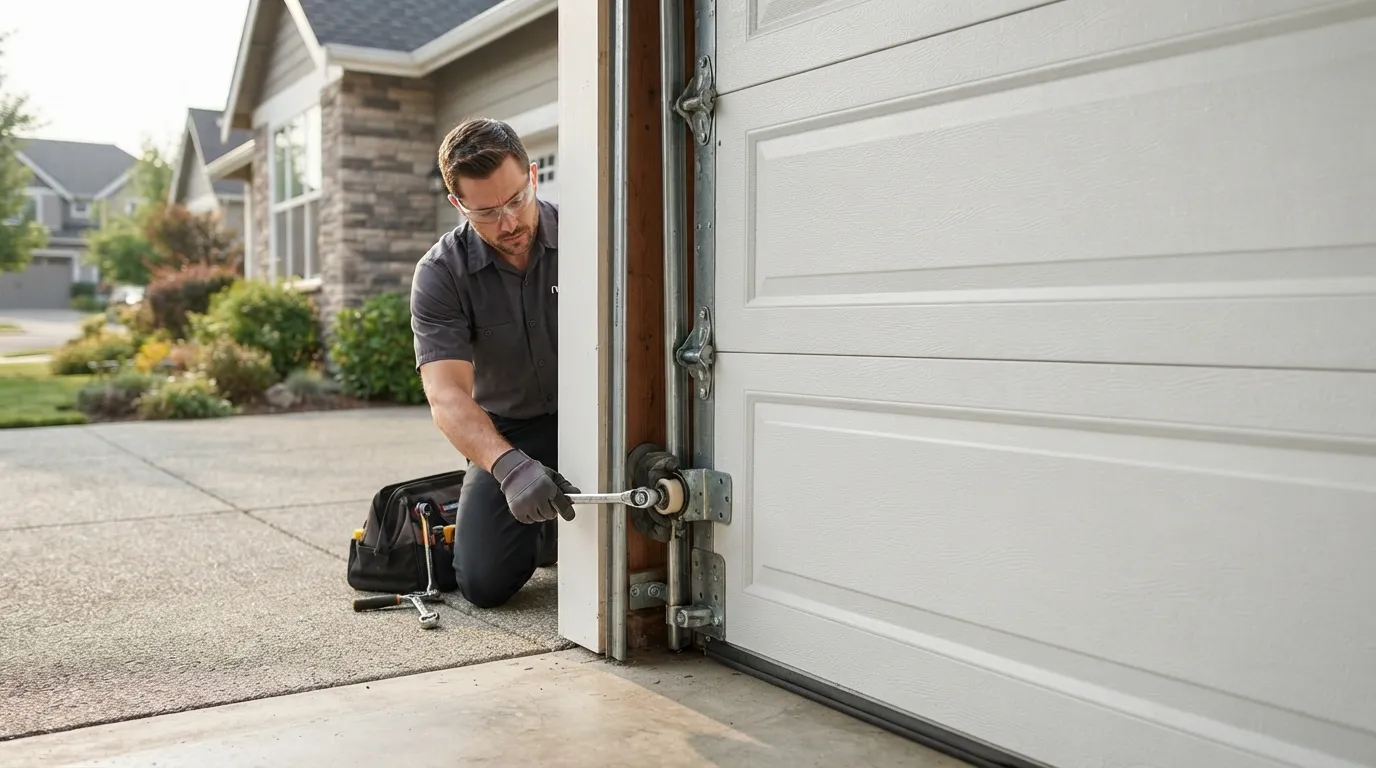
This service area sits in a cold climate zone with severe winter conditions, and that matters more for rollers than most people expect. Steel rollers with sealed bearings still rely on grease to stay quiet and smooth, and cold grease thickens and resists movement. Every winter cycle - cold overnight, warmer by afternoon - puts stress on the roller stem and the bracket holding it to the door panel. Across the roughly 223,811 owner-occupied houses in this area, a large share date to the 1960s and 70s construction wave, and those garages were built to a standard that assumed steel rollers running in steel track - not the nylon rollers most manufacturers ship today. Age plus repeated cold-stress cycles is exactly the combination that wears out old steel wheels and stretches the roller stem hole in the bracket. It's not that these doors were built badly; it's that forty-plus winters of contraction and expansion will wear any roller down, and steel wears faster than nylon under sustained cold.

Why It Happens Here

The repair

What the Fix Involves

A proper roller replacement starts with checking the track, not just swapping wheels - if the track has been chewed up by a bad roller, replacing the roller alone won't fix the noise or the binding.

  1. All-roller replacement

    We check all the rollers on both sides of the door, since if one wheel is worn, its neighbors usually aren't far behind, and replacing one at a time means going back up the ladder repeatedly.

  2. Nylon roller upgrade

    Nylon rollers with sealed ball bearings are the standard swap-in for old steel wheels; they run quieter and handle the cold-to-warm cycling better than steel does. The stems get inspected too - a bent or worn stem will chew through a new roller just as fast as the old one wore out.

  3. Track wear assessment

    One honest limitation: if the track itself is bent or badly worn from years of a flat-spotted roller grinding against it, roller replacement alone won't solve the problem - the track needs straightening or replacing first, and we'll tell you that upfront rather than sell you a roller job that won't hold.

Questions

Common questions

How often do garage door rollers need replacing in Arlington Heights?

There's no fixed schedule, but on the older steel rollers common in 1960s-70s housing here, ten to fifteen years of cold winters is a realistic window before you hear grinding or feel the door hesitate. Homes with nylon rollers already installed tend to go longer.

Can I just replace one roller instead of the whole set?

You can, but it's rarely the better move. If one steel roller wore out from age and cold-cycling, the others on that door are close behind. Replacing the full set in one visit costs less overall than repeat trips as each roller fails in turn.

Will a new roller fix a noisy door on its own?

Only if the roller is actually the cause. A worn track, a bad hinge, or a dry cable can all sound similar. We check the whole run before replacing parts, because a new roller in a bent track will start grinding again within months.

Is roller replacement a DIY job?

The rollers themselves aren't complicated, but the door is under spring tension, and pulling rollers on the bottom bracket near the cable can be dangerous without the right clamps. We don't recommend it as a first repair for most owners.

Ready when you are

Need a garage door sorted in Arlington Heights?

Arlington Heights Garage Door Pros repairs and installs garage doors, springs and openers in Arlington Heights, IL and the surrounding area.

CallGet a quote