Prospect Heights, Arlington Heights

Garage Door Repair for Prospect Heights Homes

Garage door repair for Prospect Heights, IL homes built around 1976. We drive the 3 miles from Arlington Heights to fix springs, openers, and tracks worn by cold winters.

Garage Door Repair for Prospect Heights Homes in Arlington Heights
On-time arrivalInsured & guaranteedPrice before we startCommunity trusted

DIY or pro

Can You Do This Yourself

At a median household income of $91,599, a lot of homeowners here weigh a $200 spring job against a $600 opener swap before calling anyone.

Spring safety danger

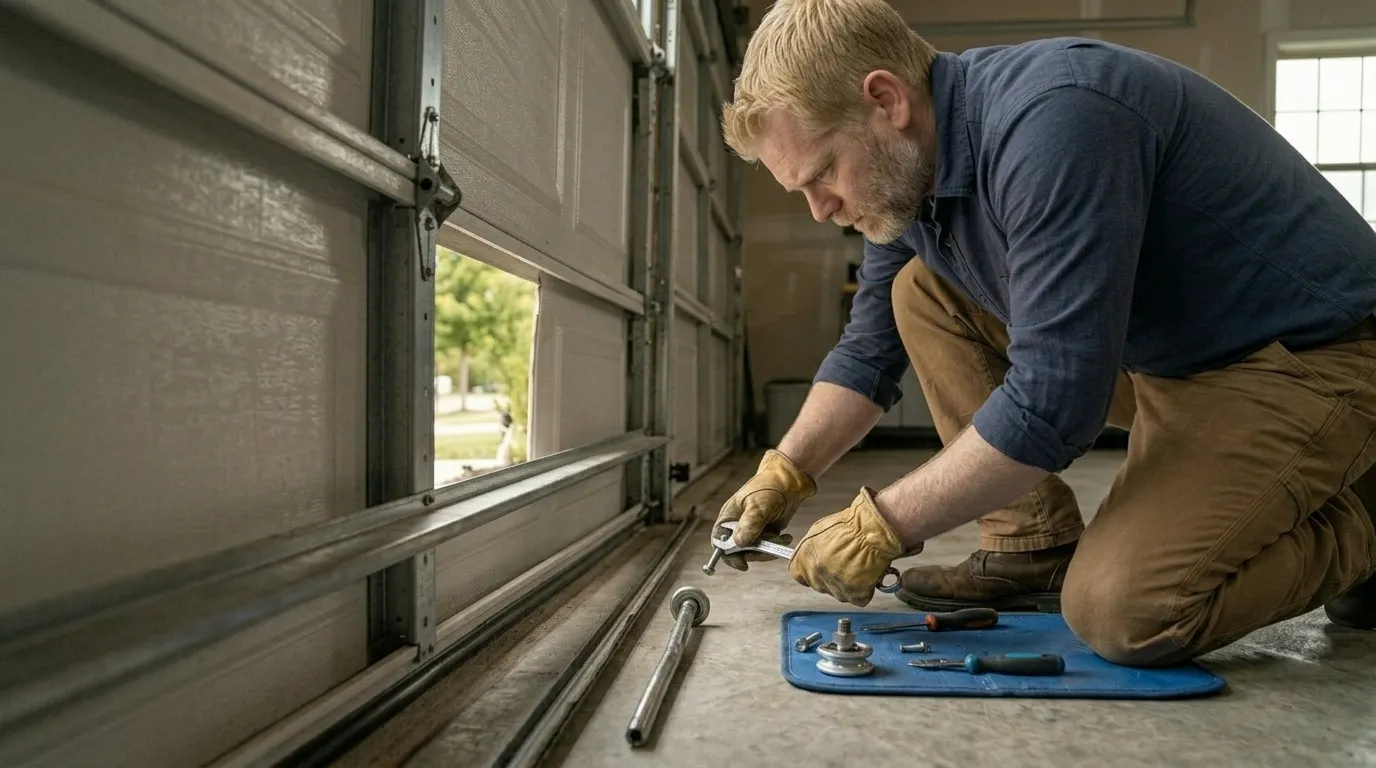
That math matters, and it's worth doing before you touch a wrench. Torsion springs are the one part on the door you should not attempt yourself - they're wound under enough tension to break a hand or worse, and the special bars to wind them safely aren't something most garages have lying around.

Track and roller maintenance

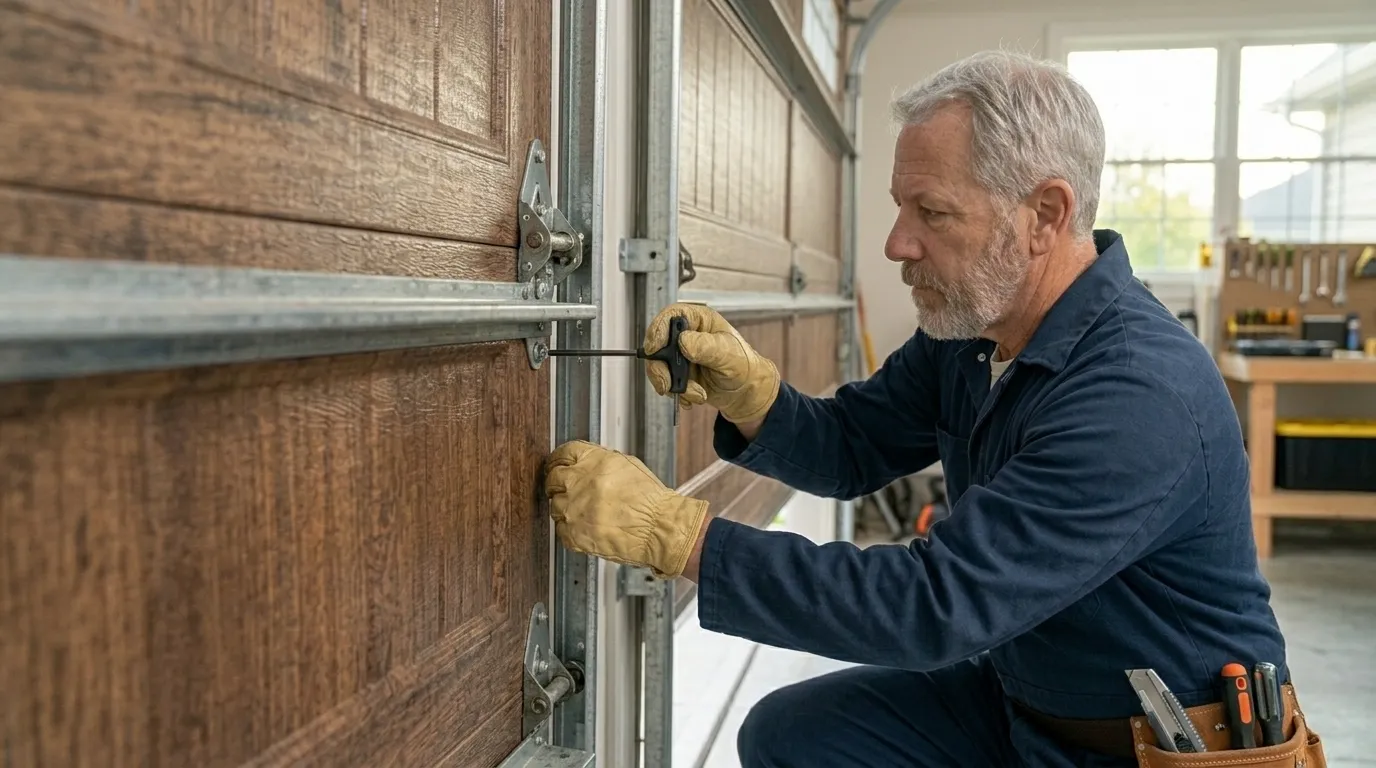
What you can reasonably do: check that the track bolts are tight, clean and lubricate the rollers, test the photo-eye sensors for dust or misalignment, and make sure the door balances when disconnected from the opener (it should stay put at waist height, not slam down or fly up). If it doesn't balance, that's a spring problem, not a lubrication problem, and it's not a DIY fix.

Circuit board and track damage

One honest limit: if the opener's circuit board is fried or the track is bent badly enough to bind, we're not going to talk you through a fix over the phone. Some jobs need a truck and a set of winding bars, and pretending otherwise wastes your afternoon and risks your fingers.

Booking

How to Book

We're based in Arlington Heights, about 3 miles from Prospect Heights, so getting a truck to you isn't a long haul. Call or use the site to describe what's happening - door won't open, spring snapped, opener grinds but nothing moves - and we'll get a read on whether it's a quick fix or a bigger job before anyone shows up.

Have the door's age and rough symptoms ready. If your house dates to the mid-1970s, which is typical for this area, tell us that too; it changes what hardware we bring. We don't run a dispatch center out of Prospect Heights itself, so we can't promise a same-hour window the way a company with a local depot might, but the drive is short enough that it's rarely the bottleneck.

How to Book

The repair

What the Fix Involves

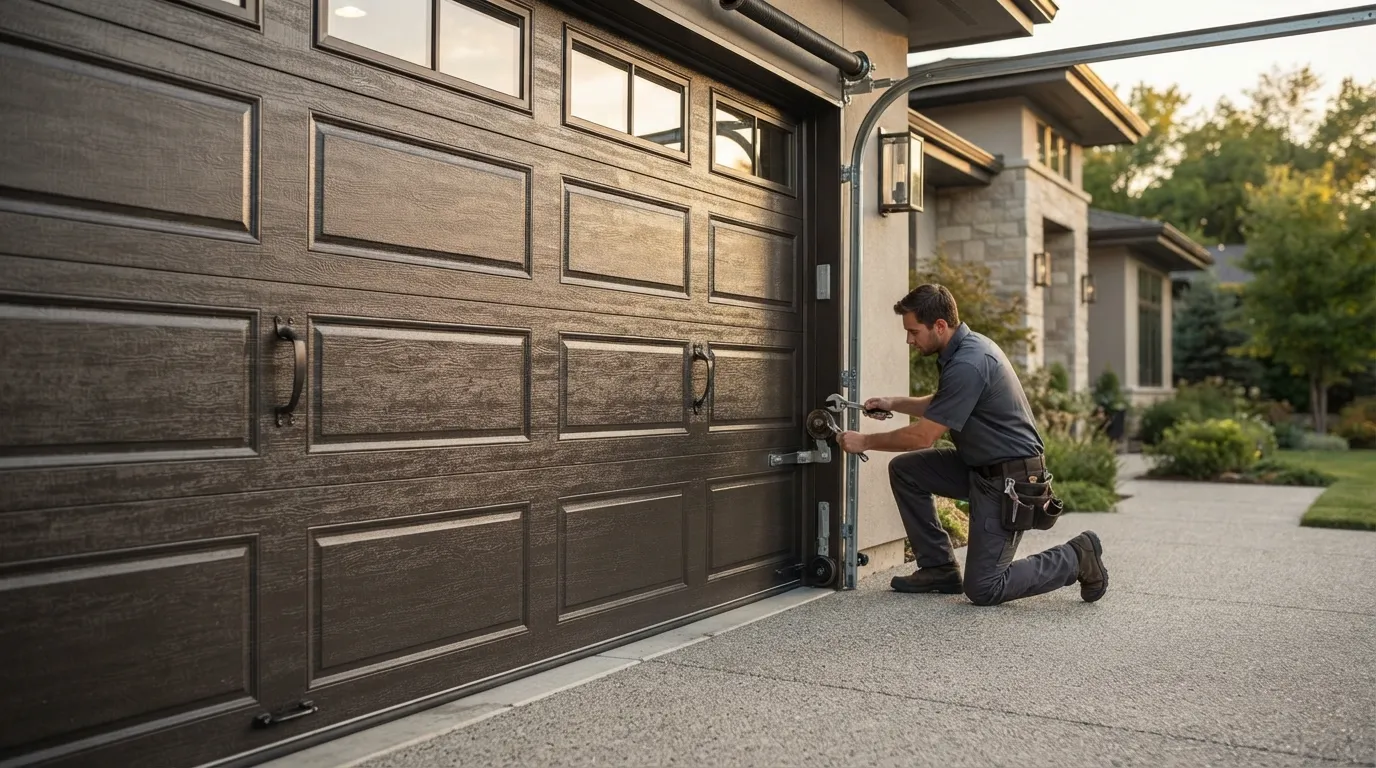
Most repair calls in Prospect Heights fall into one of three buckets: a broken torsion spring, a burnt-out opener motor, or a track knocked out of alignment by a car bumper or a slammed door.

  1. Spring wire gauge and weight

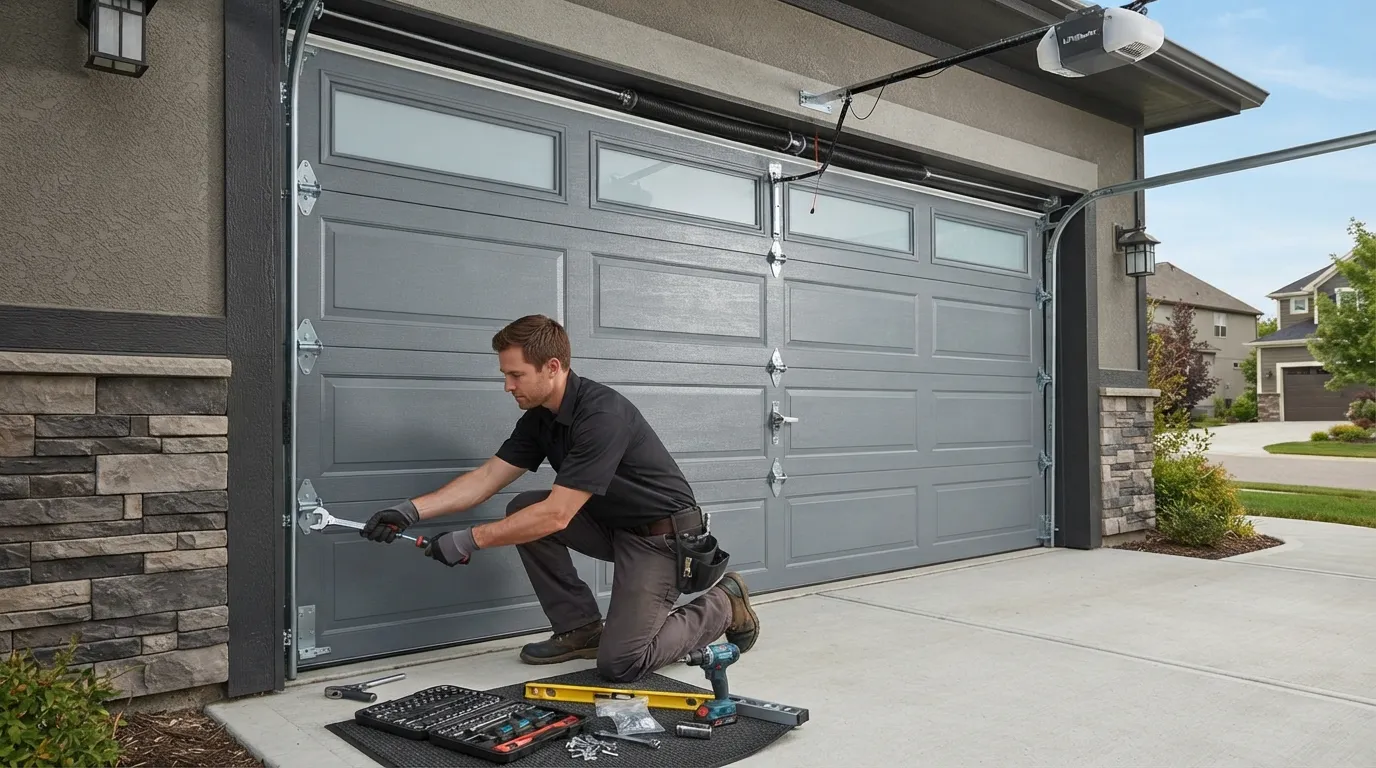
    For a spring, we match the wire gauge and wind to the door's weight - original doors on houses built in the 1970s often ran lighter-gauge springs than what's sold today, so we size to the door, not to a generic kit.

  2. Opener part replacement

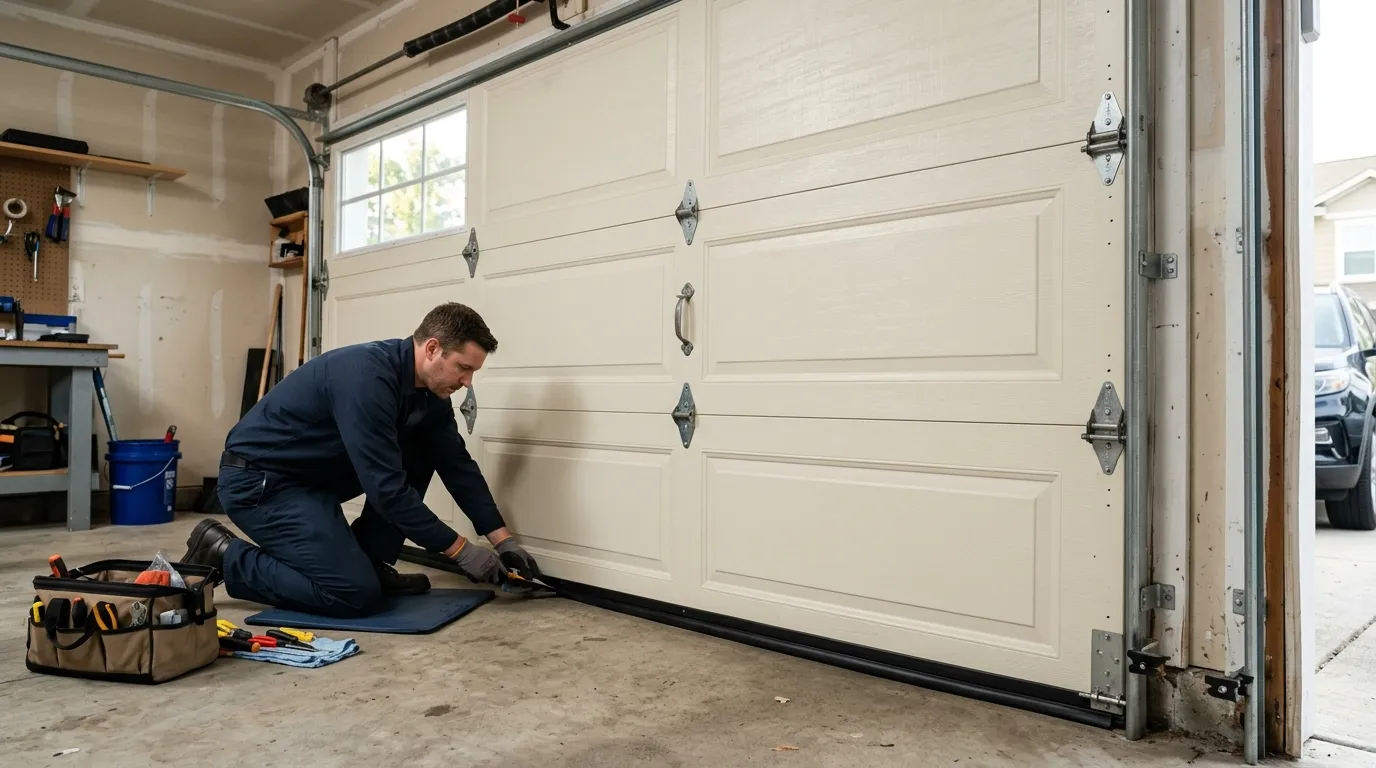
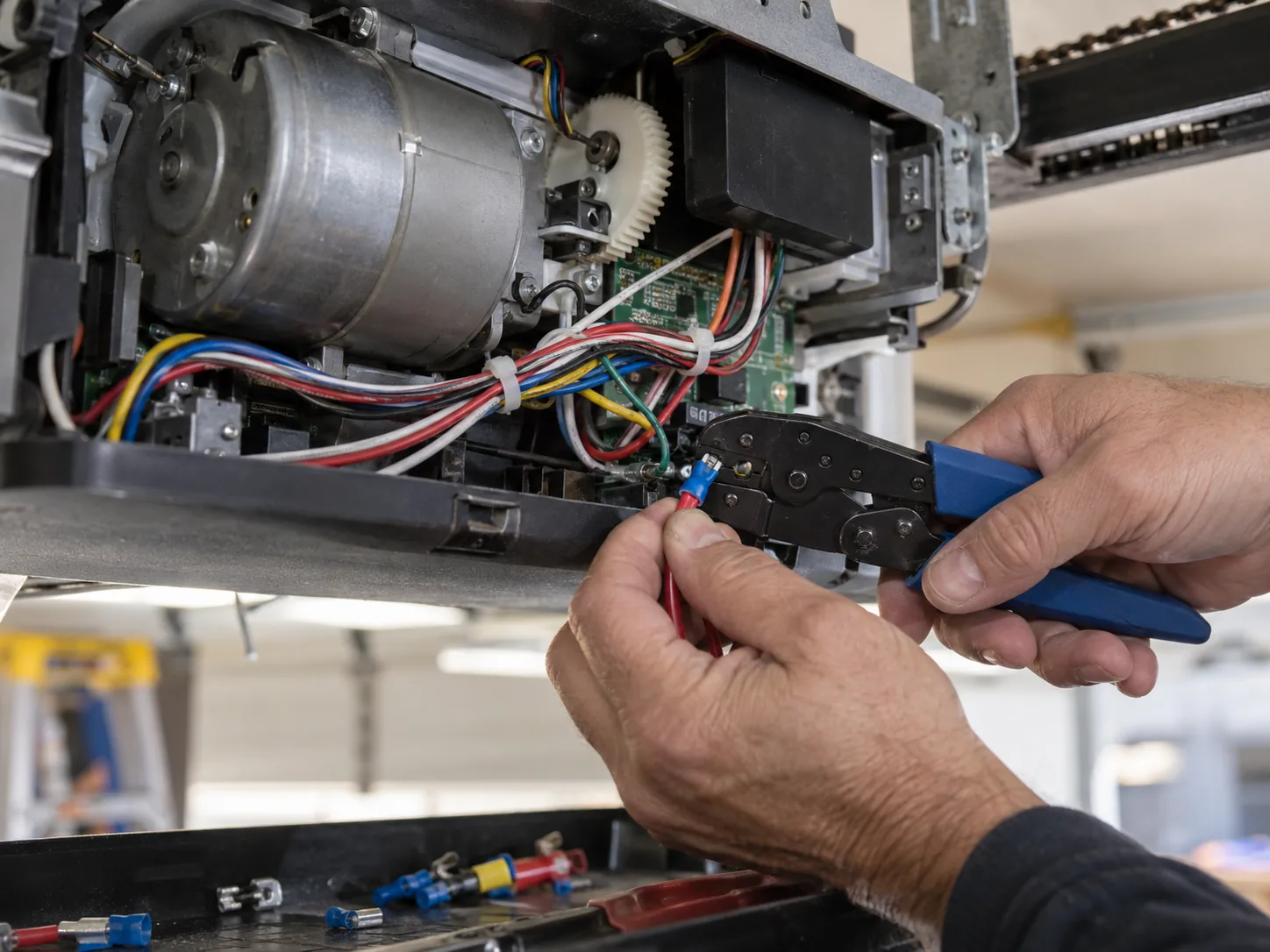
    Opener repairs usually mean replacing a logic board, a drive gear, or the whole unit if the motor's seized. Track work is straightforward: unbolt the bent section, reset it plumb, check the rollers haven't been chewed up in the process.

  3. Safety function testing

    We test the full cycle before we leave - balance, travel limits, auto-reverse safety on the photo eyes. A door that opens but doesn't reverse when it hits an obstruction isn't fixed, it's a liability, and we won't call a job done until that's checked.

Warning signs

How It Shows Up

With a median build year of 1976, a good share of Prospect Heights doors and openers are original or one replacement removed from original. The most common sign we see: the door starts to lift, hesitates, and the opener strains or reverses on its own.

Spring tension loss

That's usually a spring losing tension, not the opener failing - the motor is just overworking on a door it can no longer lift on its own. A loud bang from the garage, especially in cold weather, is almost always a torsion spring snapping.

Cold weather spring failure

Cold makes steel more brittle, and a spring near the end of its cycle life tends to go on the first hard freeze rather than a mild day.

Stripped gear failure

Grinding or clicking from the opener with no door movement points to a stripped gear, common on units original to houses from that era. If the door drags on one side, check the track first - a bent section from decades of settling is common in houses this age.

The Complications

Watch-outs

The Complications

This area sits in a cold, severe winter climate, and that's the biggest factor working against garage door hardware here. Steel springs and cables lose flexibility in sustained cold, and lubricant that's fine in summer thickens up and stops doing its job by January. We see spring failures cluster in the first hard cold snap of the season, not gradually through the year.

Houses built in the 1970s also tend to have narrower door openings and older track spacing than what's sold new today, so a straight swap of parts doesn't always work - we sometimes have to adapt hardware rather than bolt on a stock replacement.

One limitation worth naming: if the opener is old enough that the manufacturer no longer makes parts for it, repair isn't always possible. At that point replacement is the honest recommendation, not a repeated string of patch jobs that won't hold through another winter.

The Cost of This Job

Pricing

The Cost of This Job

At the area's median income of $91,599, most homeowners here treat a garage door repair as a maintenance expense, not a remodel - and for the common failures, that's the right frame. A single broken spring or a bad opener logic board is a repair, not a replacement decision.

Where the math shifts toward replacement: if the door itself is original to a house built around 1976 and the panels are rusted, warped, or the track is bent beyond a clean reset, throwing a new spring at a fifty-year-old door often means paying for the repair twice within a few years. We'll tell you when we see that, rather than sell a fix that won't hold.

We don't publish flat prices here since parts and labor vary by what's actually broken, but we'll give you a number before we start, not after.

Questions

Common questions

How far out is Prospect Heights from your shop?

About 3 miles from our Arlington Heights location. It's a short drive, so it's rarely the reason a job takes longer than expected - the actual repair time depends on what's broken, not on the distance we travel to get there.

Why did my spring break in the middle of winter?

Cold makes torsion springs more brittle, and a spring near the end of its lifespan is far more likely to snap during the first hard freeze than on a mild day. This area's winter climate is classified cold and severe, which is exactly the condition that pushes worn springs over the edge.

My house was built in the 1970s - does that affect the repair?

Often, yes. Doors and track hardware from that era can run narrower or spaced differently than what's sold new today, so a generic replacement part doesn't always bolt straight on. We check the original sizing before ordering parts so we're not adapting on the fly at your driveway.

Is it ever not worth repairing?

Yes. If the door itself is original, rusted, or badly warped, a new spring or cable is a temporary fix on a door that's failing structurally. In that case we'll say so rather than sell a repair that won't hold through another winter.

Ready when you are

Need a garage door sorted in Arlington Heights?

Arlington Heights Garage Door Pros repairs and installs garage doors, springs and openers in Arlington Heights, IL and the surrounding area.

CallGet a quote