Prospect Heights, Arlington Heights

Garage Door Maintenance for Prospect Heights Homes

Garage door maintenance for Prospect Heights homes built around 1976 - steel doors, aging torsion springs, and cold-weather wear, serviced from Arlington Heights, 3 miles away.

Garage Door Maintenance for Prospect Heights Homes in Arlington Heights
On-time arrivalInsured & guaranteedPrice before we startCommunity trusted

DIY or pro

Can You Do This Yourself

A lot of the doors we see in Prospect Heights went up around 1976, which puts most of them squarely in the era of single-layer steel sectional doors on standard torsion springs - no insulation core, no reinforced end stiles, just steel and a coat of paint that's been baked and frozen a few thousand times since Ford was in office.

Track and sensor maintenance

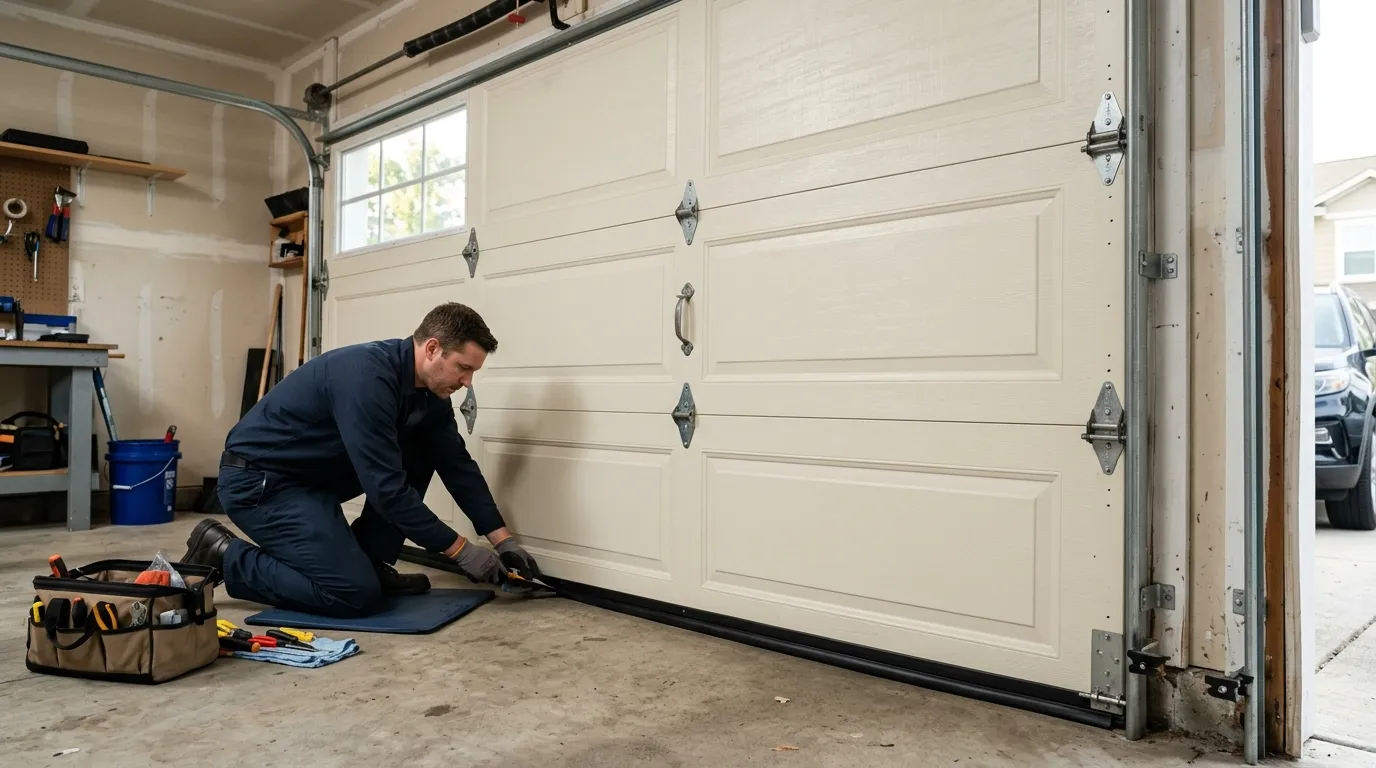
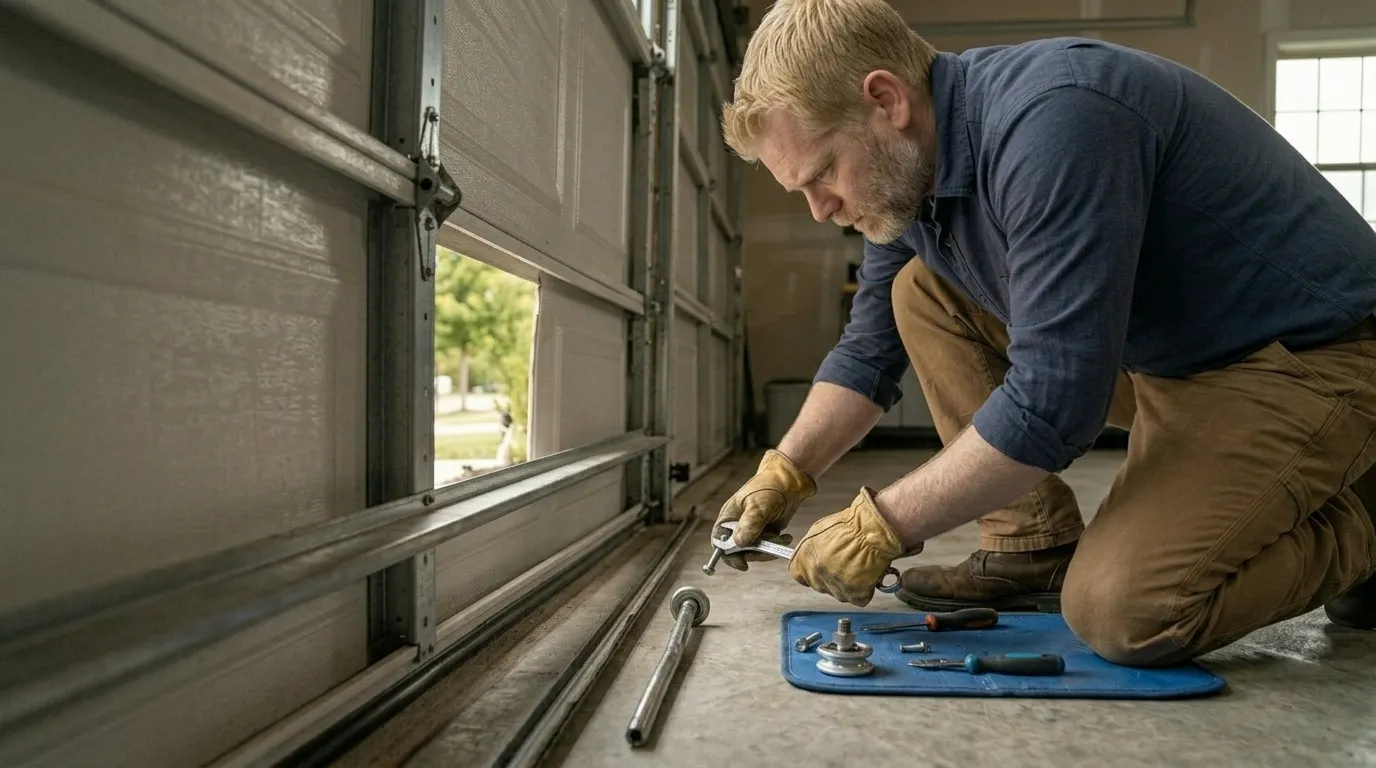
You can do some of this yourself. Wipe down the tracks, check that the photo-eye sensors are clean and aligned, and look at the weatherstrip along the bottom panel for cracking - that's all reasonable for an owner with a ladder and a Saturday morning.

Spring and tension hazards

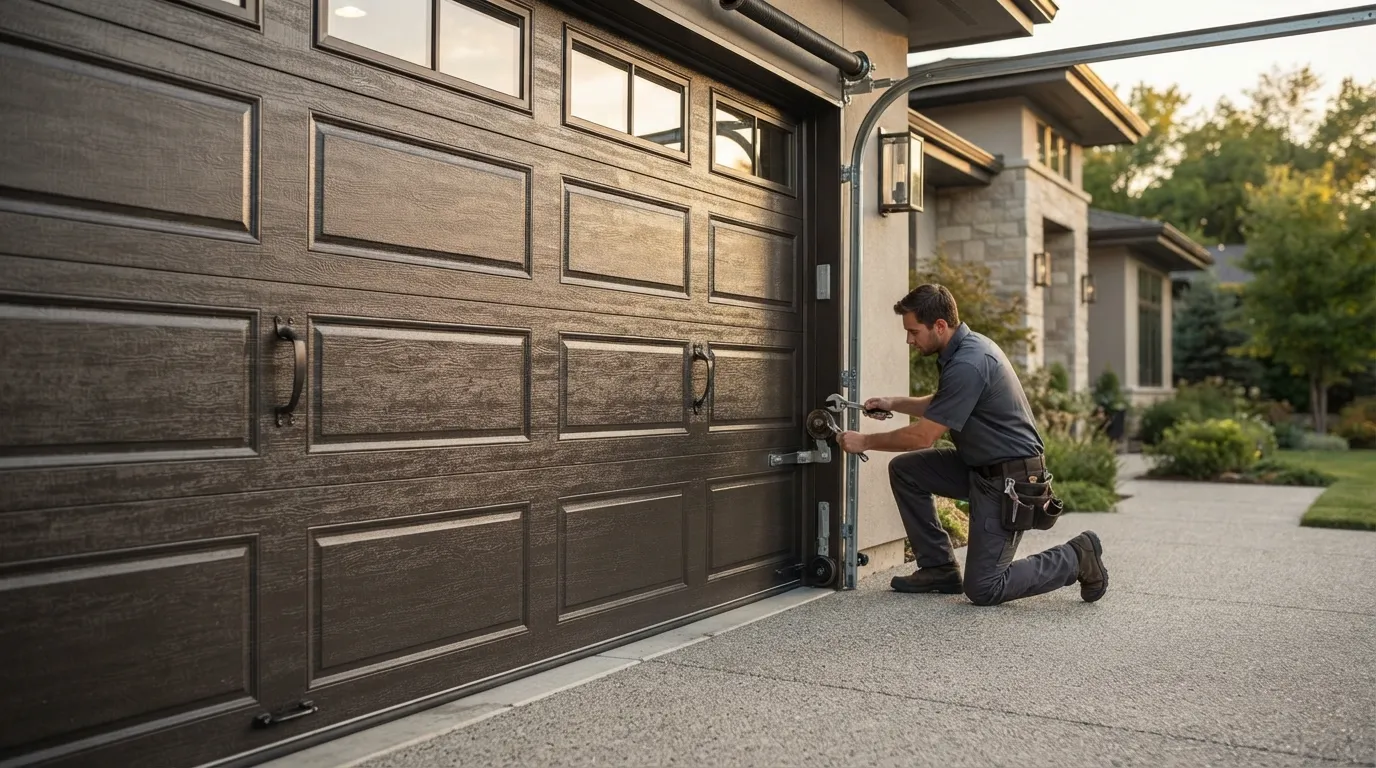
What you shouldn't touch is the spring. A torsion spring on a door this size is wound under real tension, and on a door this old the spring is likely original or a first replacement - meaning it's tired, and tired springs don't fail gently.

Lubricant and adjustment

Lubricating rollers and hinges with the right product (not WD-40, which attracts grit) is fine for a homeowner. Adjusting spring tension or opener force settings is not, and we'd rather tell you that up front than have you find out the hard way.

Booking

How to Book

We run out of Arlington Heights and cover Prospect Heights as part of that route, about 3 miles down the road, so getting a truck to your driveway doesn't mean a special trip or a surcharge tacked on for distance. Call or use the site to get a maintenance visit on the schedule. Tell us the door's approximate age if you know it - for a lot of Prospect Heights streets that's going to land somewhere near the mid-1970s, and that number changes what we bring on the truck, from spring gauge to the kind of rollers likely still on the track.

We don't operate a same-day dispatch out of a local branch here - the crew comes from Arlington Heights, so booking ahead gets you a better window than calling at 7am hoping for a slot that morning. If it's a full failure and the door won't move at all, say so when you call; that changes how we prioritize the route.

How to Book

The repair

What the Fix Involves

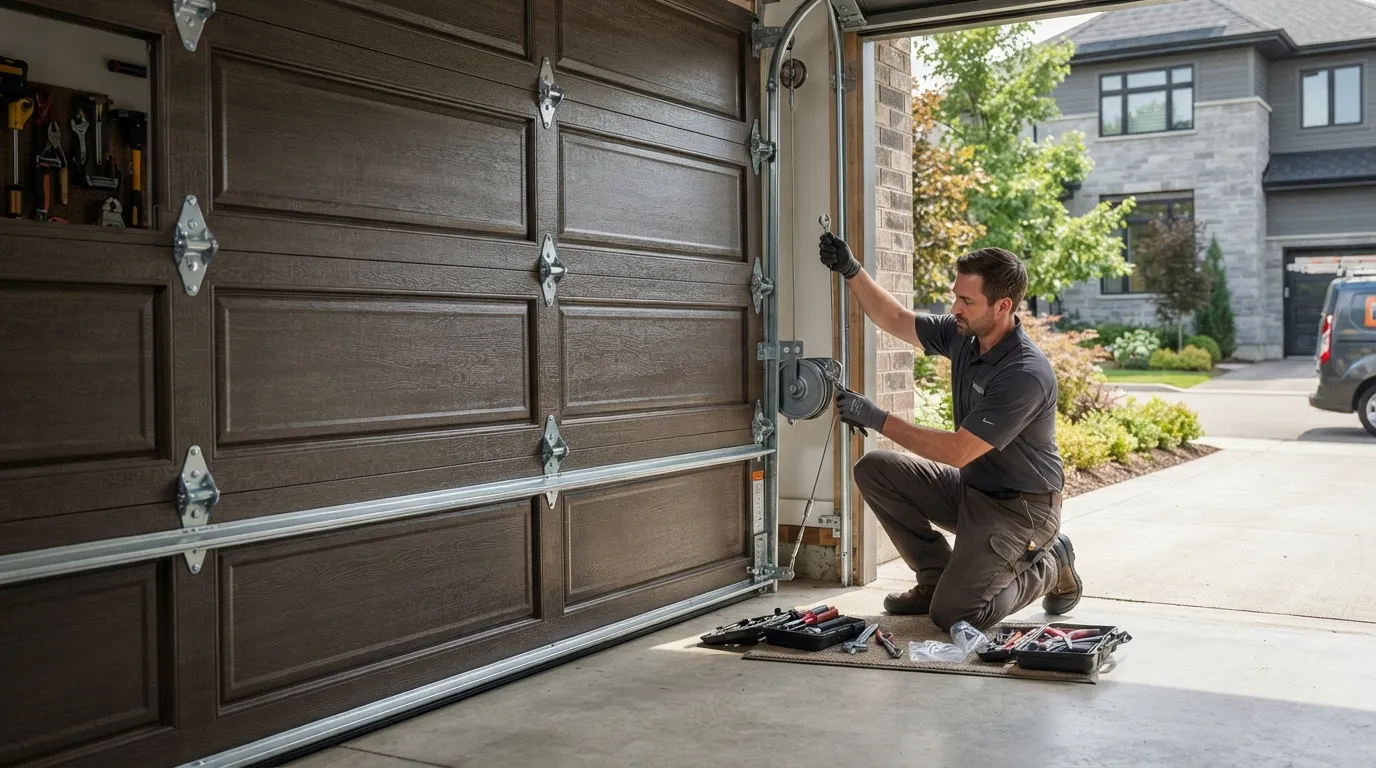
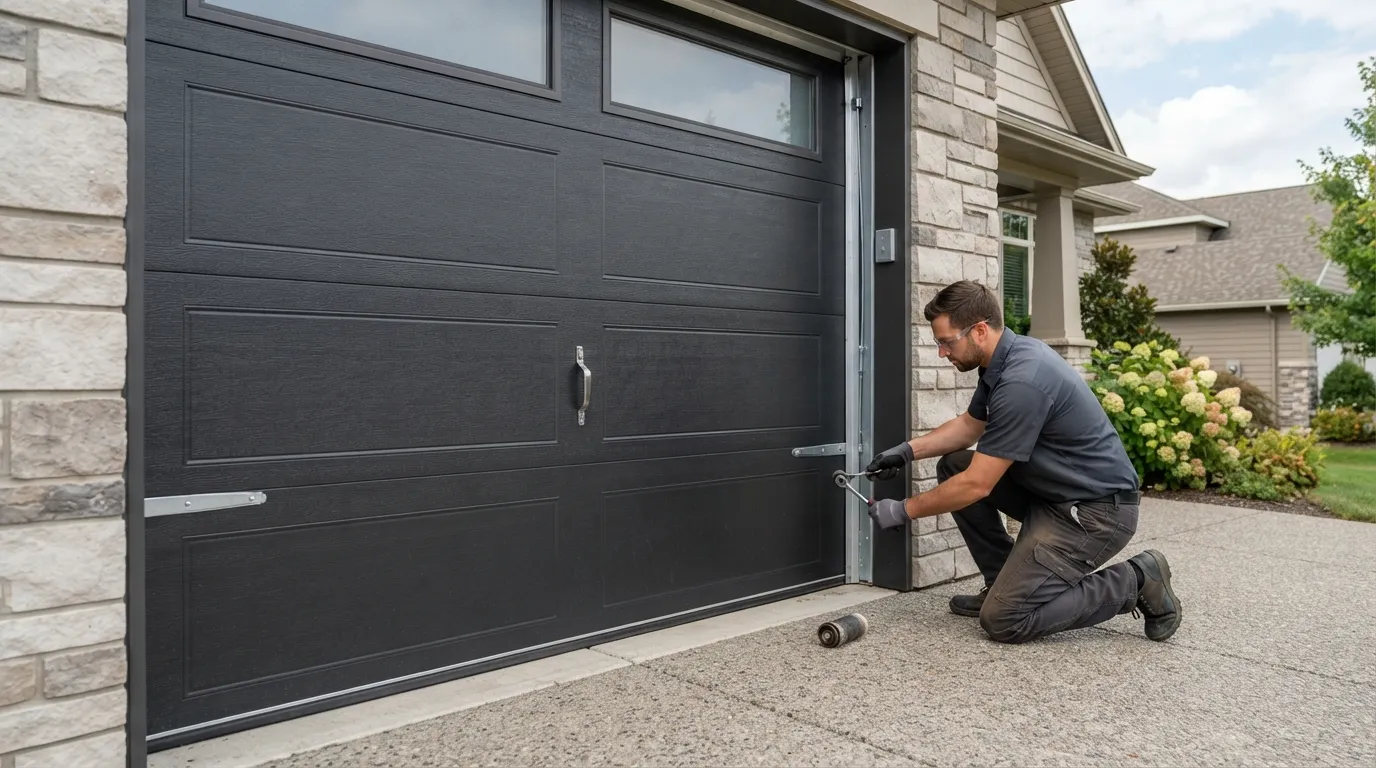
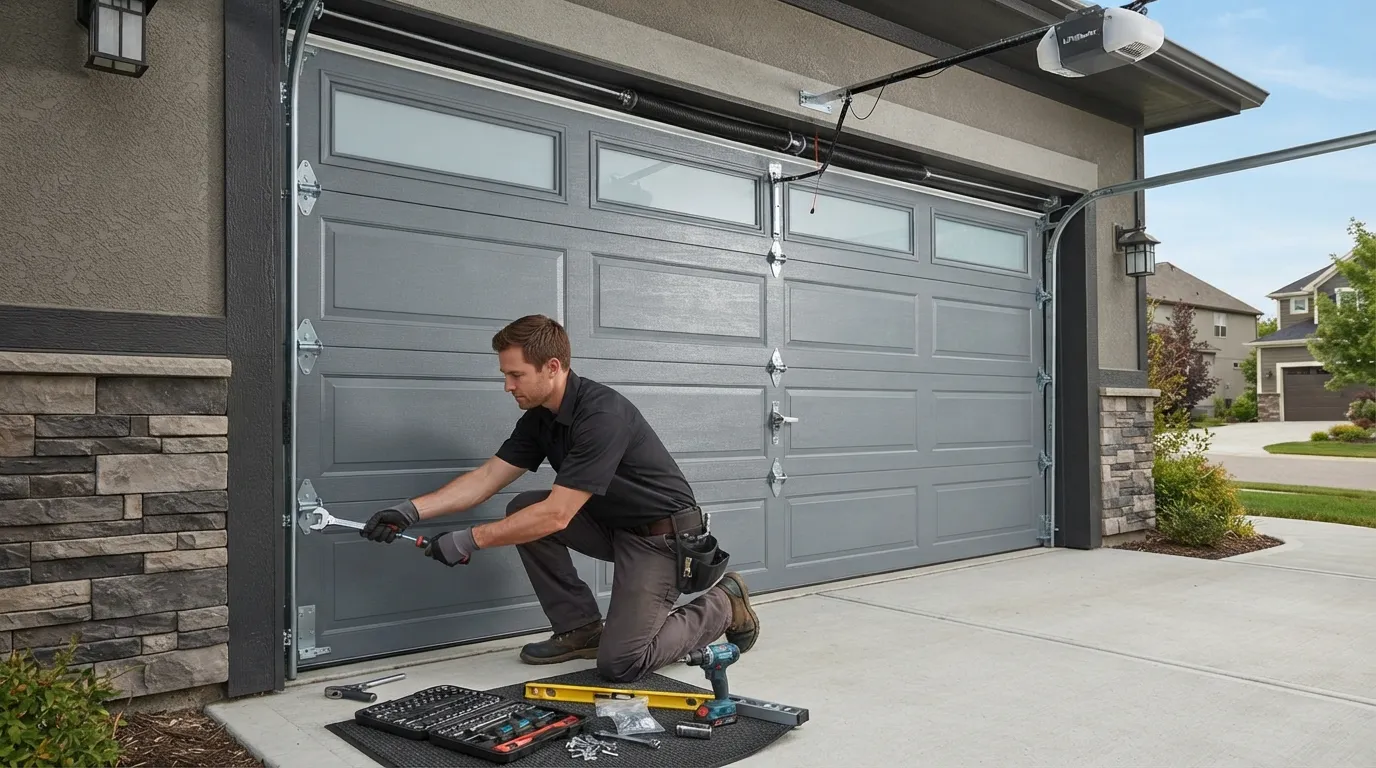
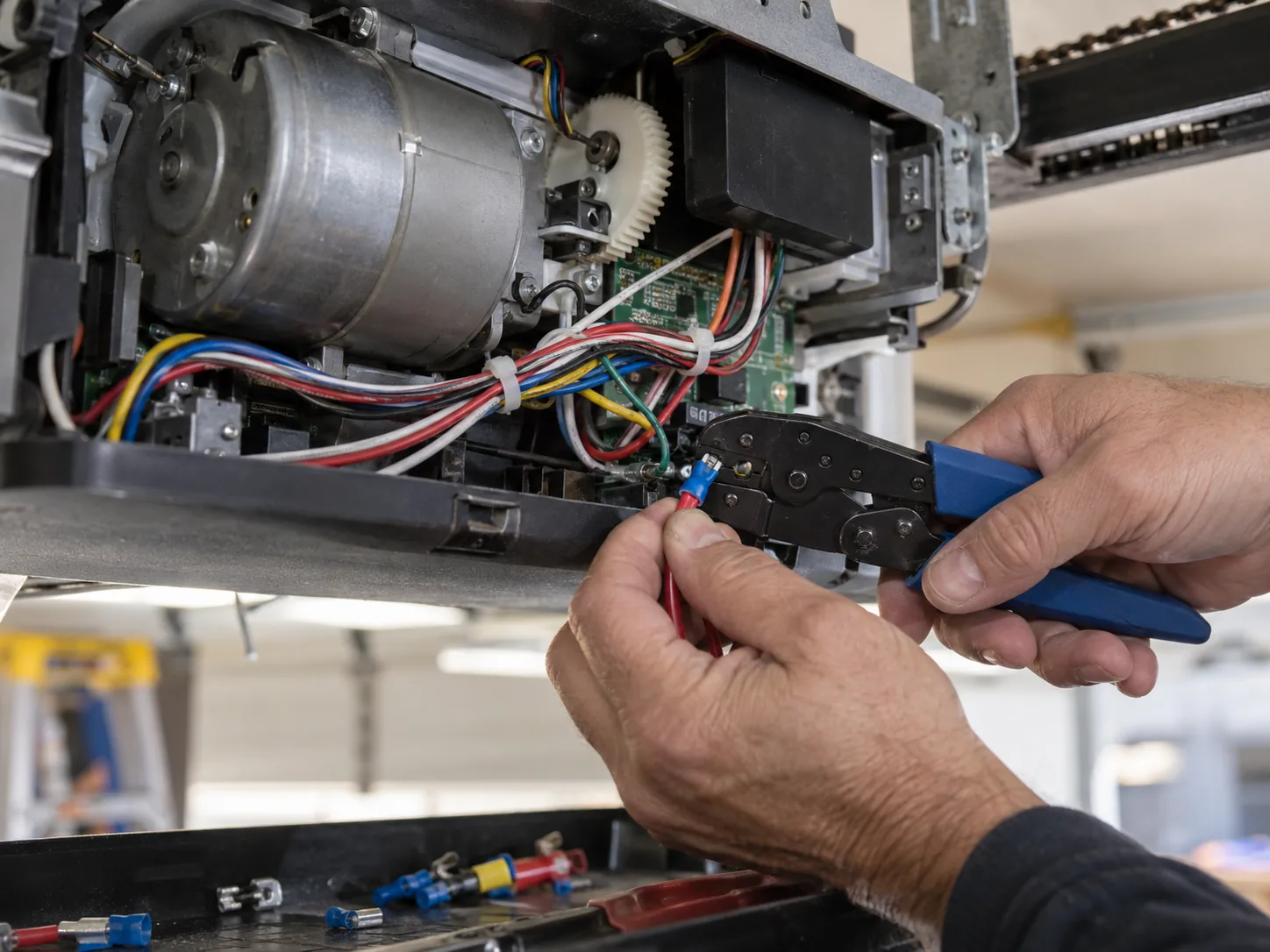
A standard maintenance visit on a door from this era covers the same core list regardless of the specific house: torsion spring inspection for rust and gap widening in the coils, track alignment (these doors have usually shifted a little after four-plus decades of settling), roller condition, cable wear where it wraps the drum, and opener force and travel limits if a unit was added later.

Bottom-corner panel rust

On original steel doors we also check the panel seams and end stiles for the kind of surface rust that starts at the bottom corner and works up.

Hardware maintenance and balance

We lubricate the moving hardware, tighten the loose lag screws that work themselves out of a wood jamb over the years, and test balance by disconnecting the opener and moving the door by hand - a well-balanced door should hold position at waist height on its own. If it drops or shoots up, that's a spring tension issue, and we'll flag it rather than just noting it and moving on.

How It Shows Up

Warning signs

How It Shows Up

On a door this age, wear shows up as a specific set of symptoms, not vague noise. A grinding sound on the way up usually means the rollers are the original steel ones, never replaced, running dry in a track that's picked up 45 years of driveway grit. A door that reverses partway or won't seal flush at the bottom often points to track alignment that's drifted along with the slab it's bolted to.

Cold makes all of it worse. This part of Illinois sits in a severe cold climate band, and steel contracts in January in a way that makes marginal hardware fail outright - a spring that was fine in October can bind or snap in a hard freeze. If your door's gotten noticeably harder to open only since the temperature dropped, that's not coincidence, that's the cold finding the weak point.

Watch-outs

The Complications

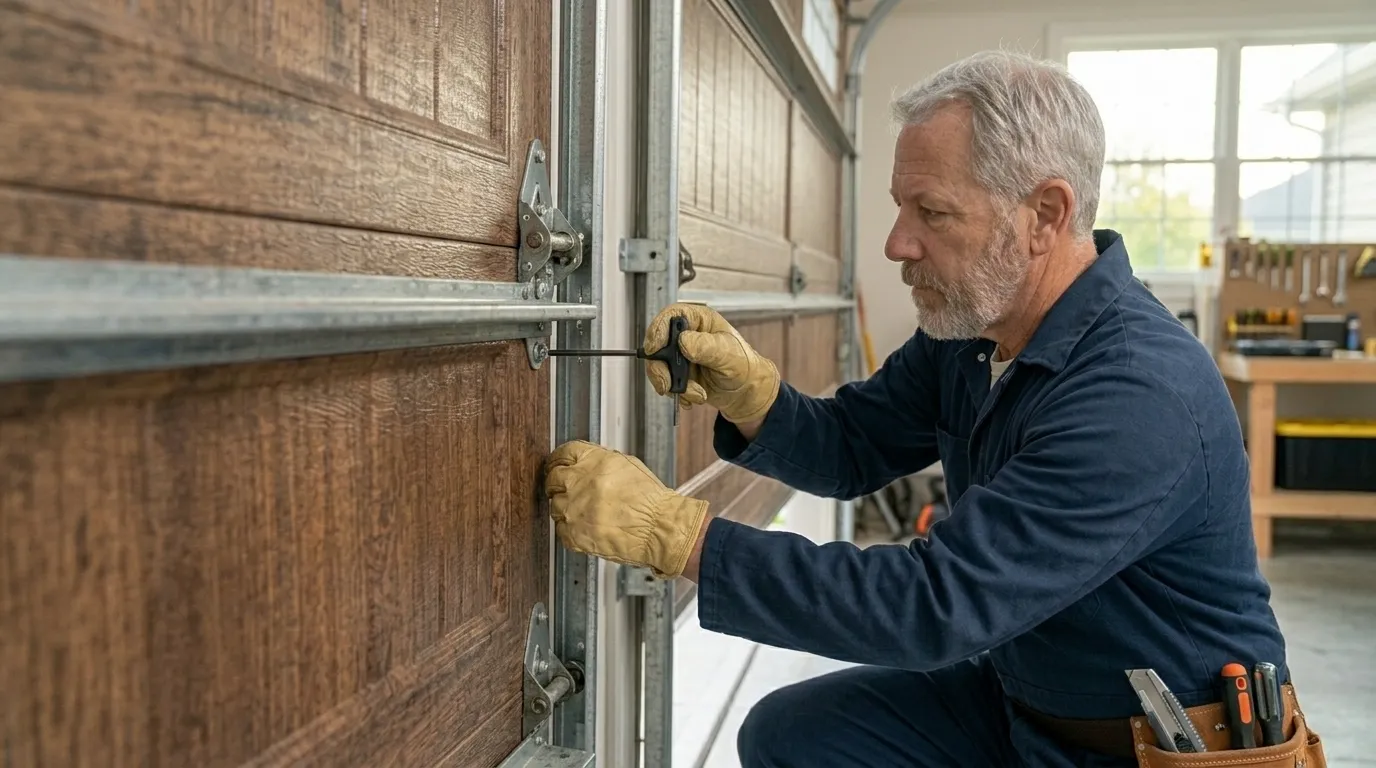
The complication with doors from the 1976 era isn't usually finding parts - torsion springs and rollers are standard sizes and we stock common ones - it's that a door this old has often had one or two prior repairs done by whoever was cheapest at the time, and those repairs don't always match.

Mismatched spring and roller

We've opened panels to find a spring gauge that doesn't match the door's weight, or a roller size that's close but not right, both of which cause premature wear on everything around them. The other complication is opener mismatch.

Retrofitted opener calibration

A lot of these houses had an opener retrofitted onto an original door well after 1976, and the force settings from that install may never have been re-tuned as the door itself sagged with age. Fixing the door without checking the opener settings just moves the problem down the line a few months.

The Cost of This Job

Pricing

The Cost of This Job

We don't quote a maintenance visit price without seeing the door, since the difference between a clean tune-up and one that turns up a cracked spring or worn cable changes the invoice. What we can tell you is that regular maintenance on a door built in the mid-1970s costs less over time than letting it run until something snaps - a spring failure on an unmaintained door is a same-visit repair instead of a ten-minute check, and it usually happens on the coldest morning of the year, not the most convenient one.

Questions

Common questions

How old are most garage doors in Prospect Heights?

Housing here centers around 1976, and a lot of the original garage doors from that era are still in place - single-layer steel sectional doors on standard torsion springs. That means original hardware that's had decades to wear, which is exactly what a maintenance visit is meant to catch before it becomes a failure.

Do you have a branch in Prospect Heights?

No. We run out of Arlington Heights, about 3 miles away, and cover Prospect Heights as part of that route. There's no separate depot here, so booking ahead gets a better time window than a same-day call.

Can I maintain the door myself?

Cleaning tracks, checking weatherstrip, and lubricating hinges and rollers with the right product are fine for a homeowner. Torsion spring tension and opener force settings are not - a spring on a door this size is under real tension and can cause injury if handled without the right bars and experience.

Why does my door get worse in winter?

This area sits in a severe cold climate band, and steel hardware that's marginal in fall can bind or fail outright once temperatures drop hard. If a door gets noticeably stiffer or louder only in winter, the cold is exposing a weak spring or dry roller that was already close to failing.

Ready when you are

Need a garage door sorted in Arlington Heights?

Arlington Heights Garage Door Pros repairs and installs garage doors, springs and openers in Arlington Heights, IL and the surrounding area.

CallGet a quote