
Narrow ridge-pattern steel
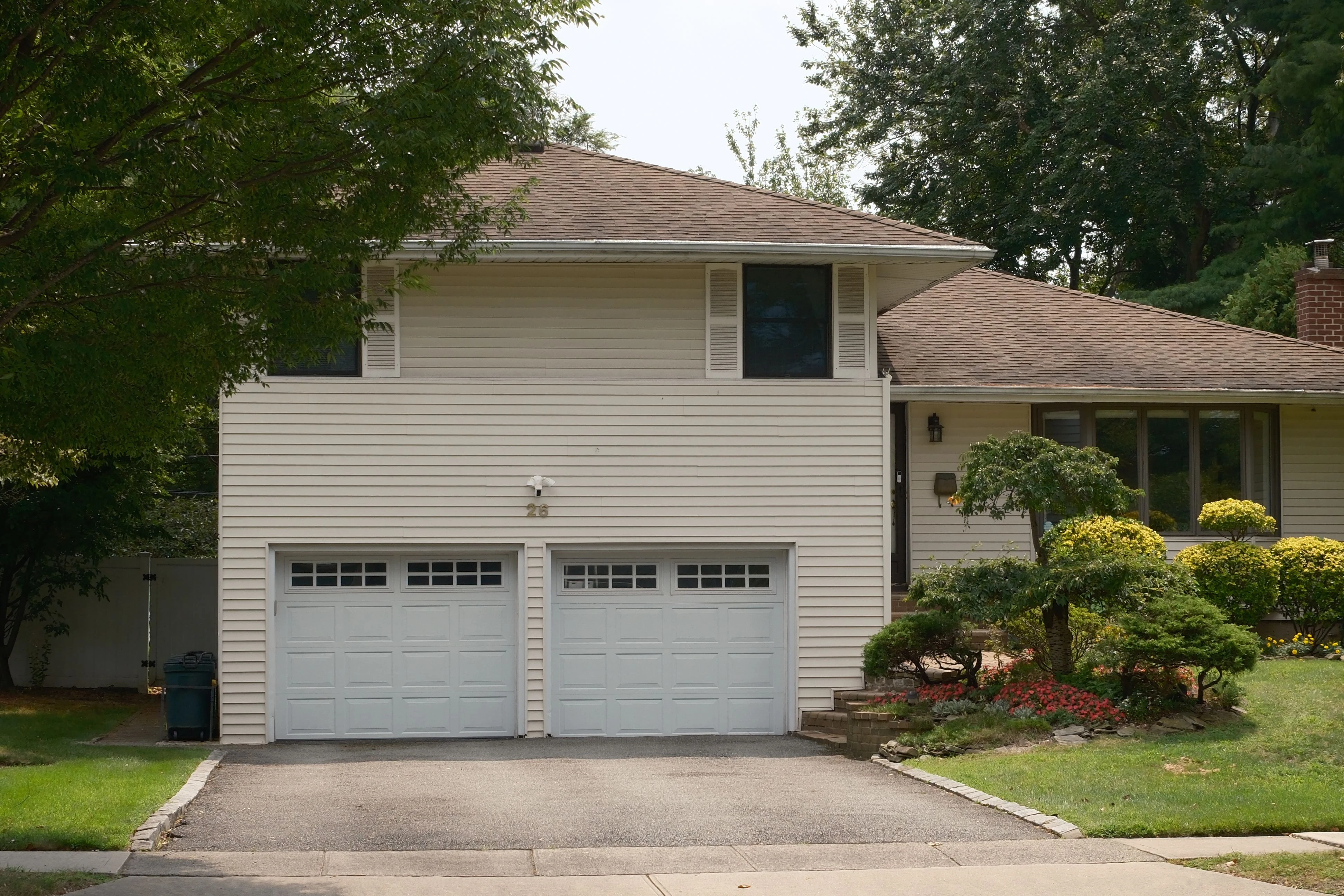
The panels are narrow ridge-pattern steel, often painted over more than once, and the track is the older 2-inch roller style rather than the wider 3-inch track that came standard later.
Mount Prospect, Arlington Heights
Garage door maintenance for Mount Prospect, IL homes built near 1969, serviced from Arlington Heights, 3 miles away. Book a seasonal tune-up before winter.
Popular Services
On the truck
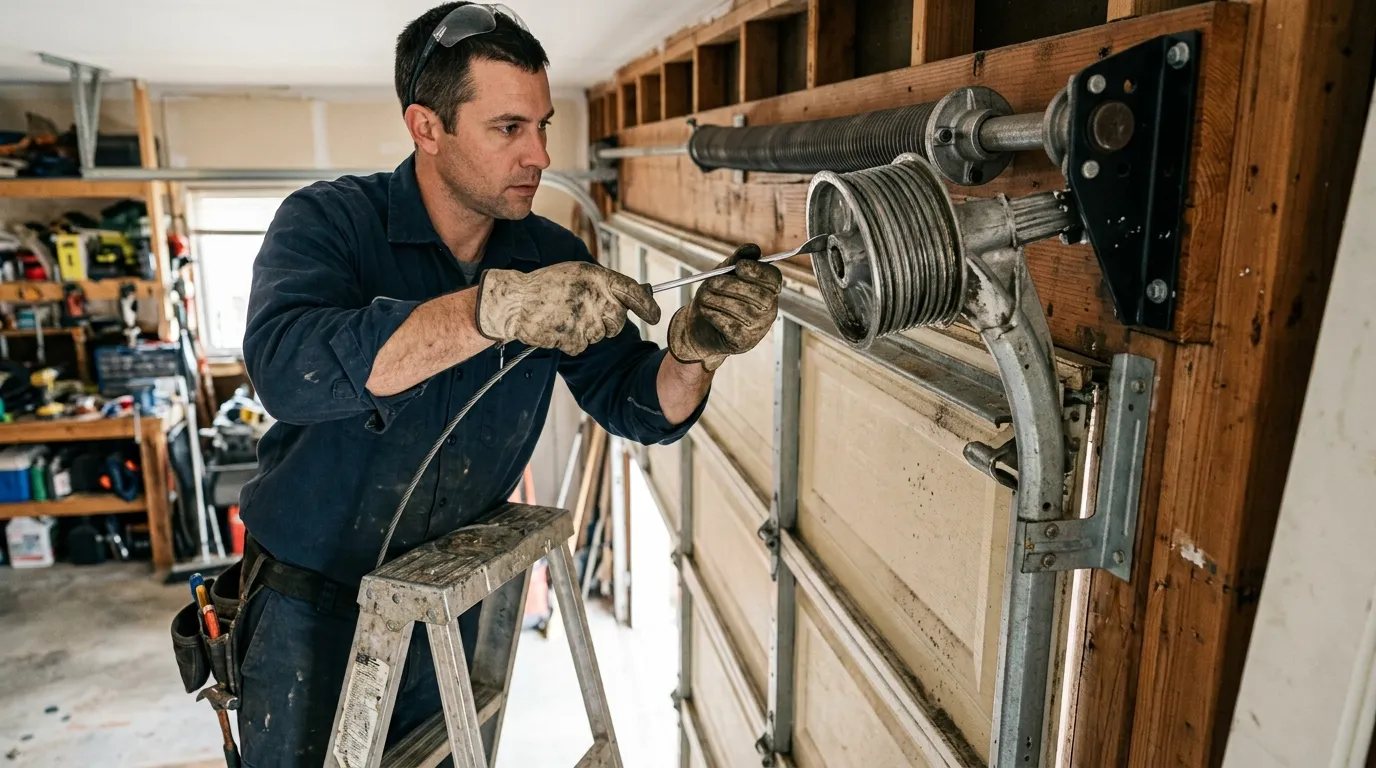
Most houses in Mount Prospect went up around 1969, right in the middle of the service area's 1960s-70s building wave. That means the garage door on a lot of these houses is a steel sectional, single layer, no foam core, hung on two torsion springs sized for a door that weighs less than the insulated doubles built today.
The panels are narrow ridge-pattern steel, often painted over more than once, and the track is the older 2-inch roller style rather than the wider 3-inch track that came standard later.
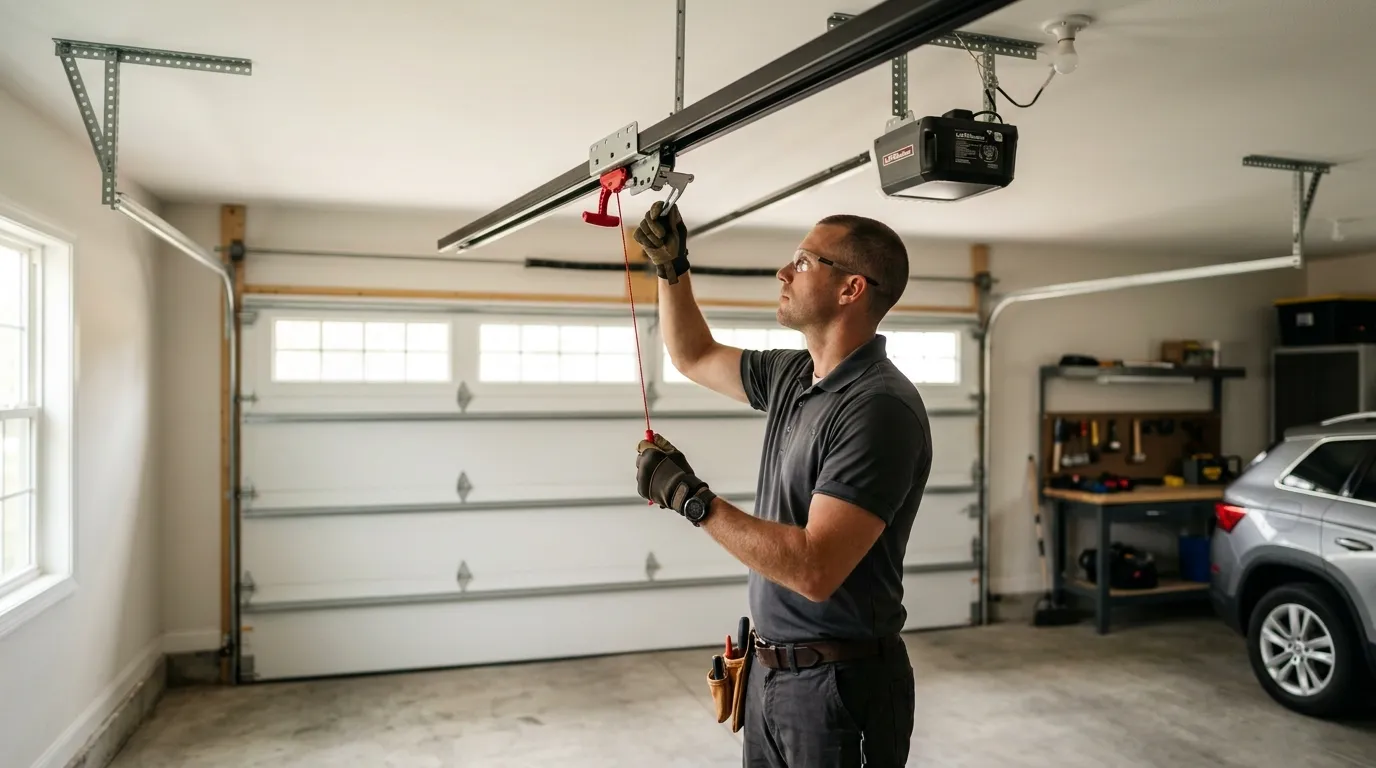
We carry torsion springs cut to the shorter drums these older headers use, along with 2-inch nylon rollers, weatherstrip sized for the thinner jamb reveal common on houses from this era, and lift cables long enough for the lower headroom these garages were built with.
None of that is stocked at a hardware store as a universal part - it has to match the door in front of us, which is why we bring a range of spring sizes on the truck rather than one all-purpose kit.
Watch-outs
A door built in 1969 has usually been re-sprung once or twice by whoever owned the house before, and not always with the right wind or wire gauge.
We open panels expecting a matched pair of springs and find one from a newer double order and one older, wound the wrong number of turns for the door's actual weight. Openers get swapped out over fifty-plus years too, so the mounting bracket on the header is often not the one the original door was drilled for, which means the travel limits and the force setting are guessing rather than measured.
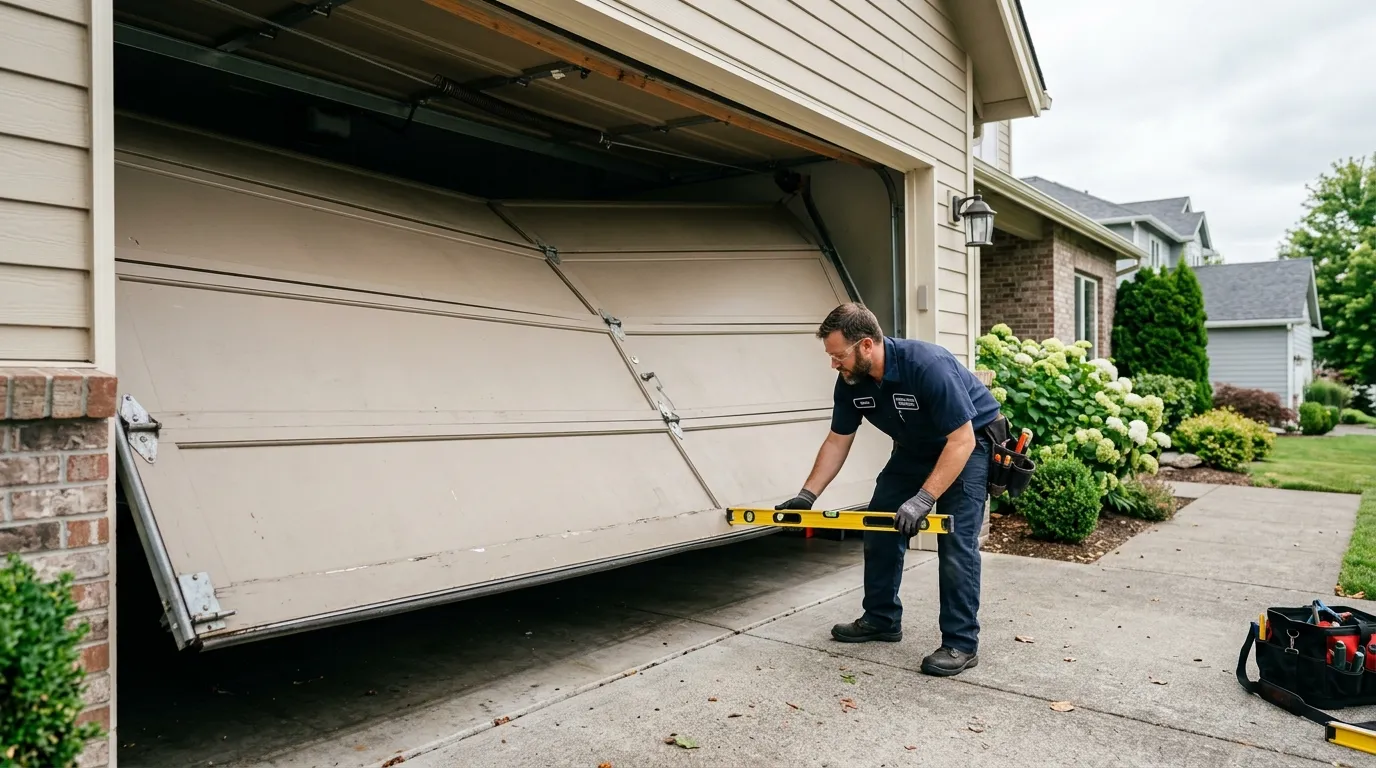
The other complication is the track itself: the older 2-inch rail flexes more than current 3-inch rail, and once a roller starts to wear, that flex shows up as a door that walks sideways in the track instead of running straight. None of this is visible from the driveway.
It only shows once the door is off its stops and we're looking at how the hardware was actually assembled over the years, which is part of why a maintenance visit on a house this age usually takes longer than the same visit on a newer build.
Local causes
The service area sits in a cold-climate zone with severe winter conditions, and steel doors from the late 1960s don't handle that the way current insulated doors do. A single-layer steel panel contracts more in deep cold, and on an older door that's already a little out of square, that contraction is enough to bind a roller in the track or tighten a hinge past where it should sit.
Condensation is the other half of it: with no foam core and no thermal break, the inside face of the panel sweats when the garage goes from freezing overnight to warmer during the day, and that moisture works on fifty-year-old steel at the bottom panel first, where road salt gets tracked in. None of that is a weather event unique to one street - the whole region gets it - but it lands harder on a door built before insulated steel was standard, and Mount Prospect's housing stock, with a median build year of 1969, has more of those older doors per block than areas built out later.
DIY or pro
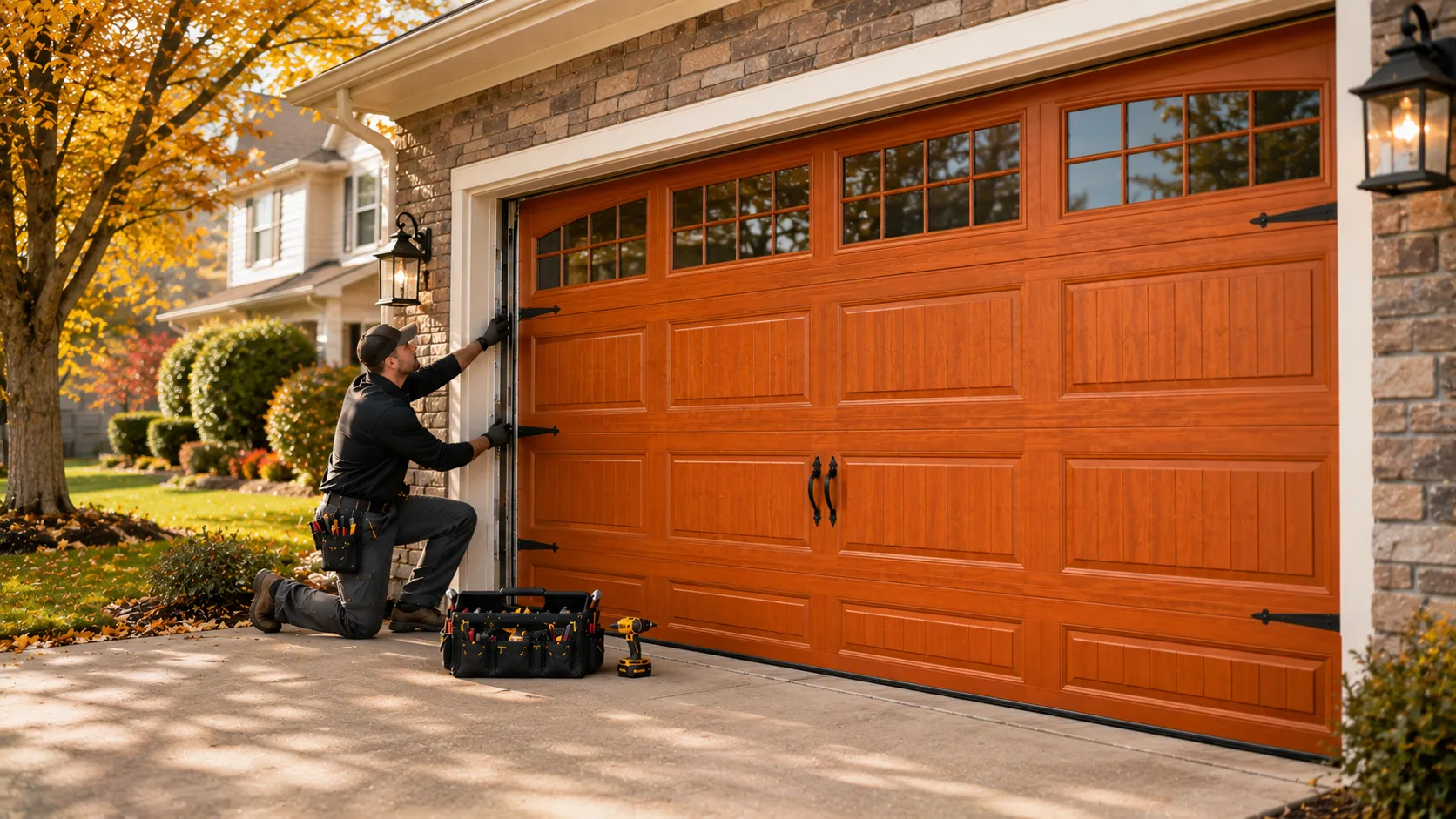
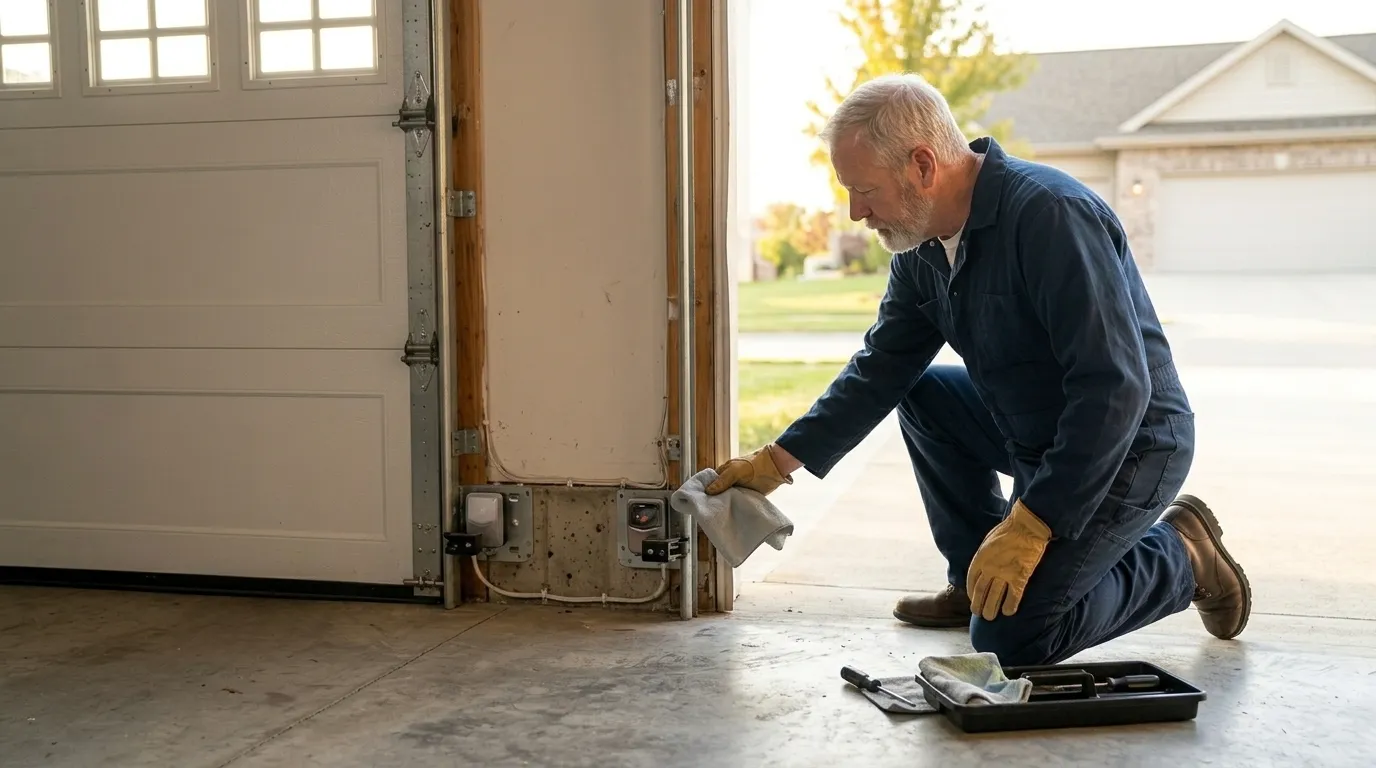
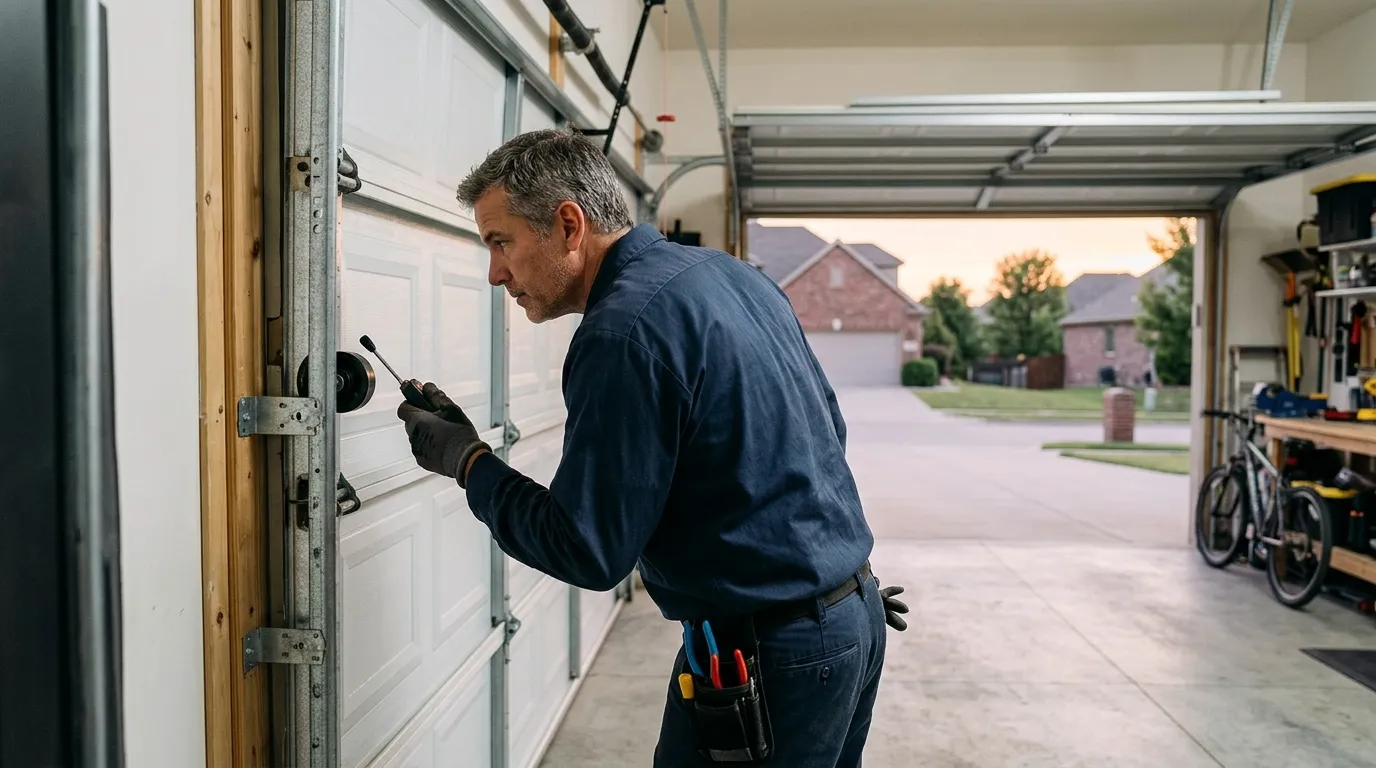
There's real maintenance a homeowner can do without a torque wrench. Wipe down the tracks, check that the rollers turn freely and aren't chipped, lubricate hinges and the torsion bar with a light spray rather than grease that collects grit, and look at the bottom weatherstrip for cracking - on a door this age it's usually due.
What you shouldn't do is touch the torsion springs. A wound spring on a door this old carries enough stored force to break a wrist or worse, and because the spring on a 1969-era door is often not the size a big-box store sells, guessing at a replacement usually means a second trip anyway once the wrong part doesn't fit the drum.
We'll also say plainly: if the door has been resprung more than once already and the track shows real wear, sometimes a tune-up isn't the honest answer - replacement is, and we'll tell you that instead of billing for a repair that won't hold past next winter.
Warning signs
On a door this age the first sign is usually sound, not a full failure. A grinding roller in the 2-inch track, a scrape at the same spot on every cycle because a panel has warped slightly out of true, or an opener that strains and reverses partway up because the spring is carrying less of the door's weight than it used to.
In winter, the sound often gets worse before it gets better: cold steel and a stiff hinge together make a door that's slow to open at 6am and looser by afternoon. Homeowners here also mention the door feeling heavy to lift by hand - that's the spring losing tension, not the door getting heavier, and it's the clearest sign a torsion spring on a fifty-plus-year-old door is near the end of its cycle count.
Booking
We run out of Arlington Heights, three miles from Mount Prospect, which keeps a maintenance visit here close to the same routing as any other stop on the truck's day rather than a special trip out. If you want to see the neighborhoods we cover from that base, the Mount Prospect area page lists them.
For details on what a tune-up actually includes - spring check, track alignment, roller and hinge lubrication, opener force test - the garage door maintenance page for Arlington Heights covers the service itself. Booking is the same either way: tell us the age of the house if you know it, since a door built around 1969 gets inspected differently than one built in 2005, and we'll bring the right spring sizes rather than showing up and having to make a second trip for parts that don't match an older drum.
Questions
Once a year is the baseline for any door, but on a house from this era we usually recommend it, since original hardware and mismatched replacement springs are common by now. A yearly check catches a roller or hinge before it fails on a cold morning rather than after.
Yes. Doors from around 1969 often use shorter torsion drums than current doubles, so we bring a range of spring sizes rather than one universal kit. If a spring turns out to be a size we don't have loaded, we'll tell you before we start, not after.
About three miles. We work out of Arlington Heights, so a maintenance call here is a short trip on the same route as our other stops, not a special dispatch.
Depends on the track and how many times it's been resprung already. If the track is straight and it's just spring and roller wear, a tune-up makes sense. If the track shows real wear or the door's been resprung more than once, we'll say so and talk replacement instead of billing for a fix that won't hold.
Explore more
Ready when you are
Arlington Heights Garage Door Pros repairs and installs garage doors, springs and openers in Arlington Heights, IL and the surrounding area.