
Door reversal testing
Check that the door reverses when it meets resistance - set a 2x4 flat on the floor under the door and let it close on it. If it doesn't stop and reverse, stop using the opener until it's looked at.
Bartlett, Arlington Heights
Bartlett's housing stock runs newer than most of our service area, so the maintenance calls we get here are different. See what actually wears out on a 1990s-era door.
Popular Services
Watch-outs
The calls we get from Bartlett aren't the same calls we get from the older parts of the service area. The complaint is usually an opener that's started grinding on the way up, or a safety sensor that trips for no obvious reason, or a torsion spring that's gone quiet and needs a hand push to get the door moving. None of that is a broken hinge on a door from the 1960s - it's a mechanical system aging out on schedule.
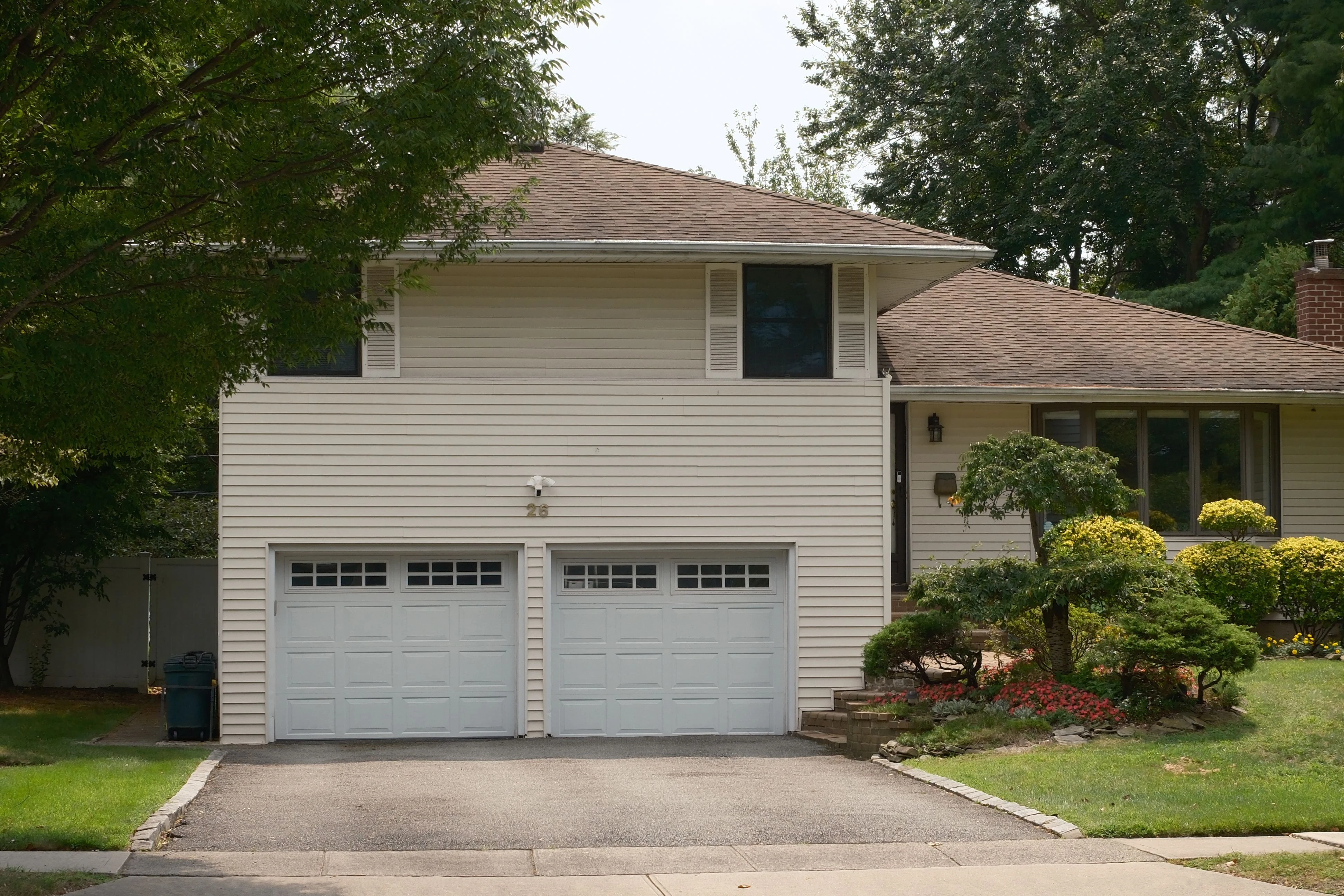
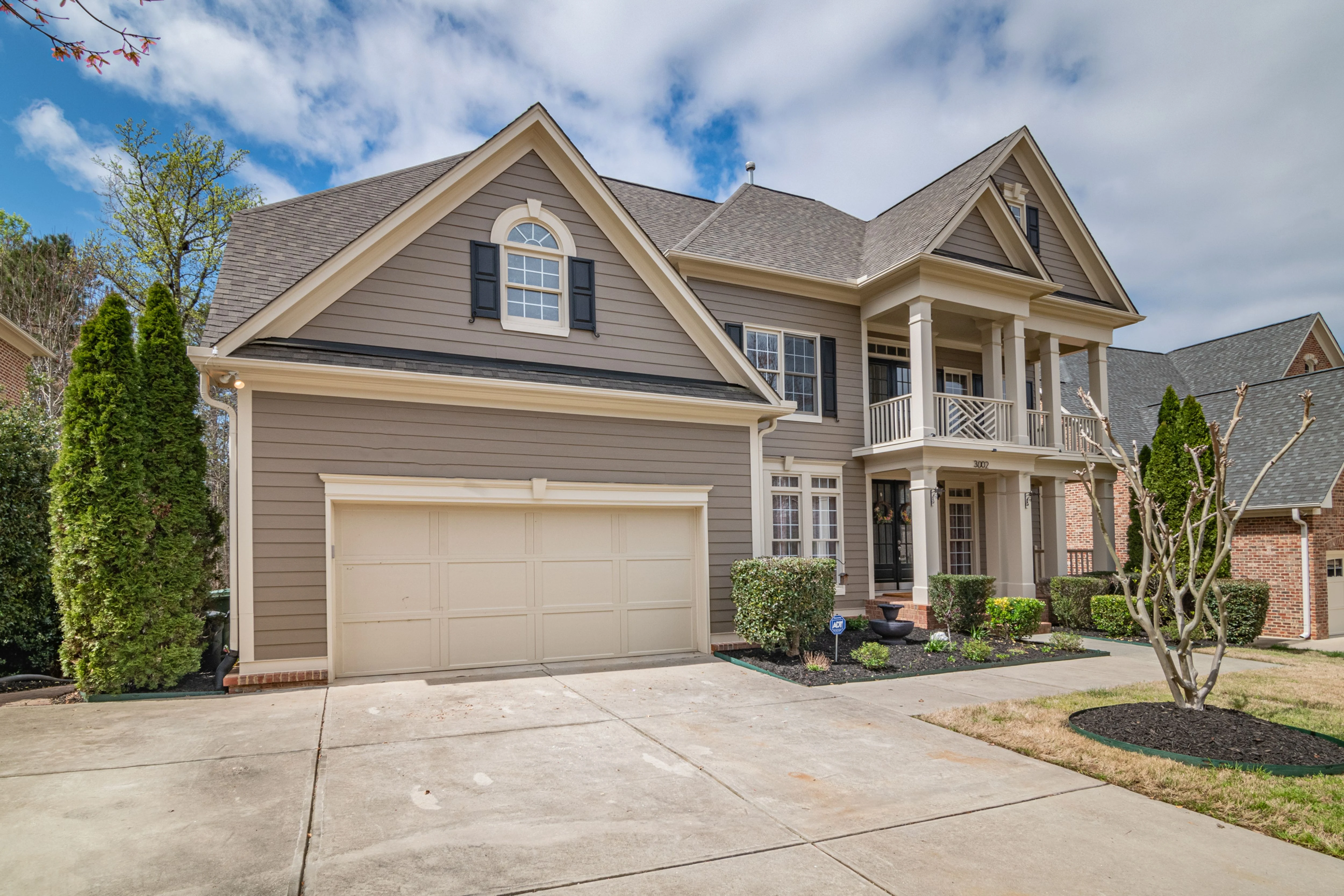
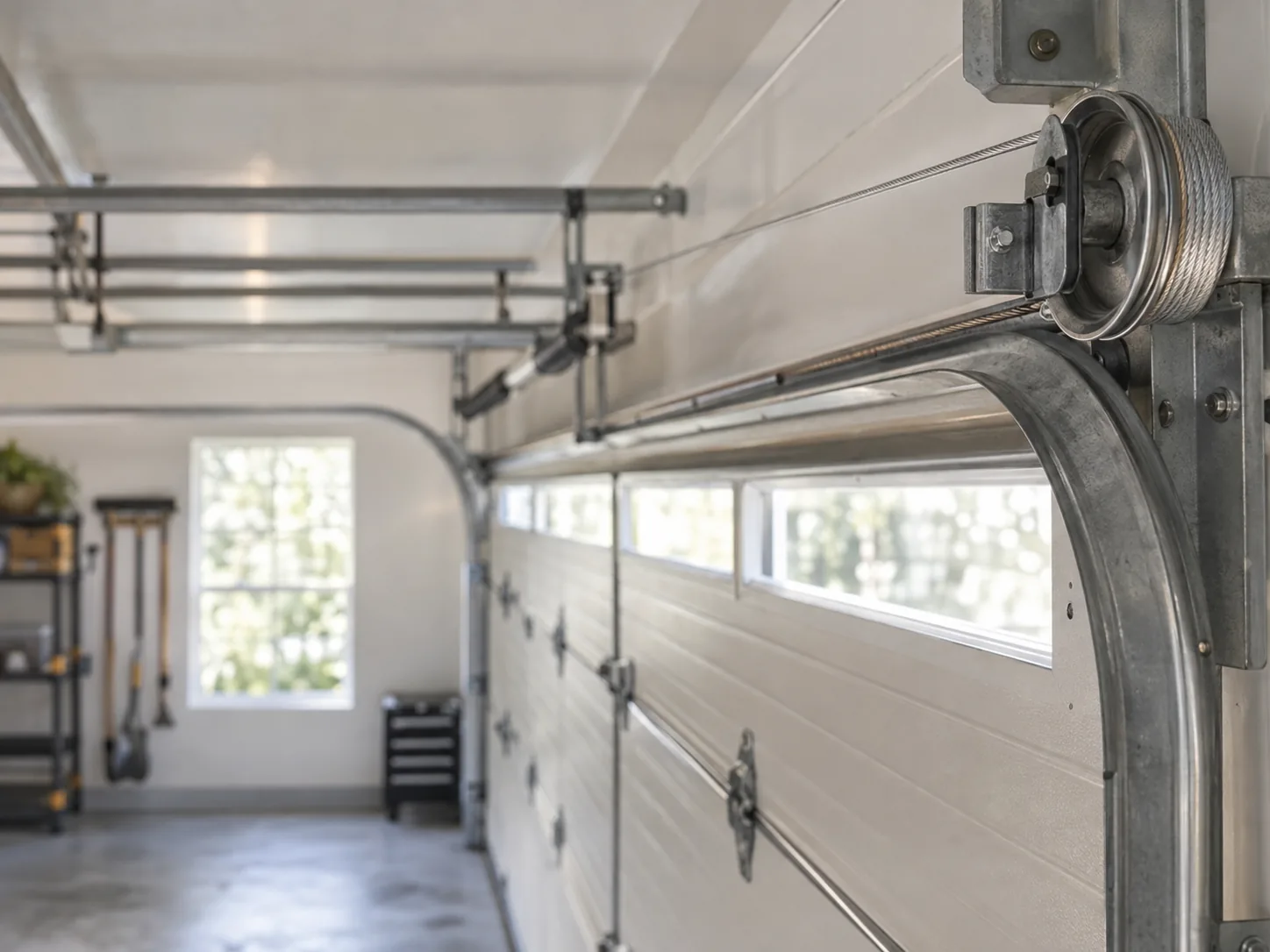
Most houses in Bartlett went up around 1992, a full generation newer than the 1960s-70s stock that dominates much of the rest of the service area. That means steel doors on torsion springs with center-mounted openers, not the older side-mount setups with one-piece wood panels we see closer to town. The failure points are different: nylon rollers wearing out of their tracks, opener gear sets stripping after two decades of use, and torsion springs that were sized for a lighter door than the insulated steel one that eventually replaced it. Maintenance on this housing stock is mostly about catching wear before it becomes a stuck door at 6 a.m.
DIY or pro
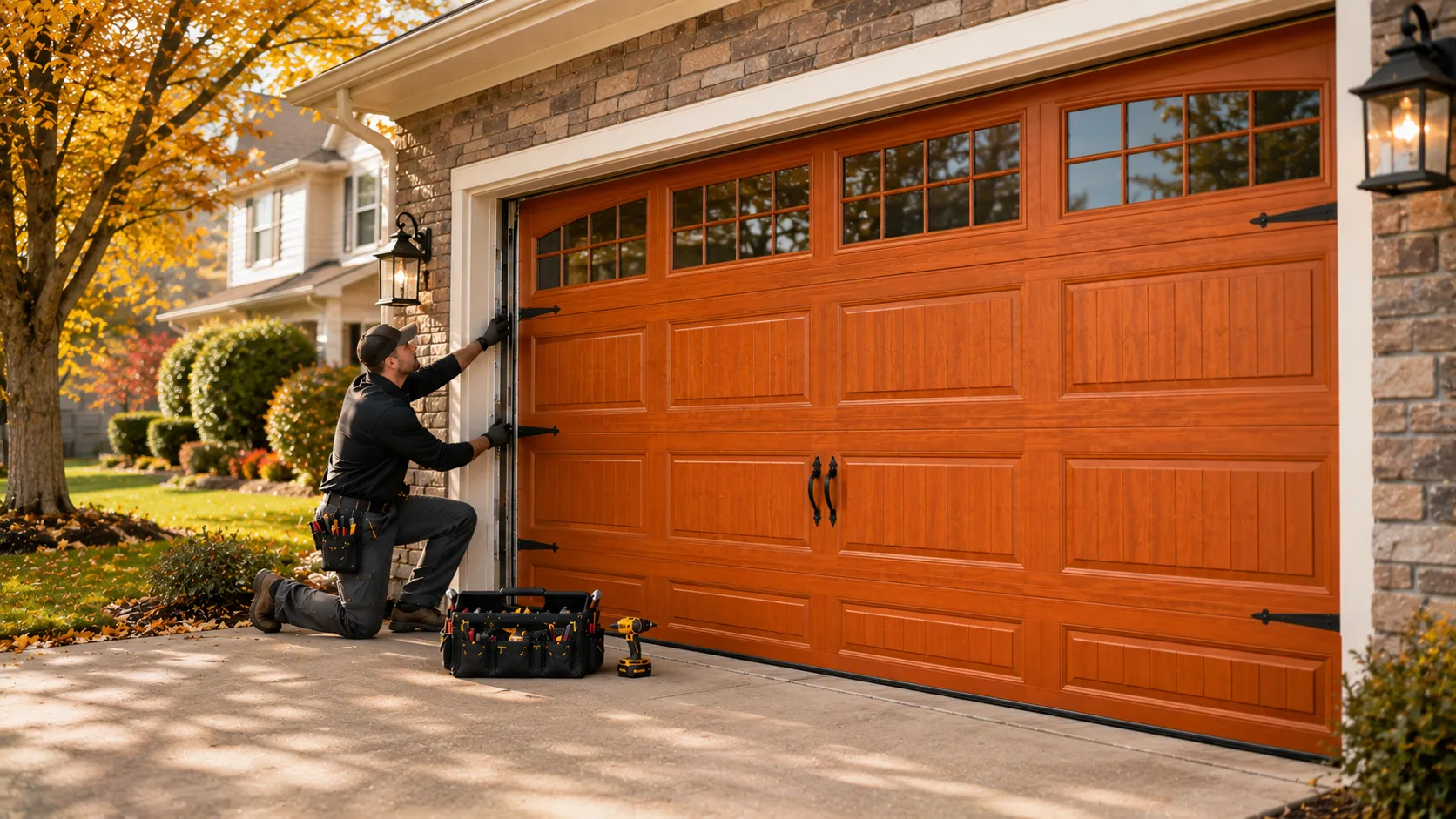
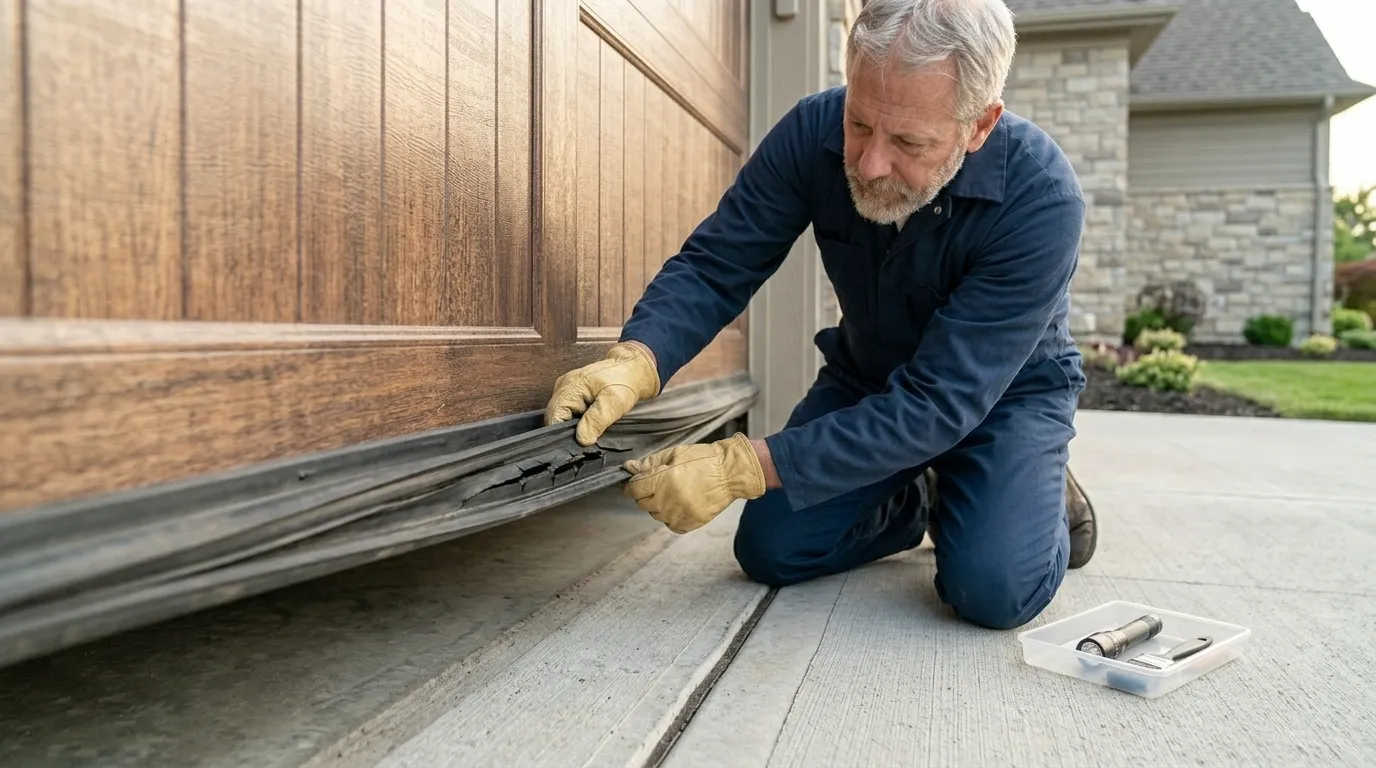
Some of it, yes. Wipe down and lubricate the rollers and hinges with a garage-door-rated grease twice a year, not household oil, which attracts grit and gums up the track.
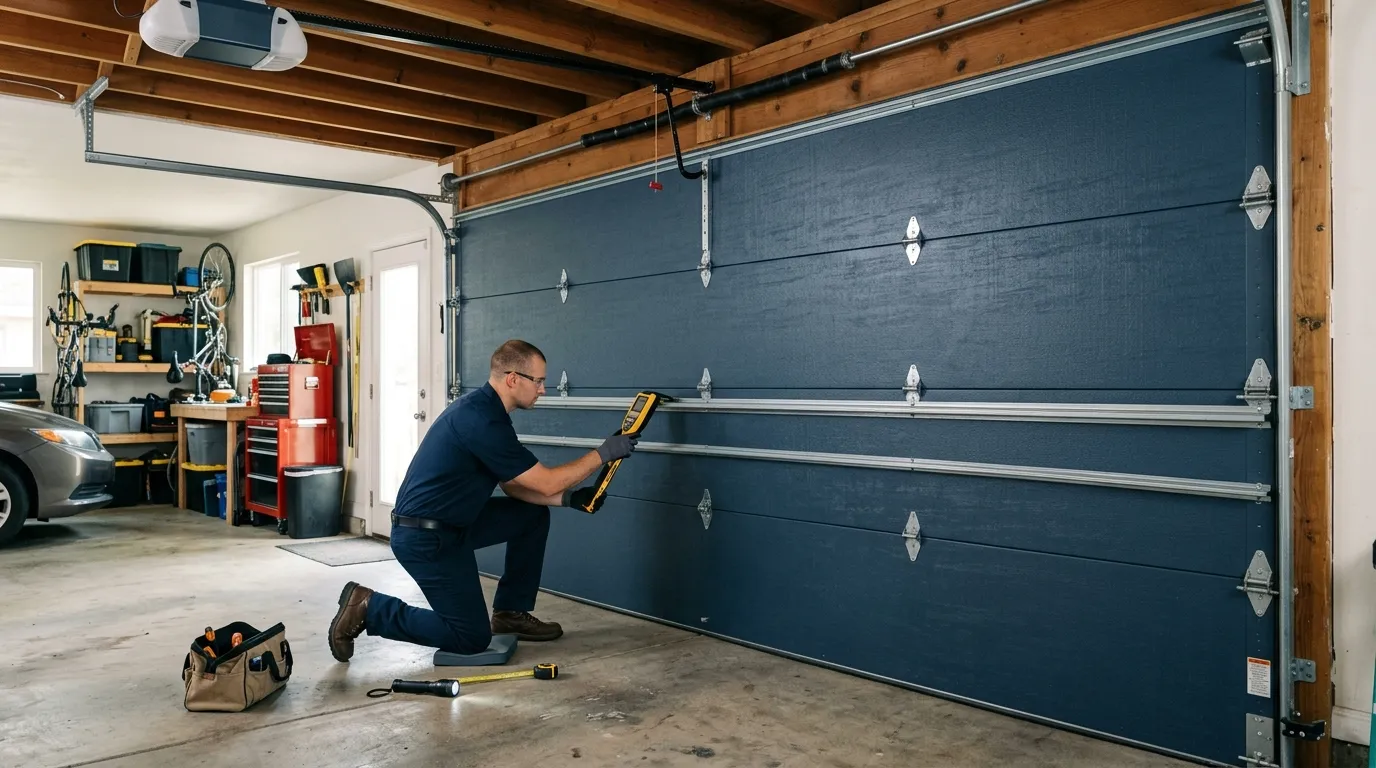
Check that the door reverses when it meets resistance - set a 2x4 flat on the floor under the door and let it close on it. If it doesn't stop and reverse, stop using the opener until it's looked at.
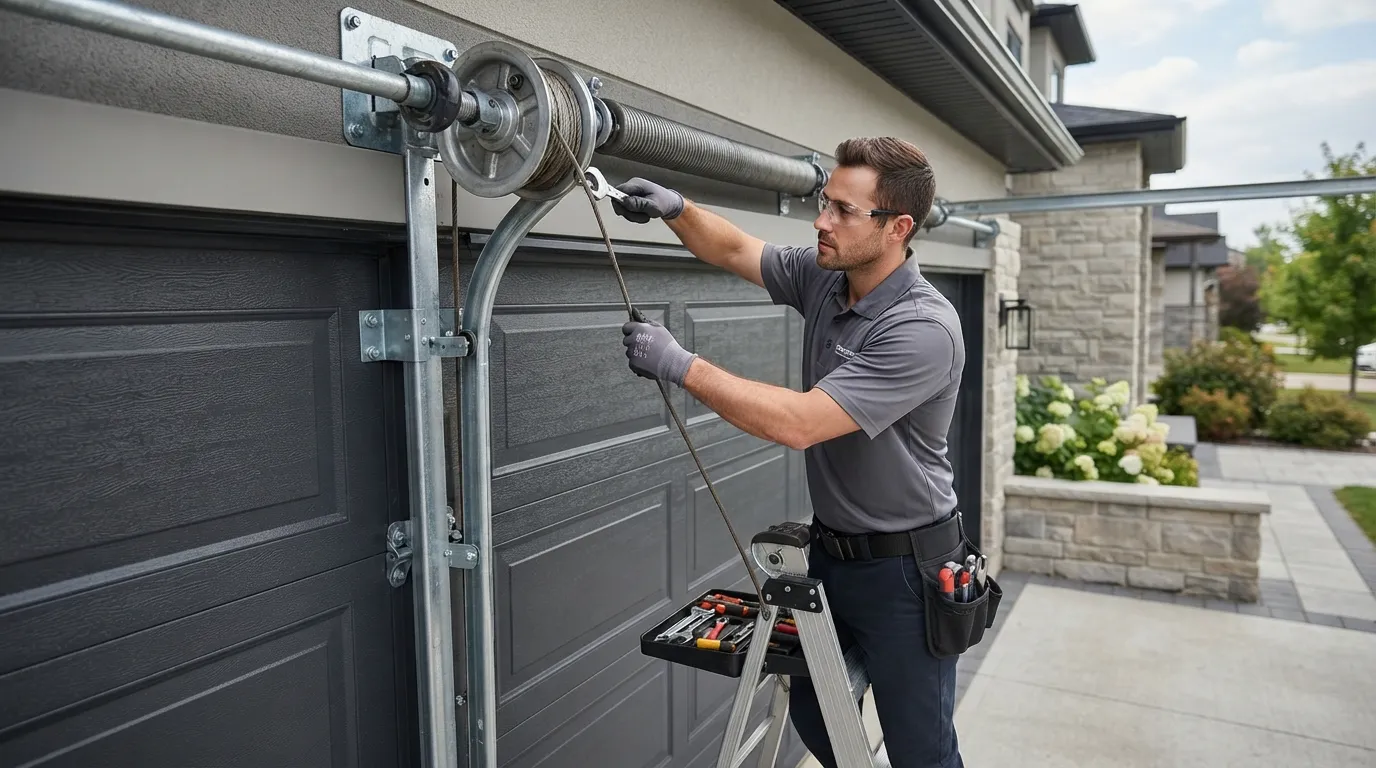
What you shouldn't touch: the torsion spring itself. It's wound under enough tension to break a hand or worse, and on a steel door of the size common in Bartlett that tension is significant. Same goes for the cables and the drums they wind onto.
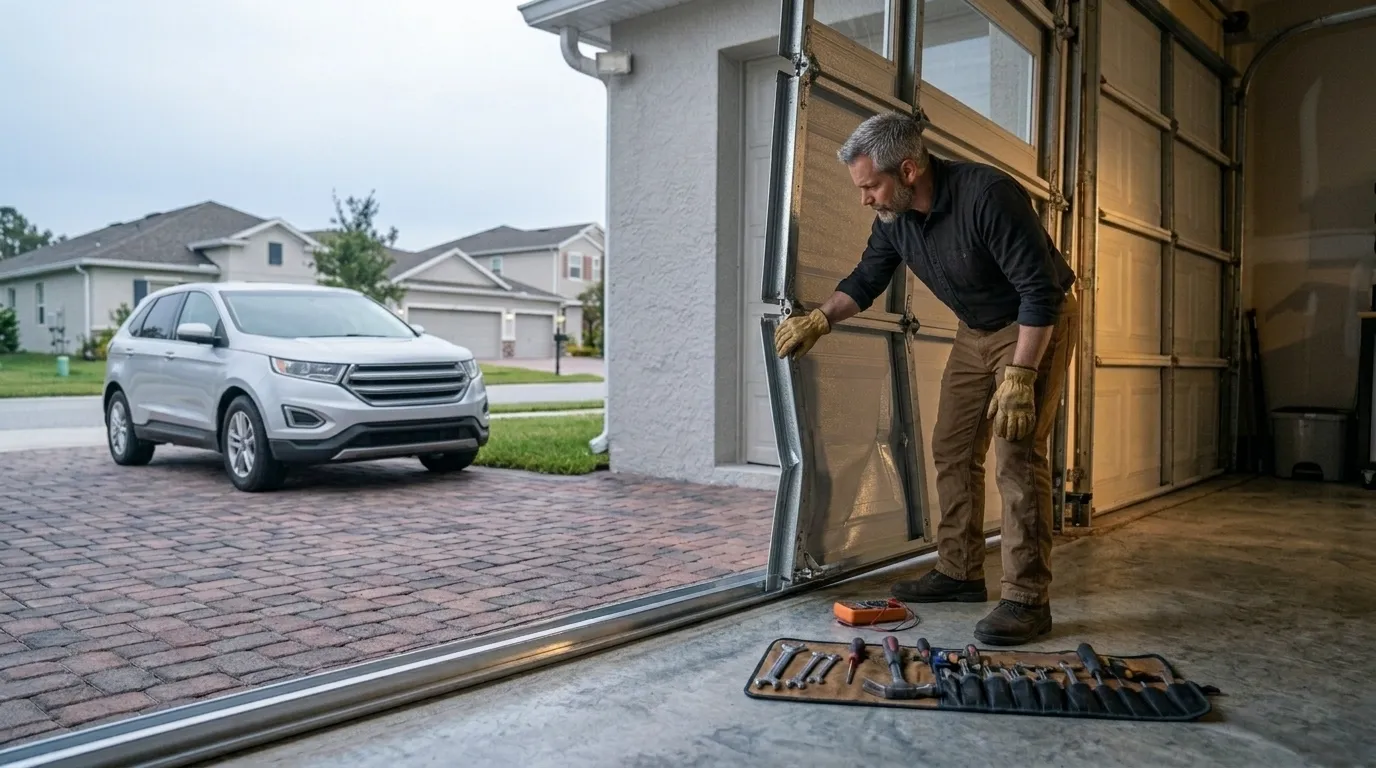
If a spring has already let go, or the door feels heavier on one side than the other, that's a call, not a project. We'd rather tell you that up front than have you find out the hard way.
Local causes
The service area sits in a cold-severe climate band, and that doesn't change from one town to the next - but how a door responds to it does depend on what the door and hardware are made of.
Newer torsion springs, common in the 1992-era stock that makes up most of Bartlett, are wound tighter and lose tension differently in cold than the older, heavier-gauge springs on side-mount hardware from the 1960s and 70s. On a cold morning that shows up as a door that struggles on the first pull of the day and loosens up by afternoon - a sign the spring is losing its set, not a one-time fluke.
With 14,332 households in Bartlett, most built after 1980, galvanized torsion springs and steel-backed insulated panels are the standard here, not the older wood panel doors you'll still find on the older side of the service area.
That newer hardware holds up better against cold-weather binding, but the openers paired with it are now old enough - 25 to 30 years in a lot of cases - that gear wear and circuit board failures are becoming the more common call than spring failure.
Booking
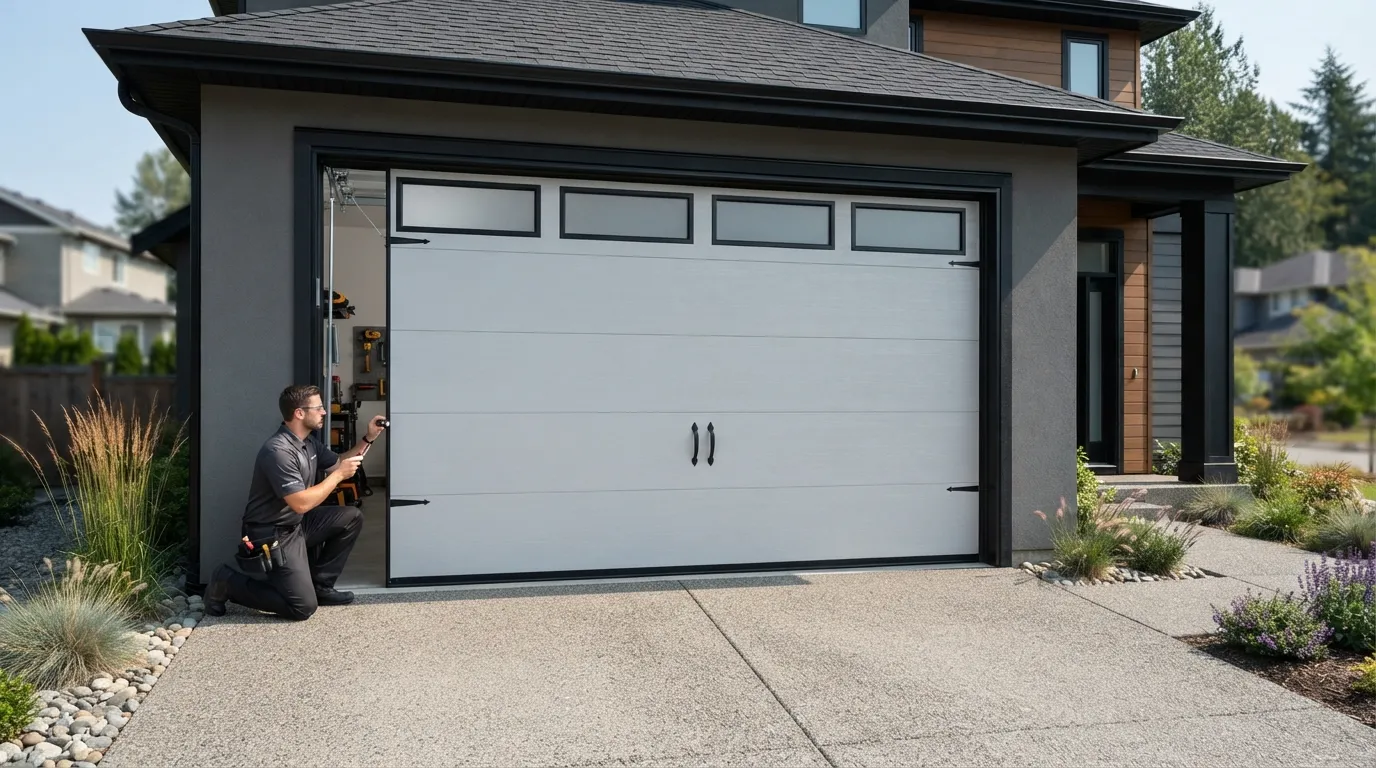
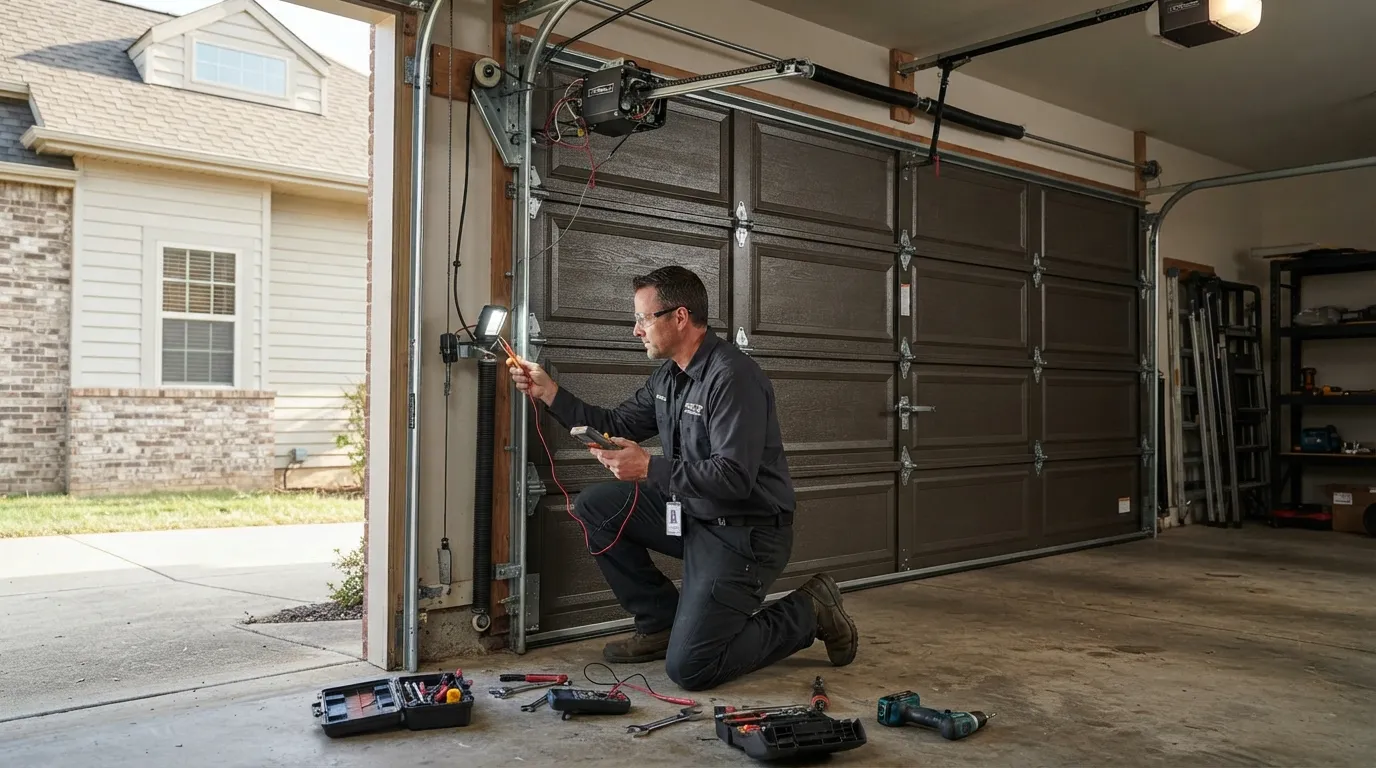
We run out of Arlington Heights, and Bartlett is a 14-mile drive from the shop, so we schedule the trip rather than treat it as a walk-up. Call ahead and we'll set a time that works for a full tune-up: rollers, hinges, cables, spring tension check, opener safety test, and track alignment. If something's already failed, tell us what the door is doing - grinding, not closing, reversing on its own - and we'll bring the right parts instead of guessing on-site.
We don't stock every opener board or every spring gauge on the truck for every trip, so a heads-up on the symptom saves a second visit. See our Bartlett service area page for what else we cover nearby, or check our main maintenance page for the full rundown of what a tune-up includes.
Pricing
We're not going to put a number here that doesn't hold up once we've actually seen the door - the honest answer is that cost depends on what's worn versus what's just dirty. A basic tune-up runs less than a spring replacement, and a spring replacement runs less than replacing an opener that's stripped its gears. On the newer steel doors common in Bartlett, the panels themselves tend to outlast the moving hardware, so most of what we replace is springs, rollers, cables, and openers rather than the door itself.
Median household income here runs to $130,479, well above the $109,454 figure for the service area as a whole, and we mention that only because it's part of why we see more owners opt for a full opener swap instead of a patch repair when the old one's on its last legs - the math on a new belt-drive unit makes more sense here than nursing a 25-year-old chain drive along. We'll always tell you honestly which option makes sense for your door rather than upsell the bigger job.
Questions
Once a year is the baseline for most doors, twice if you use the garage as your main entrance and the door cycles several times a day. Given the age of hardware common in Bartlett homes built in the early 1990s, an annual check catches roller and opener wear before it turns into a stuck door.
No, we run out of Arlington Heights, about 14 miles away. We schedule Bartlett visits rather than offer same-day walk-ins, so a call ahead with what the door is doing helps us bring the right parts on the first trip.
It's common in cold weather and usually points to a torsion spring losing tension rather than anything urgent. It's worth having checked at your next tune-up, but it's not typically an emergency unless the door starts sticking or refusing to move.
You can install a new opener unit yourself if you're comfortable with basic wiring and mounting, but the safety sensor alignment and force settings matter and are easy to get wrong. If the old unit failed because of a spring or track issue rather than the motor, replacing just the opener won't fix the real problem.
Explore more
Ready when you are
Arlington Heights Garage Door Pros repairs and installs garage doors, springs and openers in Arlington Heights, IL and the surrounding area.